At an open house organized to update the public on plans to build a 16-mile light rail line linking spurs of D.C.'s subway system in suburban Maryland, planners' visions of smart growth where seen as a developer-driven nightmare by local residents.


"The bird's eye view offered a vision of progress—modern transit spurring economic development - but homeowners who studied the path of the $2.2 billion project at an open house organized by the Maryland Transit Administration (MTA) on Tuesday night saw something different," reports Martin Di Caro.
"Despite the assurances of state transportation planners and transit advocates, homeowners like [Anne] Spielberg and [Tom] Armstrong could not help but see the hands of real developers in every twist and turn of the Purple Line's path," notes Di Caro.
"The Purple Line seems to be designed to increase development. It's about helping developers. And we've actually seen statements to that effect from people who are building the Purple Line, instead of doing what makes sense for our neighborhood," Spielberg said.
"To the project's supporters, focusing mixed-use development (housing, retail, and office) around the 21 station stops is a positive aspect of the project, in addition to the ability to move people more efficiently."
Read the full story: Maryland Holds Open Houses On Purple Line Progress

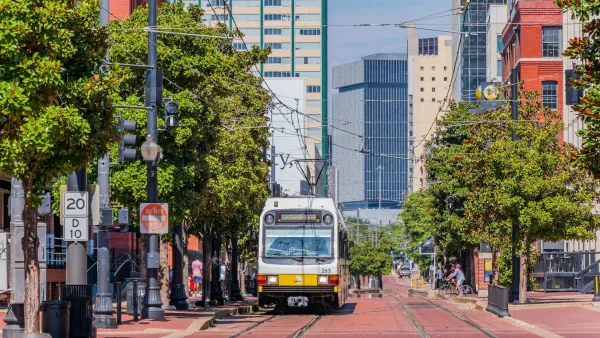
Development Near Dallas Light Rail has ‘Directly Created’ Over 5,000 Jobs, Generated $18 Billion Over 25 Years
Transit-oriented development has spurred billions in economic activity along DART light rail.
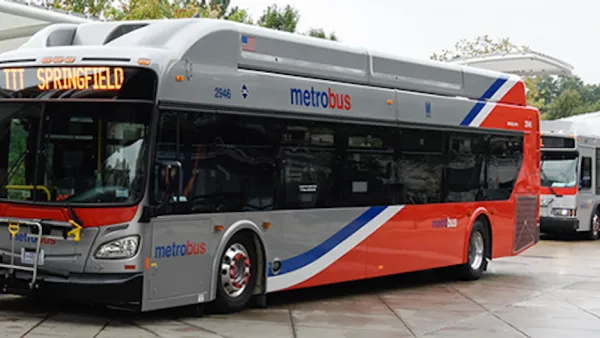
DC Metro Is Betting on Buses
The agency plans to significantly expand bus service, which can be added faster and at a lower cost than rail projects.
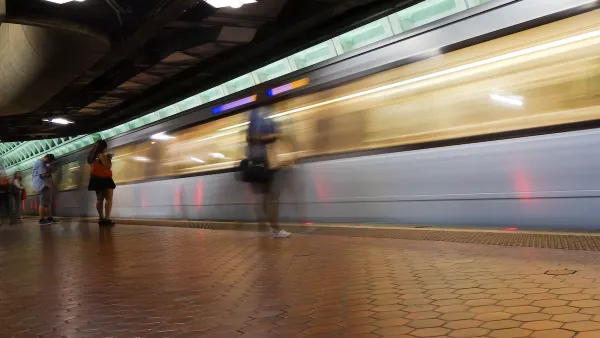
DC Suburban Light Rail Expansion Prompts Mixed-Use Development
The Purple Line’s expansion into Maryland suburbs in 2027 has spurred TOD along the line.

Planetizen Federal Action Tracker
A weekly monitor of how Trump’s orders and actions are impacting planners and planning in America.

Amtrak, CN end decades-long dispute with eight-year agreement
The new operating agreement establishes an updated framework for the companies to work together, including processes to resolve disputes.

Northwest rail fans eager for Sept. 30 debut of Amtrak’s Airo fleet
Get ready for that new train smell and more seats. But they won’t go faster or run more frequently on the Cascades route in Washington and Oregon.

Brightline Florida files for bankruptcy
The transit company is over $5 billion in debt.

St. Louis Metro to test if single-car trains can reduce operating costs, maintain rider satisfaction
The pilot program will run from October to spring 2027, and begin with one single-car train operating on Metrolink’s Red and Blue lines.

Pennsylvania is building data centers in abandoned mines
Housing data centers in mines provides an alternative to destroying local forests and may spare residents from data centers’ noise and air pollution.

FREE Course: Walkable City 1: Why Walkability?
After describing his path towards focusing on walkability as the essence of good planning, Jeff Speck marches through his five principal reasons for making more walkable places.
Reinventing Malls: Planning Alchemy—Turning Gray Fields Into Gold
The course focuses on the opportunities and imperatives that shape reinvention of mall sites.

City of Thousand Oaks
City of Wisconsin Rapids
Harvard University Graduate School of Design
The Architects Foundation
University of Cincinnati Online
The Pocatello Development Authority
The Urban Renewal Agency of the City of Pocatello