Residents living near Brooklyn's toxic Gowanus Canal are fighting the E.P.A.'s $500 million environmental cleanup effort over disagreement with the methods proposed by the agency. Will their opposition thwart the long-sought remediation.


Most residents who live in proximity to Brooklyn's heavily polluted Gowanus can agree on one fundamental thing: "They want the canal purged of pollutants like PCBs, lead, mercury and raw sewage..." But, as Joseph Berger reports, two neighborhood groups are fighting the Environmental Protection Agency's plans for how to accomplish that task.
"One neighborhood fears that the sludge taken out from the canal would poison the air over their ball fields, and others worry that the location of a sewage-processing site needed for the cleanup would destroy a beloved swimming pool."
"The disputes illustrate a predicament that often crops up in environmental remediation: those affected see the cure as worse than the disease."
Read the full story: Neighbors Resist a Plan to Clean a Toxic Canal
NYC Unveils Plans for Cleaning Up One of Its Most Polluted Waterways
The EPA has released plans for how it intends to clean up Brooklyn's Gowanus Canal Superfund site. Branden Klayko reports on the $500 million, two pronged approach.
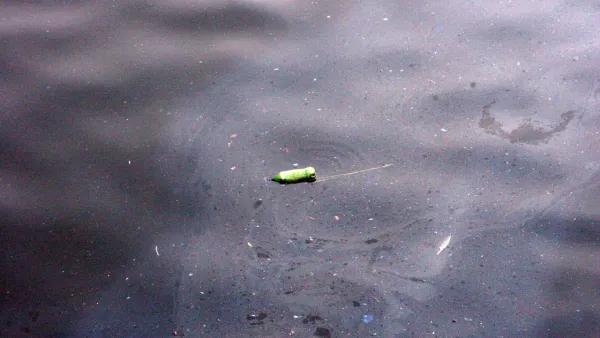
EPA Launches Long-Awaited Cleanup of Gowanus Canal
Gowanus Creek was channelized in the 1800s and has been accumulating sludge ever since.
New York Tries to Dodge Superfund Status for Canal
New York City's Gowanus Canal has been heavily polluted for years. Mayor Bloomberg said the cleanup would happen, but it never did. Now the EPA is calling the troubled waterway a Superfund site and the city is kickstarting action.

Planetizen Federal Action Tracker
A weekly monitor of how Trump’s orders and actions are impacting planners and planning in America.

California plans to bury El Niño’s downpour
If the state plays its cards right, it may be able to store a billion acre-feet of El Niño’s water in aquifers.

Desperate measures: Advocates weigh draining Lake Powell to fill Colorado River
Draining the reservoir could reduce evaporation losses by a couple hundred thousand acre-feet.

Los Angeles just elected an urban planner as its mayor
Transportation analysts are optimistic that Raman will be more aggressive in addressing transit issues than Bass.

Mamdani’s pied-à-terre tax survives legal challenge
A panel of judges found that the plaintiffs failed to demonstrate injury as a result of New York City's implementation of the tax.

Eastern Nebraska is running out of electricity
Data centers and electrification are straining eastern Nebraska’s grid, throttling economic development.

FREE Course: Walkable City 1: Why Walkability?
After describing his path towards focusing on walkability as the essence of good planning, Jeff Speck marches through his five principal reasons for making more walkable places.
Reinventing Malls: Planning Alchemy—Turning Gray Fields Into Gold
The course focuses on the opportunities and imperatives that shape reinvention of mall sites.

City of Rosemead
Rutgers University, Edward J. Bloustein School of Planning and Public Policy
One Hundred Miles
University of Michigan School for Environment and Sustainability (SEAS)
Hunter College, City University of New York (CUNY)
The Architects Foundation
City of Cambridge
Montrose County
The Pocatello Development Authority