Gowanus Creek was channelized in the 1800s and has been accumulating sludge ever since.


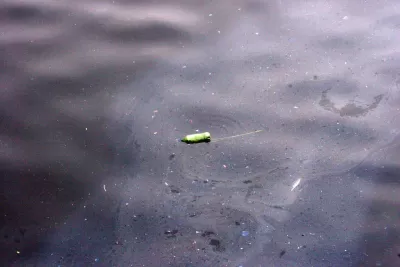
The U.S. Environmental Protection Agency has begun preliminary work on a major cleanup of the Gowanus Canal, which the agency has called "one of the nation's most seriously contaminated bodies of water."
The canal became a Superfund site in 2010, but has been notoriously dirty for much longer—even earning the nickname "Lavender Lake" in the 1900s, Jackson Rollings reports in The Architect’s Newspaper.
At present, 26 million gallons of raw sewage flood into the canal per year, which the advent of new underground sewage tanks is expected to reduce to 11 million gallons per year. Flooding is still a common occurrence for nearby residents.
The dredging that began this month is the first step in a $506 million, multi-phase plan to revitalize the channel. The first remediation attempt in the canal's history, it coincides with recent development interest at the Gowanus waterfront, as well as a community planning process associated with New York's citywide rezoning program.
FULL STORY: The Gowanus Canal is being cleaned up for the first time in its long, polluted life

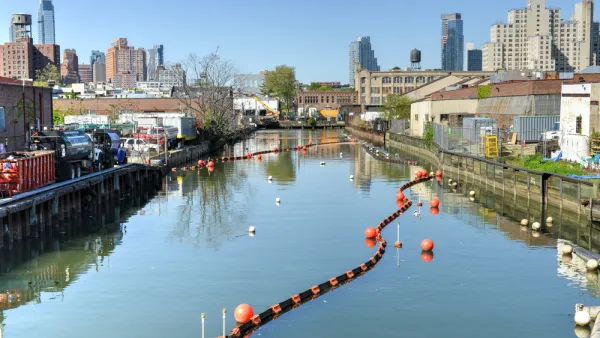
Big Day for Brooklyn: Gowanus Canal Clean Up Begins
Local advocates are celebrating the start of clean up work on the Gowanus Canal in Brooklyn.
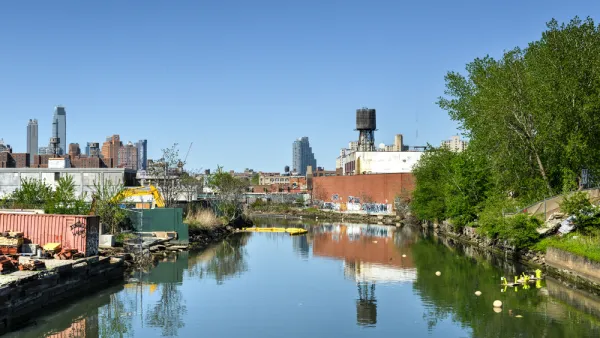
Parking Spaces Give Way to Stormwater-Collecting Dumpsters in Gowanus
A project proposal from Alloy Development and the Gowanus Canal Conservancy makes creative use of space to achieve stormwater benefits in the neighborhood surrounding the Gowanus Canal.
New York Tries to Dodge Superfund Status for Canal
New York City's Gowanus Canal has been heavily polluted for years. Mayor Bloomberg said the cleanup would happen, but it never did. Now the EPA is calling the troubled waterway a Superfund site and the city is kickstarting action.

Planetizen Federal Action Tracker
A weekly monitor of how Trump’s orders and actions are impacting planners and planning in America.

The state-sanctioned urbicide of Austin
People don’t kill cities. Freeways do.

US to reduce Colorado River water deliveries to Mexico
A new Colorado Treaty amendment reduces Mexico’s Colorado River water allocation by 250,000 acre feet.

Airbnb launches $250 million 'last-dollar financing' housing accelerator, makes first investment in Austin
The company will put $6.4 million towards affordable housing development in Texas’ capital.

Guerilla urbanists are building DIY bus stop benches in Chicago
A before-and-after of one of the bus stops with a new bench. The new benches are not officially sanctioned or permitted, but the residents who placed them hope they will be the start of a network of DIY benches across the city.

Mamdani overhauls NYC's Vision Zero plan with 100 new policy goals
The overhaul aims to reduce traffic deaths and make streets safer for pedestrians, cyclists and drivers through lower speed limits, new safety infrastructure and more.

FREE Course: Walkable City 1: Why Walkability?
After describing his path towards focusing on walkability as the essence of good planning, Jeff Speck marches through his five principal reasons for making more walkable places.
Reinventing Malls: Planning Alchemy—Turning Gray Fields Into Gold
The course focuses on the opportunities and imperatives that shape reinvention of mall sites.

Eagle County Government
Harvard University Graduate School of Design
Nashville Planning Department
The Architects Foundation
University of Cincinnati Online
The Pocatello Development Authority
The Urban Renewal Agency of the City of Pocatello
Journal of the American Planning Association