Much of the future built environment will be determined by how commercial sites are developed, says Robert Steuteville. And it's up to cities and towns to demand better retail designs.


"Recently I criticized the design of a supposedly nonpolluting, 'net zero' Walgreens in Evanston, Illinois. Aside from the raft of solar panels on the roof, the store looks like it could be located by any Interstate interchange. The store is, in fact, in a walkable neighborhood, one block from a Chicago Transit Authority station. The claim of “net zero” strikes me as flimsy — note the SUVs in the parking lot and that much of the merchandise will be shipped from Asia — but mostly I object to the parking in front. The store design diminishes the walkability of the neighborhood, which cancels out the energy savings of the building itself."
"The national retailers will need in the coming years to build more and more in redeveloped and infill locations. They are changing their formats when they are required to, but not otherwise."
"At stake are mediocre streets that are connected to street networks and need to become complete streets, sites near transit that are marginally walkable now and should be improved, and strip malls with the potential to be redeveloped into mixed-use urban villages."
Read the full story: Why retail design is important
Shopping: An ‘Obnoxious Industrial Activity’?
As James Howard Kunstler points out in Home From Nowhere, one of the tragedies of single-use zoning is that it branded shopping as an “obnoxious industrial activity that must be kept separate from houses”. Ironically, the places where most Americans shop today come pretty close to “obnoxious” and “industrial”.
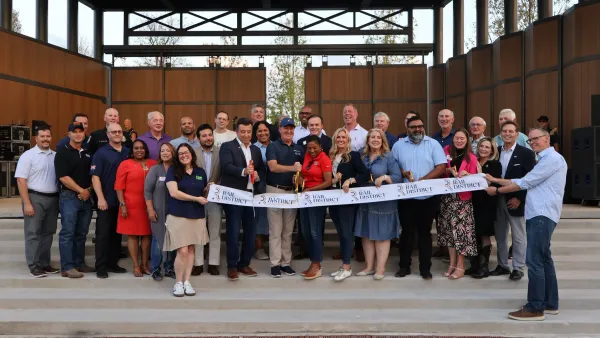
Dallas suburbs are turning their downtowns into small towns
Four Texas towns are embracing walkability and density in their downtowns.
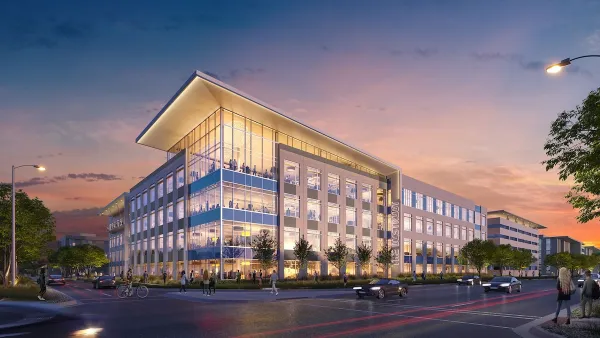
Texas’ $1 billion ‘live-work-play destination’ sees progress
When complete, the project’s plaza will house up to 14 restaurants and lifestyle brands in six buildings.

Planetizen Federal Action Tracker
A weekly monitor of how Trump’s orders and actions are impacting planners and planning in America.

California plans to bury El Niño’s downpour
If the state plays its cards right, it may be able to store a billion acre-feet of El Niño’s water in aquifers.

Desperate measures: Advocates weigh draining Lake Powell to fill Colorado River
Draining the reservoir could reduce evaporation losses by a couple hundred thousand acre-feet.

Housing is the top priority of Seattle’s sole new councilmember
Jenks campaigned on building 1,000 new units of affordable housing.

New tax cuts may slash $1.5 billion in funding for Miami transit, public parks
Amendment 3 will save Miami-Dade homeowners $2,700 in 2028.

Arizona, Wisconsin, Pennsylvania hope to finally advance climate goals post-midterms
The three states have spent years under Republican or divided control.

FREE Course: Walkable City 1: Why Walkability?
After describing his path towards focusing on walkability as the essence of good planning, Jeff Speck marches through his five principal reasons for making more walkable places.
Reinventing Malls: Planning Alchemy—Turning Gray Fields Into Gold
The course focuses on the opportunities and imperatives that shape reinvention of mall sites.

City of Rosemead
Rutgers University, Edward J. Bloustein School of Planning and Public Policy
One Hundred Miles
University of Michigan School for Environment and Sustainability (SEAS)
Hunter College, City University of New York (CUNY)
The Architects Foundation
City of Cambridge
Montrose County
The Pocatello Development Authority