An exhibit that's just opened at NYC's Center for Architecture examines the brief history of a housing type that incorporated elements of suburban housing at higher densities. Can low-rise high-density houding provide a model for affordable infill?


"'Low Rise High Density' is the brainchild of curator Karen Kubey, executive director of the IPA, who began her research on the topic while a student at Columbia University’s GSAPP," writes Sabrina Wirth. The exhibit, "examines the history of a typology that sprung up 40 years ago, when the need for space and better living conditions led to alternatives to high-rise public housing."
"Modeled a bit after suburban homes, these low-rise high-density buildings reached prominence in the 1970s," explains Wirth. "This type of housing serves two functions: 1) to intensify land use as urban growth escalates by providing higher density; and 2) to improve living conditions by using suburban housing characteristics such as more open space, more light, and a closer connection to the ground."
"Through a curated set of photographs, architectural drawings, and original oral histories, 'Low Rise High Density' brings into context a housing model that lacks significant contemporary scholarship."
Read the full story: Goodbye, Micro-Apartments: ‘Low Rise High Density’ Presents An Alternative Housing Solution


LA delays state housing mandate with 'low-rise ordinance'
The new ordinance allows the city to delay implementing SB 79, a state law requiring more density near transit.
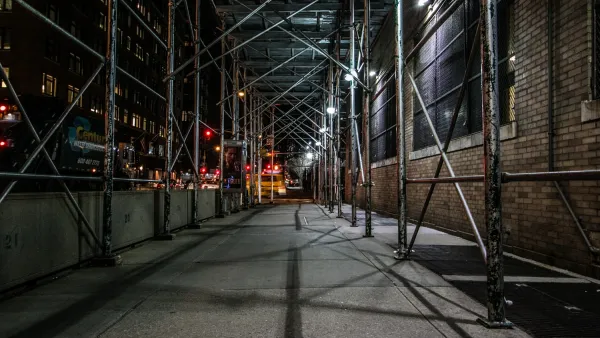
A Closer Look Under the Sidewalk Scaffolding of New York City
A common part of the urban landscape, scaffolds are mostly ignored or detested. But these in-between spaces can also take on a life of their own.

Developer's Ballot Box Planning Would Allow Suburban Development at Ferry Terminal
A June 7 ballot measure in Richmond, California would permit 59 single family homes to be built on a 5-acre bayfront lot within walking distance to a future ferry landing for San Francisco service. The site is zoned for high-density housing.

Planetizen Federal Action Tracker
A weekly monitor of how Trump’s orders and actions are impacting planners and planning in America.

‘Going backwards:’ Baltimore mayor, students rally against state's transit funding plan
Maryland's proposed six-year plan provides no funding for Baltimore’s BMORE bus program and reduces its road maintenance funding.

Detroit to transform waterfront with $2.2 billion investment
Developers will convert about 18 acres of unused parking lot space into civic spaces.

Data center developers are using lawsuits, cash offers to ‘overwhelm’ rural America
Newsrooms in five states worked together to uncover the tactics big tech developers use to buy land from reluctant communities.

U.S.-Iran war may have ‘devastating’ impact on cost to warm homes
Vermont and Maine residents may see a 76% increase in the cost of warming their homes this winter.

Senate bill would ‘overhaul’ environmental permitting laws
Under the proposed act, government agencies would also not be able to suspend or rescind permits after granting them.

FREE Course: Walkable City 1: Why Walkability?
After describing his path towards focusing on walkability as the essence of good planning, Jeff Speck marches through his five principal reasons for making more walkable places.
Reinventing Malls: Planning Alchemy—Turning Gray Fields Into Gold
The course focuses on the opportunities and imperatives that shape reinvention of mall sites.

One Hundred Miles
County of Mendocino
planning NEXT
The Architects Foundation
University of Cincinnati Online
Montrose County
Northern Illinois Transit Authority (NITA)
The Pocatello Development Authority