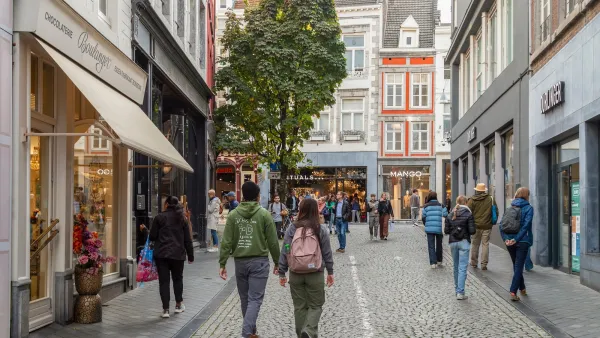
With new bike paths, regional trails, and renovated parks, Cleveland is catering to bikes and pedestrians, says Steven Litt. He explains how this "car town" is "undergoing a revolution in attitudes toward public space, city streets and walkability."


"From the 1970s through the early 2000s, the city and various partners fought to save downtown by renovating the historic theaters at PlayhouseSquare and building attractions such as the Gateway sports complex, Cleveland Browns Stadium and the Rock and Roll Hall of Fame and Museum," writes Litt. "Streetscapes and parks received little attention back then. The result: a downtown with great attractions and beautiful historic buildings separated by garages, surface-parking dead zones and acres of concrete that discouraged walking and cycling."
"Now, as it tries to attract more visitors and increase the number of downtown residents from today’s 11,700, the city recognizes that creating attractive public spaces and bike-friendly streets is essential, not a frill."
"The cultural shift in favor of bikes and pedestrians echoes a rising national trend inspired by the new popularity of urban living and growing proof that the nation’s obesity epidemic is rooted in part in suburban lifestyles centered on the automobile."
Read the full story: Cleveland is slowly becoming a more bike- and pedestrian-friendly town

Bikeable and Walkable, But Room to Improve
Seattle has been named one of the nation's safest p[laces to walk or bike. But some question whether that success will translate into any further improvements in bike and pedestrian infrastructure spending.
Planning for Love, Part 3: Enhancing human connection through walkability
In the third and final installment of this series, author Hannah Kosoff examines what her research findings say about modern dating and urban form.

Planning for Love, Part 2: What happens to dating in a car-centric world?
A survey of over 150 adults about their dating lives reveals stark differences based on their neighborhood's walkability.

Planetizen Federal Action Tracker
A weekly monitor of how Trump’s orders and actions are impacting planners and planning in America.

California plans to bury El Niño’s downpour
If the state plays its cards right, it may be able to store a billion acre-feet of El Niño’s water in aquifers.

Desperate measures: Advocates weigh draining Lake Powell to fill Colorado River
Draining the reservoir could reduce evaporation losses by a couple hundred thousand acre-feet.

Non-stop party: Chicago voters weigh permanent festival grounds
A stable place for bleachers, stages and drainage may streamline the setup and teardown of large events.

Metra may invest $9.1 billion in regional rail
The agency released a draft of a study examining potential ways to offer more frequent train service.

California city breaks ground on transit connector
The project includes three mobility hubs and a pedestrian bridge.

FREE Course: Walkable City 1: Why Walkability?
After describing his path towards focusing on walkability as the essence of good planning, Jeff Speck marches through his five principal reasons for making more walkable places.
Reinventing Malls: Planning Alchemy—Turning Gray Fields Into Gold
The course focuses on the opportunities and imperatives that shape reinvention of mall sites.

City of Rosemead
Rutgers University, Edward J. Bloustein School of Planning and Public Policy
One Hundred Miles
Hunter College, City University of New York (CUNY)
The Architects Foundation
University of Cincinnati Online
City of Cambridge
Montrose County
The Pocatello Development Authority