In January of this year, Tallinn (pop. 423,000) became the first European capital and the largest European city to provide public transit free of charge to its residents. So far, the experiment has proven a success.


In aiming to reduce traffic congestion in the Estonian capital, city leaders decided to increase their subsidy for the city's transit system from 70 percent to 100 percent, at a cost of €12 million. So far, their decision has been rewarded with a 10% rise in usage and a 15% reduction in traffic in the city center.
"In addition to providing mobility to unemployed and low-income residents, free public transport has brought new passenger groups into the city centre in the evenings and weekends. This will boost the local economy, as these residents are likely to spend their free time and money consuming local goods and services."
"To cope with the new demand, Tallinn has invested in 70 new buses and 15 new trams. It has also put into place a series of deterrents to private car use, including expansion of exclusive bus lanes barred for private vehicles and increased parking charges and expanded paid parking area."
"Residents have welcomed the scheme, with a vote revealing 75% of the city’s population supports the initiative."
Learn more about the program on the city's website.
Read the full story: Residents enjoy free public transport in Tallinn
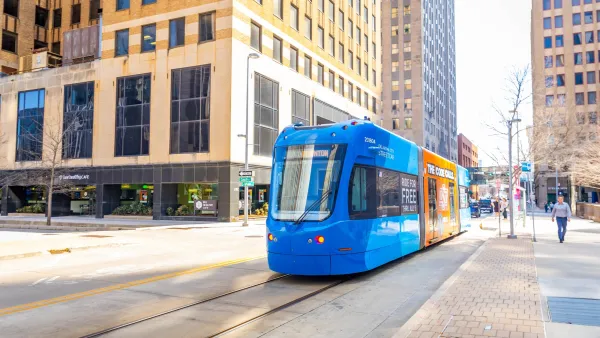
OKC streetcar will stay fare-free after ridership shot up 74%
The downtown streetcar saw a surge in ridership after it eliminated fares in January.
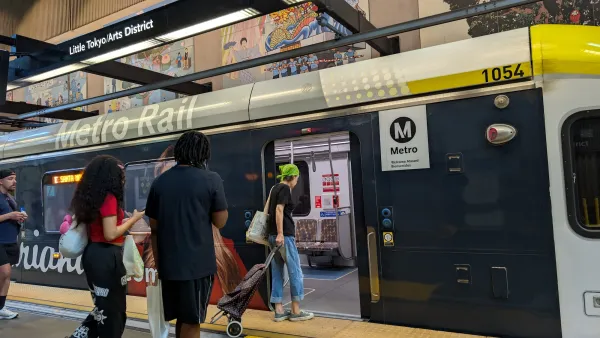
LA mayor wants to make transit fare-free
Los Angeles Mayor Karen Bass says she wants to develop a long-term strategy to make Metro free during her term as chair of the Metro board of directors.
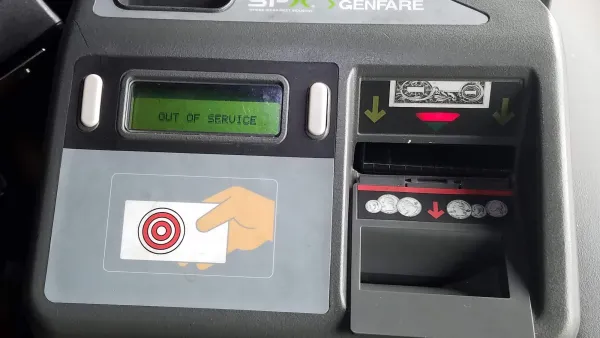
Fisticuffs: The argument FOR fare-free transit
When the barrier to entry drops to zero, magic can happen.

Planetizen Federal Action Tracker
A weekly monitor of how Trump’s orders and actions are impacting planners and planning in America.

California plans to bury El Niño’s downpour
If the state plays its cards right, it may be able to store a billion acre-feet of El Niño’s water in aquifers.

Desperate measures: Advocates weigh draining Lake Powell to fill Colorado River
Draining the reservoir could reduce evaporation losses by a couple hundred thousand acre-feet.

Chicago voters approve permanent festival grounds, penalty for vacant property owners
Currently, major summer and fall festivals take over public parks for weeks at a time, drawing criticism from nearby residents

NYC votes to cut outdoor dining red tape, speed up permitting
New York City also voted to allow the Department of Transportation to begin work on urgent projects before notifying elected officials.

California appears to reject Prop. 45
The proposition would have expanded the projects that qualify for a streamlined environmental review, effectively paring down the California Environmental Quality Act.

FREE Course: Walkable City 1: Why Walkability?
After describing his path towards focusing on walkability as the essence of good planning, Jeff Speck marches through his five principal reasons for making more walkable places.
Reinventing Malls: Planning Alchemy—Turning Gray Fields Into Gold
The course focuses on the opportunities and imperatives that shape reinvention of mall sites.

City of Rosemead
Rutgers University, Edward J. Bloustein School of Planning and Public Policy
One Hundred Miles
Hunter College, City University of New York (CUNY)
The Architects Foundation
University of Cincinnati Online
City of Cambridge
Montrose County
The Pocatello Development Authority