Along a nondescript street in Chicago's gritty West Side, a 1.5-mile stretch of a "historic, industrial artery" has been given a futuristic makeover as the greenest street in the country, and perhaps the world, reports Lori Rotenberk.


In the shadow of the soon-to-be-closed Fisk coal-fired power plant, Chicago officials recently unveiled a reborn stretch of Cermak Road - which has already become a model for streetscape sustainability. "The unlikely marriage of sustainability and this gritty corridor isn't
accidental," says Rotenberk. "The Chicago Department of Transportation has spent two years
and $16 million on this stretch of Cermak, which serves as the southern
gateway to the city's Pilsen neighborhood."
"David Leopold, project manager for the CDOT, says he took everything
that would make a building LEED platinum and built it into the
streetscape. Improvements range from solar-paneled bus stops to native
plants and pavement that sucks up rainwater. Other cities are studying
the project as a blueprint for change."
"CDOT engineers at first planned to give Cermak the usual
not-so-eco-groovy upgrade," explains Rotenberk. "Leopold, however, saw the raw beauty - and
how good it would look in green. Armed with TIF (Tax Increment Financing)
funds and grant money, CDOT set to work, incorporating what Leopold
believes is the greatest number of sustainable elements ever to go into a
single stretch of road."
Read the full story: The greenest mile: Chicago pushes the limits on sustainable streets

South Chicago development proposal would 'upzone' neighborhoods to increase density
The South Chicago Land Use Framework plan also aims to promote pedestrian and transit-oriented developments.
A ‘shady’ deal: Chicagoans rally against planned Amtrak maintenance facility
The $900 million facility would allow Amtrak to maintain entire trains in one building, which the company says will reduce delays.
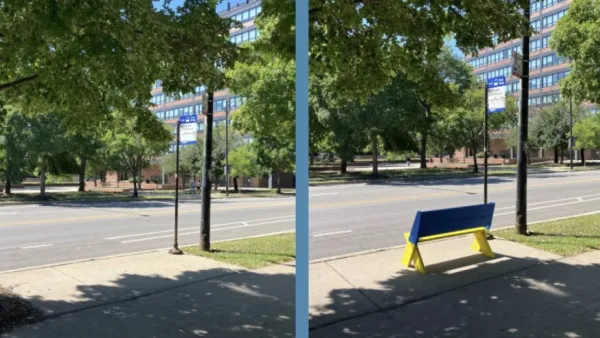
Guerilla urbanists are building DIY bus stop benches in Chicago
The new benches are not officially sanctioned or permitted, but the residents who placed them hope they will be the start of a network of DIY benches across the city.

Planetizen Federal Action Tracker
A weekly monitor of how Trump’s orders and actions are impacting planners and planning in America.

Amtrak, CN end decades-long dispute with eight-year agreement
The new operating agreement establishes an updated framework for the companies to work together, including processes to resolve disputes.

Northwest rail fans eager for Sept. 30 debut of Amtrak’s Airo fleet
Get ready for that new train smell and more seats. But they won’t go faster or run more frequently on the Cascades route in Washington and Oregon.

Brightline Florida files for bankruptcy
The transit company is over $5 billion in debt.

St. Louis Metro to test if single-car trains can reduce operating costs, maintain rider satisfaction
The pilot program will run from October to spring 2027, and begin with one single-car train operating on Metrolink’s Red and Blue lines.

Pennsylvania is building data centers in abandoned mines
Housing data centers in mines provides an alternative to destroying local forests and may spare residents from data centers’ noise and air pollution.

FREE Course: Walkable City 1: Why Walkability?
After describing his path towards focusing on walkability as the essence of good planning, Jeff Speck marches through his five principal reasons for making more walkable places.
Reinventing Malls: Planning Alchemy—Turning Gray Fields Into Gold
The course focuses on the opportunities and imperatives that shape reinvention of mall sites.

City of Thousand Oaks
City of Wisconsin Rapids
Harvard University Graduate School of Design
The Architects Foundation
University of Cincinnati Online
The Pocatello Development Authority
The Urban Renewal Agency of the City of Pocatello