Lissette Valdez looks at two new applications that are helping to blur the lines between digital and hand drawn designs.


New applications may demonstrate that the supposed "death of drawing" in the architectural design process at the hands of computers, as diagnosed by architect Michael Graves in a recent Times op-ed, may be premature.
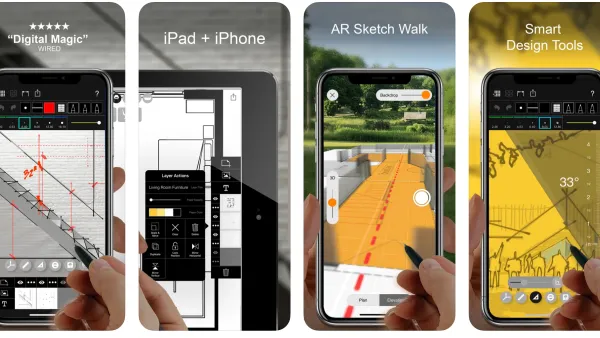
As Valdez notes, "the Trace app from the
Morpholio Project allows users to draw-with a stylus or a finger-over
digitized manilla-yellow tracing paper and sketch graphic concepts
directly onto an iPad screen. Designers can add new layers of Trace,
creating a timeline for the design process and allowing for easy sharing
between colleagues."
The second app, UrbaSee, "turns mobile devices into viewing windows that reveals a digital 3-D
scale model of a project when viewing the original plan through the
screen, tethering the virtual image to the tabletop plan. By using
georeferenced files and the device's GPS, UrbaSee can also display
models on the intended construction location."
Read the full story: Two New Apps Change the Way Designers See Architecture

Best Apps for Urban Planning in 2022
Mobile apps continue to redefine the practices of planning—urban planning, regional planning, transportation planning, community planning, and rural planning included.
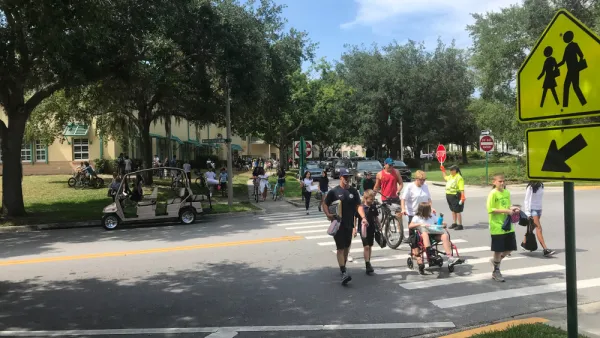
Earn Rewards for Traveling for by Foot, Bike, Bus, or Train
The city of Orlando is partnering with the Miles app.
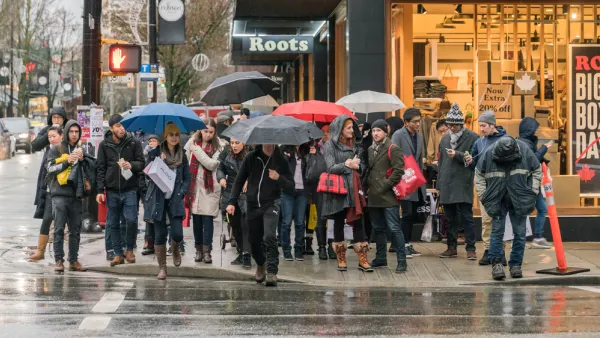
A New App Helps Identify 15-Minute City
The new 15-Minute City App generates maps which show the number of services and activities within a 15 minute walk, and and therefore whether an area can be considered a 15-minute neighborhood.

Planetizen Federal Action Tracker
A weekly monitor of how Trump’s orders and actions are impacting planners and planning in America.

Amtrak, CN end decades-long dispute with eight-year agreement
The new operating agreement establishes an updated framework for the companies to work together, including processes to resolve disputes.

Northwest rail fans eager for Sept. 30 debut of Amtrak’s Airo fleet
Get ready for that new train smell and more seats. But they won’t go faster or run more frequently on the Cascades route in Washington and Oregon.

Brightline Florida files for bankruptcy
The transit company is over $5 billion in debt.

St. Louis Metro to test if single-car trains can reduce operating costs, maintain rider satisfaction
The pilot program will run from October to spring 2027, and begin with one single-car train operating on Metrolink’s Red and Blue lines.

Pennsylvania is building data centers in abandoned mines
Housing data centers in mines provides an alternative to destroying local forests and may spare residents from data centers’ noise and air pollution.

FREE Course: Walkable City 1: Why Walkability?
After describing his path towards focusing on walkability as the essence of good planning, Jeff Speck marches through his five principal reasons for making more walkable places.
Reinventing Malls: Planning Alchemy—Turning Gray Fields Into Gold
The course focuses on the opportunities and imperatives that shape reinvention of mall sites.

City of Thousand Oaks
City of Wisconsin Rapids
Harvard University Graduate School of Design
The Architects Foundation
University of Cincinnati Online
The Pocatello Development Authority
The Urban Renewal Agency of the City of Pocatello