Angie Schmitt reports on a recent study which found that bicycle infrastructure is a good predictor of ridership for bike-share programs.


It's now quite evident that more and more U.S. cities are becoming bicycle-friendly. But for cities and communities that are just starting to invest in bicycle infrastructure, an active debate focuses around the question of whether bicycle lanes would entice more people to participate in a bike-share program, or vice versa.
Despite a report [PDF] by the FHWA suggesting bike-share programs can be successful regardless of the level of bicycle infrastructure in the area, Darren Buck of Bike Pedantic produced his own study which found otherwise. Says Buck, "the bottom line is that even after controlling for a variety of stuff, bike lane volume still emerges as a significant predictor of bikeshare ridership."
Dayton, Ohio is studying establishing a bike-share program, and based on his findings, Buck suggests first investing in more basic bicycle infrastructure before putting all of the city's eggs in one basket.
Read the full story: Bike-Share and Bike Lanes: The Chicken and Egg Debate

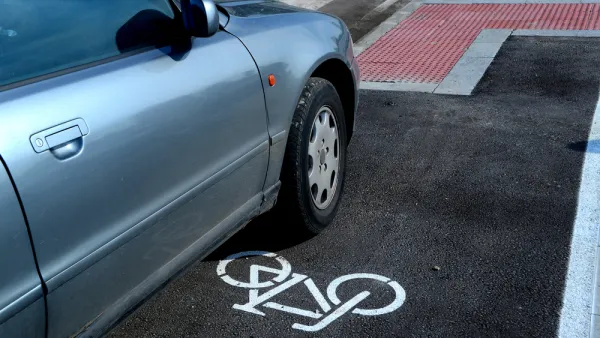
Responding to Bike Improvement Skeptics
Communities can receive high economic returns from appropriate bicycle facility invesments. It is important that advocates have solid arguments for responding to skeptics.
Surveying the Weakest Arguments Against Bike Lanes
According to a recent newspaper editorial, "Egged on by the hardcore enthusiasts, New York City is spending lots of money, confiscating lots of lane-miles and basing its transportation policy on a fantasy." Who knew white paint is so threatening?
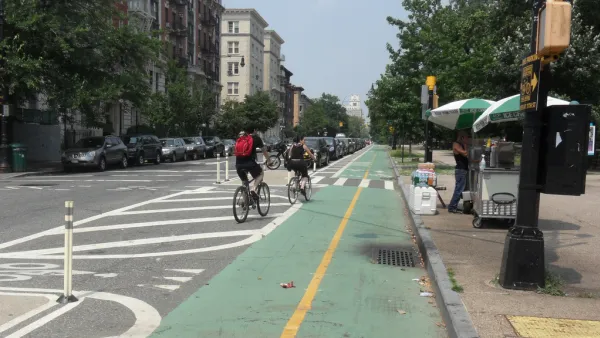
Got Protected Bike Lanes?
While Angie Schmitt doesn't ask this question in her article on the movement behind these lanes, she writes that cities without them "are being left behind". They're popular because they effectively address the #1 reason for not riding: safety

Planetizen Federal Action Tracker
A weekly monitor of how Trump’s orders and actions are impacting planners and planning in America.

The state-sanctioned urbicide of Austin
People don’t kill cities. Freeways do.

US to reduce Colorado River water deliveries to Mexico
A new Colorado Treaty amendment reduces Mexico’s Colorado River water allocation by 250,000 acre feet.

Nation's most wind-powered state turns to coal as data centers increase energy demand
For the first time in decades, Iowa has increased its generation of coal power.

NYC cools commuters with city's first rain garden above a bus stop
New York City officials say the plants in the rain garden can absorb 16 gallons of rainwater during heavy storms.

Brightline West’s future may rely on $6 billion federal loan
The company has until Nov. 2 to make a $400 million equity investment into its proposed high-speed rail line.

FREE Course: Walkable City 1: Why Walkability?
After describing his path towards focusing on walkability as the essence of good planning, Jeff Speck marches through his five principal reasons for making more walkable places.
Reinventing Malls: Planning Alchemy—Turning Gray Fields Into Gold
The course focuses on the opportunities and imperatives that shape reinvention of mall sites.

Eagle County Government
Harvard University Graduate School of Design
Nashville Planning Department
The Architects Foundation
University of Cincinnati Online
The Pocatello Development Authority
The Urban Renewal Agency of the City of Pocatello
Journal of the American Planning Association