With low-income children much more likely to be overweight than their wealthier counterparts, Sarah Parsons looks at six innovative ideas for improving access to healthy foods in low-income communities.


The six areas of innovation highlighted by Parsons include efforts focused on grocery incubators, healthy corner stores, food education, farm-to-school programs, farmers' market coupon programs, and urban farms and food pantries.
The locally and nationally oriented programs she identifies seek to tackle the food desert phenomenon, wherein "More than 20 million people live in food deserts, areas where at least a third of the population lives more than one mile from the nearest grocery store (10 miles in rural areas)," by increasing education, availability, and affordability of healthy food.
Read the full story: Just Deserts: 6 Ways to Bring Good Food to Poor Neighborhoods

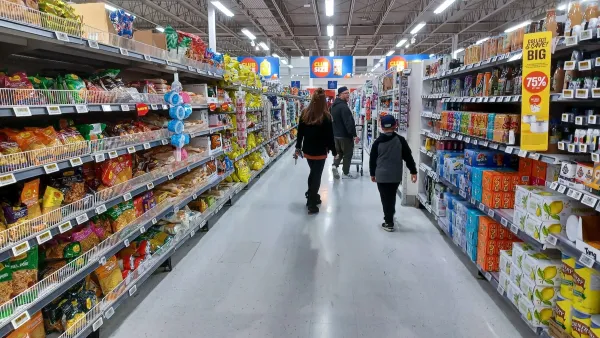
Making economic sense of city-owned grocery stores
Several cities are moving to create municipal stores, but do they actually save low-income households money?
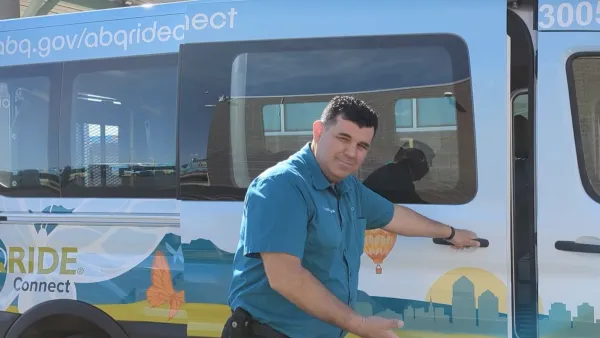
Albuquerque’s Microtransit: A Planner’s Answer to Food Access Gaps
New microtransit vans in Albuquerque aim to close food access gaps by linking low-income areas to grocery stores, cutting travel times by 30 percent and offering planners a scalable model for equity-focused transit.
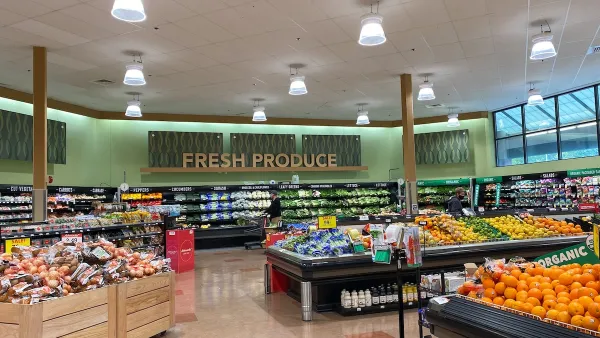
Food Insecurity in LA County Remains Alarmingly High Despite Some Improvement
Food insecurity in Los Angeles County remains above the national average, disproportionately affecting low-income and minority households, with researchers calling for expanded assistance and systemic solutions to address ongoing disparities.

Planetizen Federal Action Tracker
A weekly monitor of how Trump’s orders and actions are impacting planners and planning in America.

‘Going backwards:’ Baltimore mayor, students rally against state's transit funding plan
Maryland's proposed six-year plan provides no funding for Baltimore’s BMORE bus program and reduces its road maintenance funding.

Detroit to transform waterfront with $2.2 billion investment
Developers will convert about 18 acres of unused parking lot space into civic spaces.

'I can't live in this:' Mississippi town besieged by power plant noise
A plant powering Elon Musk’s xAI data centers is subjecting Southaven, Mississippi residents to ceaseless noise.

Battered from federal attacks, Louisiana's offshore wind industry refuses to give up
State Representative Joe Orgeron expressed hope that the state could revitalize its wind industry once President Trump leaves office.

Data center developers are using lawsuits, cash offers to ‘overwhelm’ rural America
Newsrooms in five states worked together to uncover the tactics big tech developers use to buy land from reluctant communities.

FREE Course: Walkable City 1: Why Walkability?
After describing his path towards focusing on walkability as the essence of good planning, Jeff Speck marches through his five principal reasons for making more walkable places.
Reinventing Malls: Planning Alchemy—Turning Gray Fields Into Gold
The course focuses on the opportunities and imperatives that shape reinvention of mall sites.

One Hundred Miles
County of Mendocino
planning NEXT
The Architects Foundation
University of Cincinnati Online
Montrose County
Northern Illinois Transit Authority (NITA)
The Pocatello Development Authority