Dr. Matthew Green surveys the rich 360-year history of London's politically provocative and intellectually charged coffeehouses, which "inspired brilliant ideas and discoveries that would make Britain the envy of the world."


While the first coffeehouse is thought to have been "opened by an eccentric Greek named Pasqua Roseé in 1652", it wasn't long before "contemporaries counted over 3,000 coffeehouses in London" by the beginning of the 1700s, despite "Charles II's attempt to crush them in 1675."
Coffee wasn't the only thing brewing at the city's new cafes. According to Dr. Green, "Coffeehouses brought people and ideas together; they inspired brilliant ideas and discoveries that would make Britain the envy of the world. The first stocks and shares were traded in Jonathan's coffeehouse by the Royal Exchange (now a private members' club); merchants, ship-captains, cartographers, and stockbrokers coalesced into Britain's insurance industry at Lloyd's on Lombard Street (now a Sainsbury's); and the coffeehouses surrounding the Royal Society galvanized scientific breakthroughs. Isaac Newton once dissected a dolphin on the table of the Grecian Coffeehouse."
Apparently, one of the only things that could not be found in the cafes of the day was a good cup of coffee, which Dr. Green thinks is the only advantage today's incarnations have over their historic brethren.
"The flavours found in the latest incarnation of London cafes are undoubtedly superior, but the vanishing opportunities for intellectual engagement and spirited debate with strangers have been quite a trade-off."
Read the full story: London cafes: the surprising history of London's lost coffeehouses

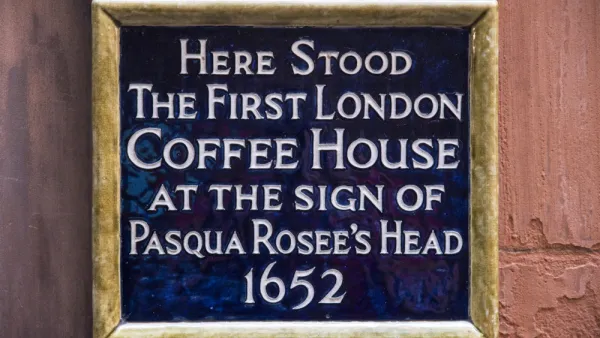
When Coffee Came to London (Not a Starbuck's Story)
Walkability makes markets! Scott Bernstein tells the Lloyds of London story from the urbanist's perspective.
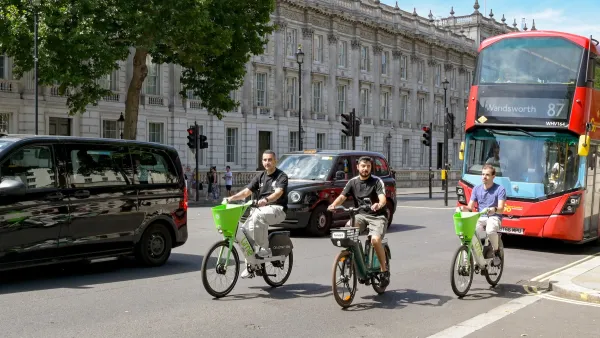
Bike use in London grew by 43% since 2019, but car use remains roughly the same
The city's efforts to reduce car use have stalled despite ambitious programs like congestion pricing and low-traffic neighborhoods.

Beavers save London Tube station from flooding
A small group of beavers is increasing biodiversity and creating cost-free flood mitigation infrastructure.

Planetizen Federal Action Tracker
A weekly monitor of how Trump’s orders and actions are impacting planners and planning in America.

The state-sanctioned urbicide of Austin
People don’t kill cities. Freeways do.

Colorado’s Largest Data Center Could Rise Next to Homes — Without a Public Hearing
The proposed campus would consume 11 times the power of Denver International Airport; as it has across the country, opposition mounts.

Judges permit Denver to divert 77,000 acre feet from the Colorado River for reservoir expansion
Overuse and climate change have caused the Colorado River’s water levels to plummet.
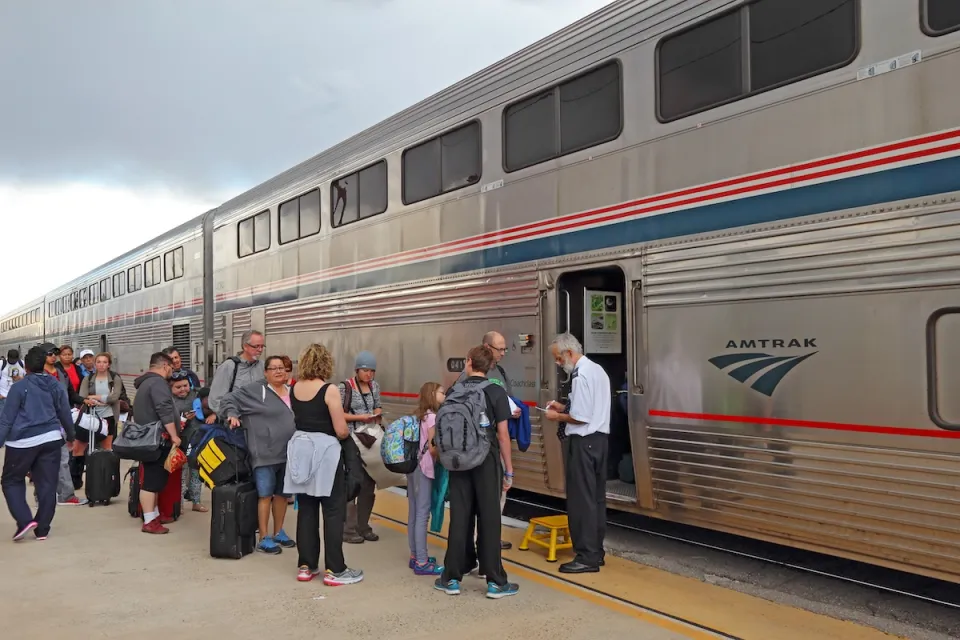
Amtrak, CN end decades-long dispute with eight-year agreement
The new operating agreement establishes an updated framework for the companies to work together, including processes to resolve disputes.

Raised interest rates may kill financially vulnerable construction projects
The chief economist at ConstructConnect warns that if construction project owners are negatively impacted by the raised rates, it could result in delayed payments to contractors.

FREE Course: Walkable City 1: Why Walkability?
After describing his path towards focusing on walkability as the essence of good planning, Jeff Speck marches through his five principal reasons for making more walkable places.
Reinventing Malls: Planning Alchemy—Turning Gray Fields Into Gold
The course focuses on the opportunities and imperatives that shape reinvention of mall sites.

KFH Group Inc.
Greater Baltimore Committee
Eagle County Government
The Architects Foundation
University of Cincinnati Online
The Pocatello Development Authority
The Urban Renewal Agency of the City of Pocatello