Recognizing that the overdue transportation reauthorization bill would not pass Congress by Sept. 30, resulting in the expiration of the 18.4 cent gas tax, President Obama called upon Congress to pass a 'clean', extension of undetermined length.


The stakes are enormous. Thousands of current road and transit construction jobs are on the line - similar to the airport construction workers that stopped working when the FAA bill wasn't extended - except this time the stakes are much greater. With major differences between the House and Senate transportation reauthorization bills unlikely to be settled by Sept. 30, Obama asked for the extension to gain time for Congress to agree on a reauthorization bill that was due two years ago.
"While his calls for an extension of the current bill are increasingly in line with the growing realization that there is no possible way of passing a new bill before the September 30 extension, Obama did look beyond the immediate fix. "When Congress is back next week, in addition to passing these clean extensions to prevent any halt on existing work, we're going to have to have a serious conversation in this country about making real, lasting investments in our infrastructure - from better ports to a smarter electric grid, from high-speed internet to high-speed rail."
"His mention of Congress inability to pass a new FAA bill highlighted another reason why significant action on a new bill will be impossible before the end of this month: Congress' most recent extension of the aviation reauthorization expires first, and the chambers will busy themselves fighting over a few million aviation dollars before the September 16 deadline for that bill, before they can get around to arguing about surface transportation."
Thanks to Streetsblog New York City
Read the full story: President Obama Pushes Congress For a Clean Extension of Transpo Bill
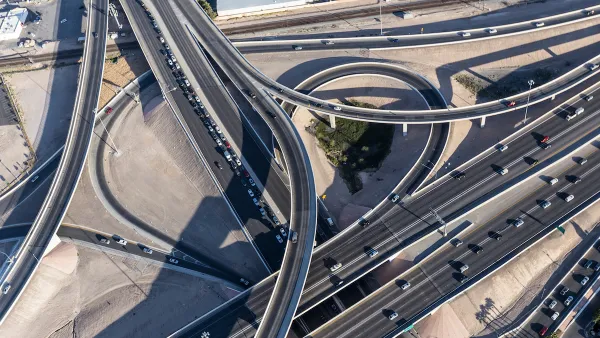
Restoring Solvency to the Highway Trust Fund
The Highway Trust Fund, the nation's source of road and bridge funding, went bankrupt in 2008 and has since relied on transfers from the General Fund to supplement fuel taxes. Republican Senators have proposed a new funding source: an EV fee.
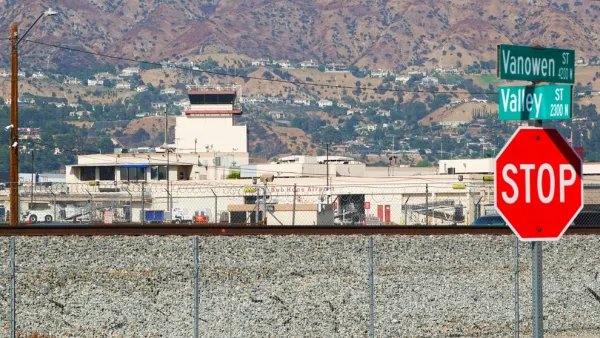
Hollywood-Burbank Airport’s Replacement Terminal Project Moves Forward
Bud Ovrom, one of Burbank’s Commissioners on the Burbank-Glendale-Pasadena Airport Authority, gives an update on the Airport’s capital improvement plans. Ovrom also opines on the challenges of federal preemption over air transport in Los Angeles.
Bipartisan Infrastructure Bill Heads to the House: Details and Reactions From the Planning World
Planetizen gathered explainer posts and advocacy responses that continue to shine a light on the Infrastructure Investment and Jobs Act, approved by the U.S. Senate earlier this month.

Planetizen Federal Action Tracker
A weekly monitor of how Trump’s orders and actions are impacting planners and planning in America.

California plans to bury El Niño’s downpour
If the state plays its cards right, it may be able to store a billion acre-feet of El Niño’s water in aquifers.

Desperate measures: Advocates weigh draining Lake Powell to fill Colorado River
Draining the reservoir could reduce evaporation losses by a couple hundred thousand acre-feet.

Chicago voters approve permanent festival grounds, penalty for vacant property owners
Currently, major summer and fall festivals take over public parks for weeks at a time, drawing criticism from nearby residents

NYC votes to cut outdoor dining red tape, speed up permitting
New York City also voted to allow the Department of Transportation to begin work on urgent projects before notifying elected officials.

California appears to reject Prop. 45
The proposition would have expanded the projects that qualify for a streamlined environmental review, effectively paring down the California Environmental Quality Act.

FREE Course: Walkable City 1: Why Walkability?
After describing his path towards focusing on walkability as the essence of good planning, Jeff Speck marches through his five principal reasons for making more walkable places.
Reinventing Malls: Planning Alchemy—Turning Gray Fields Into Gold
The course focuses on the opportunities and imperatives that shape reinvention of mall sites.

City of Rosemead
Rutgers University, Edward J. Bloustein School of Planning and Public Policy
One Hundred Miles
Hunter College, City University of New York (CUNY)
The Architects Foundation
University of Cincinnati Online
City of Cambridge
Montrose County
The Pocatello Development Authority