Utility boxes are cluttering city streets all over the world. But they're not going away, and cities should start to try to find new ways to blend them into the urban fabric, according to this article from the San Francisco Chronicle.


John King writes that the large boxes that hold utility equipment require more thought from city officials and the public.
"San Francisco and other cities instead need to accept the clutter for what it is - part of today's landscape - and work to make it as unobtrusive as possible.
The challenge is particularly daunting in a dense city like ours, where some older neighborhoods lack the street trees and shrubbery that can shield things like utility boxes from sight.
In such districts, there's no obvious place to hide the "telecommunications cabinets" that AT&T wants to install as part of an effort to bring fiber-optic service into homes and businesses. The cabinets are 48 inches tall, 52 inches wide and 26 inches deep."
Read the full story: Site utility boxes in SF by design, not chance

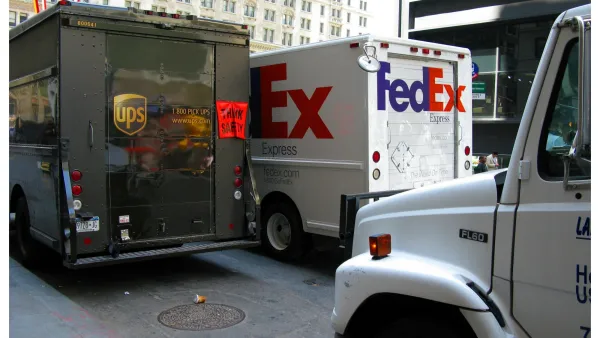
How Street Configuration Impacts Equity
With urban pollution and traffic violence disproportionately affecting communities of color, better management of public space and streets could improve equity in cities.
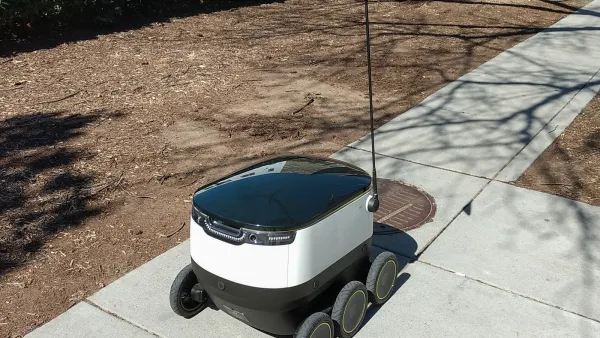
Are Delivery Robots on Their Way to a Neighborhood Near You?
Amazon and FedEx are developing bots that would travel on city streets and sidewalks. The companies are also working behind the scenes on legislative efforts that would help them deploy the technology in the future.
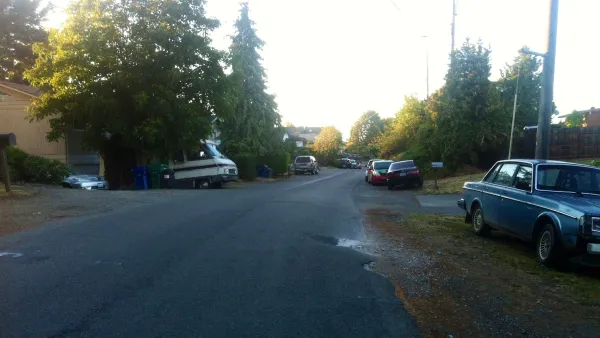
Should a Residential Street Ever Lack Sidewalks?
You're probably familiar with the sight of a long, quiet residential street unadorned by sidewalks, pushing pedestrians, pets, and kids on bikes onto the street. Is there ever a good reason for such a typology?

Planetizen Federal Action Tracker
A weekly monitor of how Trump’s orders and actions are impacting planners and planning in America.

‘Going backwards:’ Baltimore mayor, students rally against state's transit funding plan
Maryland's proposed six-year plan provides no funding for Baltimore’s BMORE bus program and reduces its road maintenance funding.

Detroit to transform waterfront with $2.2 billion investment
Developers will convert about 18 acres of unused parking lot space into civic spaces.

'Texas' Main Street' gets a multimodal glow-up
Congress Avenue in Austin is undergoing a major renovation to receive bike lanes and upgraded pedestrian infrastructure.

The Massachusetts town that didn't get the T wants a re-do
Fifty years ago, Arlington said no to a stop on the MBTA Red Line connecting it to Boston. Now, the town wants a second chance.

After $600,000 wasted, CA high-speed rail board limits CEO’s power
Ian Choudri will no longer be able to sign, change or manage contracts.

FREE Course: Walkable City 1: Why Walkability?
After describing his path towards focusing on walkability as the essence of good planning, Jeff Speck marches through his five principal reasons for making more walkable places.
Reinventing Malls: Planning Alchemy—Turning Gray Fields Into Gold
The course focuses on the opportunities and imperatives that shape reinvention of mall sites.

One Hundred Miles
County of Mendocino
planning NEXT
The Architects Foundation
University of Cincinnati Online
Montrose County
Northern Illinois Transit Authority (NITA)
The Pocatello Development Authority