In an attempt to lure more employees of high-tech companies to use public transit, the Santa Clara County Valley Transportation Authority has proposed buses with wi-fi, reclining seats, and even a concierge to coordinate dry-cleaning services.


From Good Magazine:
The idea is that the Silicon Valley commuter is "a different animal. This (is) a person who wouldn't give up convenience of a car unless they could trade it in for something even more useful. They knew that they'd have to make public transportation look like a tech-friendly luxury-a service that could help them be even more efficient during their commute. Brute Labs proposed perks like reserved seating, wi-fi, gourmet snacks, and a concierge that could coordinate dry cleaning and postal services."
Also, writes Alissa Walker, "they proposed several changes to the routes themselves, creating more of a hub-and-spoke system that would get employees nearer to major tech campuses, where they could then ride their bikes the rest of the way. The routes for these changes, they said, could come from tech companies like Google, who could analyze transit and ridership data and help maximize efficiency."
Read the full story: Silicon Valley's Public Transit Will Become More Tech-Friendly

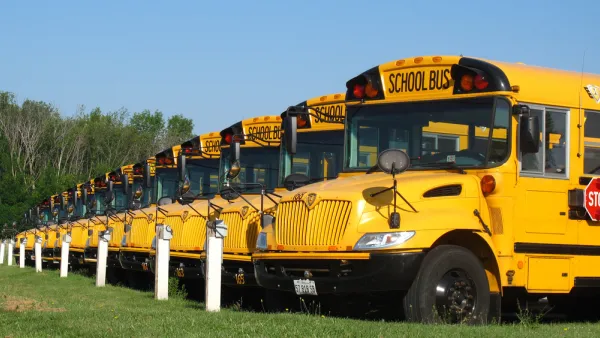
Transportation Start-up Fails for Being Too Public-Minded
Night School, planning to use school bus fleets to supplement late-night Bay Area transit, lost the regulatory fights Uber and Lyft handily won.

Planetizen Federal Action Tracker
A weekly monitor of how Trump’s orders and actions are impacting planners and planning in America.

California plans to bury El Niño’s downpour
If the state plays its cards right, it may be able to store a billion acre-feet of El Niño’s water in aquifers.

Chicago breaks ground on $3 billion megadevelopment
The new neighborhood, titled Foundry Park, will one day host 3,700 residences.

This road in NYC is infamously dangerous — and Mamdani can't fix it
New York City's Ocean Parkway is known for reckless driving, but the power to implement safety measures lies with the state rather than the city.

One of Denver’s busiest corridors to gain BRT
The project will span 18 miles and contain 74 bus rapid transit stations.

275,000 bus trips are at stake on Seattle's ballot
If passed, the Seattle Transit Measure would trigger a 0.3% sales tax and raise an average of $138 million per year to maintain and expand Seattle’s bus services.

FREE Course: Walkable City 1: Why Walkability?
After describing his path towards focusing on walkability as the essence of good planning, Jeff Speck marches through his five principal reasons for making more walkable places.
Reinventing Malls: Planning Alchemy—Turning Gray Fields Into Gold
The course focuses on the opportunities and imperatives that shape reinvention of mall sites.

City of Rosemead
Rutgers University, Edward J. Bloustein School of Planning and Public Policy
One Hundred Miles
Hunter College, City University of New York (CUNY)
The Architects Foundation
University of Cincinnati Online
City of Cambridge
Montrose County
The Pocatello Development Authority