The U.S. spends far less on its infrastructure than many other countries, which some say will hurt the nation's competitiveness. The U.S. needs to build infrastructure, but as Neal Peirce argues, with a few caveats.


"[T]he United States falls behind in global competition for strong and reliable infrastructure. We're willing to spend $100 billion a year on a debatable venture like the Afghanistan conflict, but expend a mere 2 percent of our Gross Domestic Product on infrastructure while China expends 9 percent and the European Union 5 percent. Other rising economic powers - India, Brazil, Mexico and others - are also investing significantly more than the U.S. - leaving us on a path, says Sen. John Kerry (Mass.) "towards a secondary competitive status."
But - we need to add a big "but." In fact, several buts."
Peirce argues that the nation needs to align its priorities about which projects even need to be built, and which should be built first.
Read the full story: New Infrastructure Strategy: Yes, Build — But

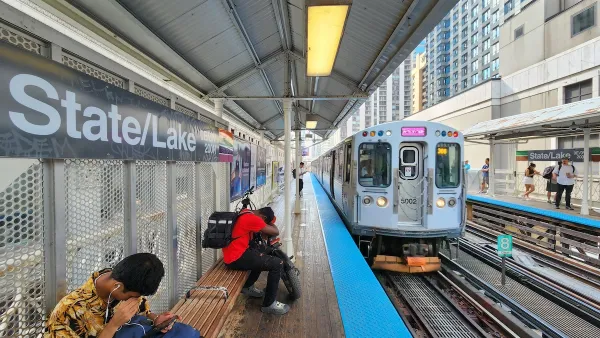
Trump Freezes $2.1 Billion for Chicago Transit and Infrastructure Projects
The administration plans to revoke federal funding over what it calls “discriminatory, illegal, and wasteful contracting practices.”
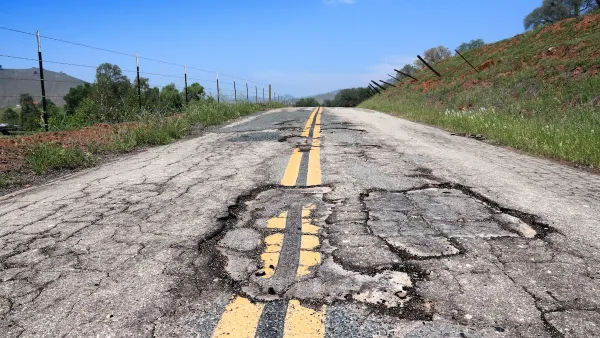
Engineers Gave America's Roads an Almost Failing Grade — Why Aren't We Fixing Them?
With over a trillion dollars spent on roads that are still falling apart, advocates propose a new “fix it first” framework.
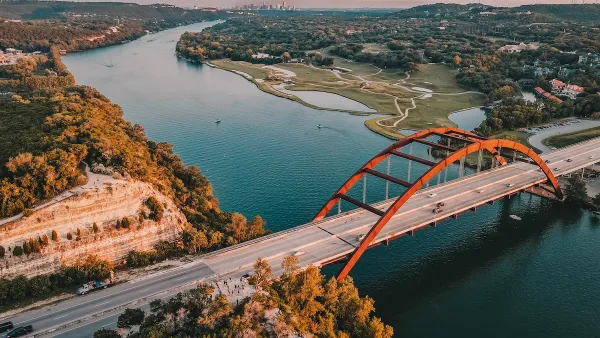
Texas Infrastructure Gets a ‘C’
The American Society of Civil Engineers rates states in 16 categories related to transportation, water, waste management, parks, and more.

Planetizen Federal Action Tracker
A weekly monitor of how Trump’s orders and actions are impacting planners and planning in America.

Amtrak, CN end decades-long dispute with eight-year agreement
The new operating agreement establishes an updated framework for the companies to work together, including processes to resolve disputes.

Judges permit Denver to divert 77,000 acre feet from the Colorado River for reservoir expansion
Overuse and climate change have caused the Colorado River’s water levels to plummet.

NYC DOT wants faster, more permanent street upgrades
The city is examining ways to build more concrete infrastructure without getting entangled in 'decades-long' projects.

'Something we’ve never seen before:' rising utility rates could strain city finances nationwide
Data centers, climate change and other factors have caused utility rates in the United States to increase by 38% since 2020.

Trump to overrule local leaders, lease millions of acres of America’s Pacific Island territories’ seafloors to mining companies
International law says that the Indigenous people of America’s territories have a right to prior and informed consent regarding projects that impact their countries.

FREE Course: Walkable City 1: Why Walkability?
After describing his path towards focusing on walkability as the essence of good planning, Jeff Speck marches through his five principal reasons for making more walkable places.
Reinventing Malls: Planning Alchemy—Turning Gray Fields Into Gold
The course focuses on the opportunities and imperatives that shape reinvention of mall sites.

Harvard University Graduate School of Design
KFH Group Inc.
Greater Baltimore Committee
The Architects Foundation
University of Cincinnati Online
The Pocatello Development Authority
The Urban Renewal Agency of the City of Pocatello