Streetcars -- a relatively old transportation technology -- have more traction than high tech solutions like monorails in the modern age of mobility. Want proof? Just look at Disneyland, says Tom Vanderbilt.


Writing for Slate, Vanderbilt tracks the rise of streetcars as urban transportation solution -- and draws a comparison to the transportation obsession of Walt Disney that can be seen in his theme parks today.
"The monorail-which must have looked to Disney and the world like the transportation of the future in the 1950s-is now, to many, considered a historical footnote, a relic of World Expos or, at best, an automated ride between airport terminals. America's highest-profile monorail project, the expansion of Seattle's line, was plagued by cost overruns and funding gaps, and was finally dissolved in 2005 (costing taxpayers $125 million). The Las Vegas monorail has filed for bankruptcy. At the same time, those retro streetcars, which Disney himself rode in Kansas City in the early 20th century and which must have seemed to him part of a vanishing past, are returning (or may soon return) to any number of American cities, including Washington, D.C.; Cincinnati' Tucson; Atlanta; Dallas; St. Louis; and Salt Lake City."
Read the full story: Streetcars vs. Monorails

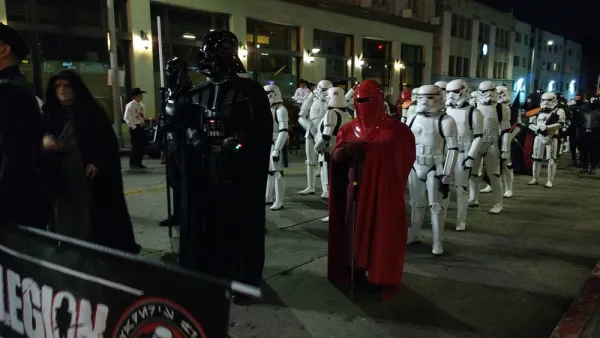
Friday Eye Candy: Renderings for the New Star Wars Theme Park
Fans of Disney theme parks and fans of Star Wars had a big week.
Plans Advance for Orange County Streetcar
The $289 million streetcar would serve the cities of Santa Ana (population 329,00), county seat and second densest in California after San Francisco, and Garden Grove (population 170,000) on a 4.1-mile route. Service could begin 2020.
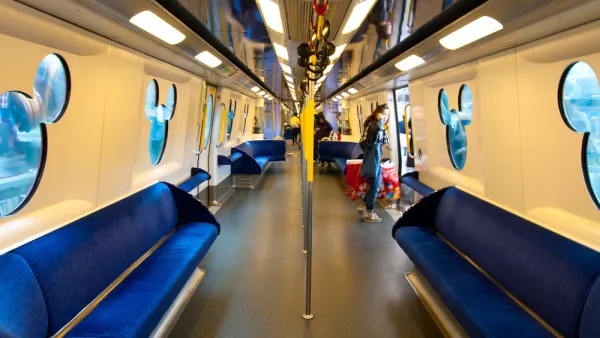
Disney's Political Donations Increase as Anaheim Considers a Streetcar
Disney says its supports pro-business candidates for City Council in Anaheim, but some see a proposed streetcar as the connection behind an uptick in the company's local political support.

Planetizen Federal Action Tracker
A weekly monitor of how Trump’s orders and actions are impacting planners and planning in America.

California plans to bury El Niño’s downpour
If the state plays its cards right, it may be able to store a billion acre-feet of El Niño’s water in aquifers.

Chicago breaks ground on $3 billion megadevelopment
The new neighborhood, titled Foundry Park, will one day host 3,700 residences.

This road in NYC is infamously dangerous — and Mamdani can't fix it
New York City's Ocean Parkway is known for reckless driving, but the power to implement safety measures lies with the state rather than the city.

One of Denver’s busiest corridors to gain BRT
The project will span 18 miles and contain 74 bus rapid transit stations.

275,000 bus trips are at stake on Seattle's ballot
If passed, the Seattle Transit Measure would trigger a 0.3% sales tax and raise an average of $138 million per year to maintain and expand Seattle’s bus services.

FREE Course: Walkable City 1: Why Walkability?
After describing his path towards focusing on walkability as the essence of good planning, Jeff Speck marches through his five principal reasons for making more walkable places.
Reinventing Malls: Planning Alchemy—Turning Gray Fields Into Gold
The course focuses on the opportunities and imperatives that shape reinvention of mall sites.

City of Rosemead
Rutgers University, Edward J. Bloustein School of Planning and Public Policy
One Hundred Miles
Hunter College, City University of New York (CUNY)
The Architects Foundation
University of Cincinnati Online
City of Cambridge
Montrose County
The Pocatello Development Authority