RThe impact of cities is spreading beyond local and even national borders, argues Robert Neuwirth in this piece from What Matters.


Neuwirth discusses the rapid growth of mega-cities like Lagos, Nigeria, and how these cities will continue to grow and interact with an increasingly democratized world.
"The world is moving beyond mega-cities to meta-cities. According to the United Nations' 2010/2011 State of the World's Cities report, these cities of the future will not be single political entities but will sprawl across geographic, regional, and national boundaries.
...Most of the urban centers in these fast growing meta-cities have one very visible trait in common. Each is ringed by dense, ever-expanding squatter communities where large portions of the city's population-and economy-reside. Squatter communities and shantytowns are now home to 800 million people and are projected to grow by 16,000 people every day for the foreseeable future. In the cities of the future, these jury-rigged communities will become normal urban neighborhoods. And places like Ladipo, which make up the "informal" economy, will create the jobs of the future. Already, half the workers of the world-1.8 billion people-are working off the books, in unauthorized street markets and other businesses that are not registered, not licensed, and not counted in official employment statistics. The number of people in these firms will grow to two-thirds of the global workforce by 2020, according to The Organisation for Economic Co-operation and Development. This new urban world will be dominated by massive do-it-yourself street markets and self-built neighborhoods."
Read the full story: In the markets of the meta city

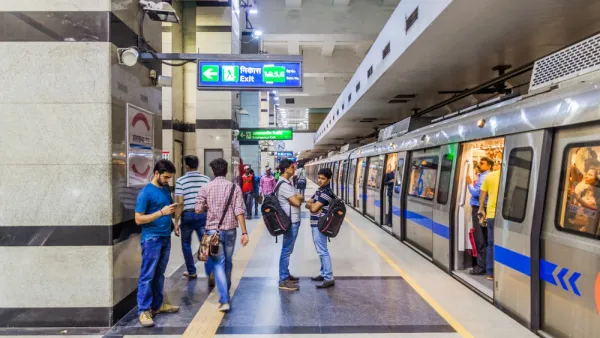
The Fastest Growing Cities in the World
None of the fastest growing cities in the world are found in North or South America.
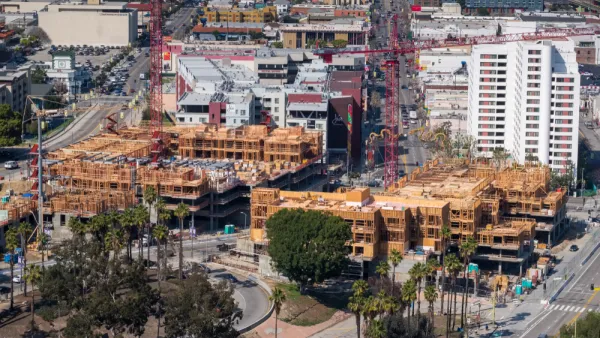
Census Data Reveal Increasing Density in the U.S.—Reversing a Two-Decade Trend
The New York Times is calling 2010 to 2020 the "Downtown Decade."

The 2010s Didn't Live Up to Potential as the 'Decade of the City'
The renaissance predicted for urban areas in the United States started strong during the 2010s but slowed in the years leading up to a potentially generation defining pandemic.

Planetizen Federal Action Tracker
A weekly monitor of how Trump’s orders and actions are impacting planners and planning in America.

Amtrak, CN end decades-long dispute with eight-year agreement
The new operating agreement establishes an updated framework for the companies to work together, including processes to resolve disputes.

Judges permit Denver to divert 77,000 acre feet from the Colorado River for reservoir expansion
Overuse and climate change have caused the Colorado River’s water levels to plummet.

Idaho may see an 18% drop in federal surface transit funding — the largest estimated cut in the US
Transit systems in rural communities are much more reliant on federal funding to provide their services.

How ‘post-disaster gentrification’ alters neighborhoods after natural calamities
After hurricanes, fires or other calamities, the original residents of a community are often replaced by younger, wealthier residents.

Maryland local governments examine if they should have more power to raise property taxes
Maryland’s housing market is out of reach for the majority of moderate-income residents.

FREE Course: Walkable City 1: Why Walkability?
After describing his path towards focusing on walkability as the essence of good planning, Jeff Speck marches through his five principal reasons for making more walkable places.
Reinventing Malls: Planning Alchemy—Turning Gray Fields Into Gold
The course focuses on the opportunities and imperatives that shape reinvention of mall sites.

Harvard University Graduate School of Design
KFH Group Inc.
Greater Baltimore Committee
The Architects Foundation
University of Cincinnati Online
The Pocatello Development Authority
The Urban Renewal Agency of the City of Pocatello