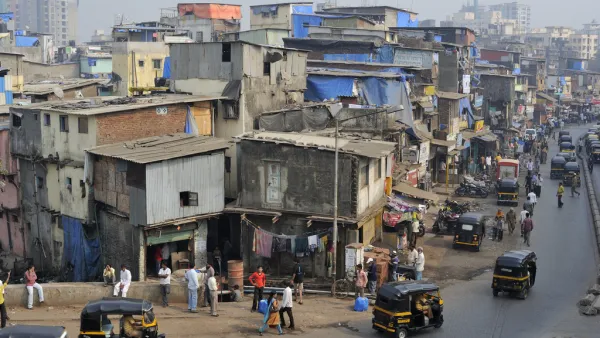
With not much undeveloped land left in Mumbai for fresh developments, the city’s real estate growth will largely be propelled by the success of its many slum redevelopment schemes, according to a recent study.


52% of the upcoming realty projects in Mumbai, spread over 8,600 acres, are slum redevelopment schemes, brokerage Anand Rathi Research said in a 4 October report. Another 18% will be factory and mill land projects, 4% will be redevelopment of old buildings, and 3%, urban slum renewal schemes. These figures are indicative of the tendency toward brownfield development in one the worlds largest cities.
It is hoped the schemes will rehabilitate families living in almost 300,000 hutments this year, and also open up substantial space for residential and commercial development.
According to the Anand Rathi report, Mumbai, India's densest city with 27,000 people per sq. km, would need an additional 324 million sq. ft of residential developments by 2021. But of the 468 sq. km in Mumbai, only 90 sq. km is actual developable land and the rest are non-revenue generating areas such as forest land, according to a survey by Pankaj Kapoor, chief executive of Mumbai-based real estate research firm Liases Foras and architect Hafeez Contractor.
"A huge amount of space can be freed through slum redevelopment but that needs to be incentivised by giving developers more construction rights," said Kapoor.
Read the full story: Slum Redevopment to Propoel Mumbai's Real Estate Growth
Allowing Higher Density to Fix Slums
Despite its economic dynamism, Mumbai is known for a lack of adequate housing. Citywide increases to maximum Floor Space Indices (i.e., Floor Area Ratios) will increase living space per resident, provided the right redevelopment takes place.
It's Time to Turn Back the Clock on Slum Upgrading
In the 1970s and 80s, bottom-up slum upgrading schemes inspired by the ideas of British-born architect James F.C. Turner benefited tens of thousands of residents of Mumbai. Current policies incentivize top-down redevelopment, harming slum dwellers.
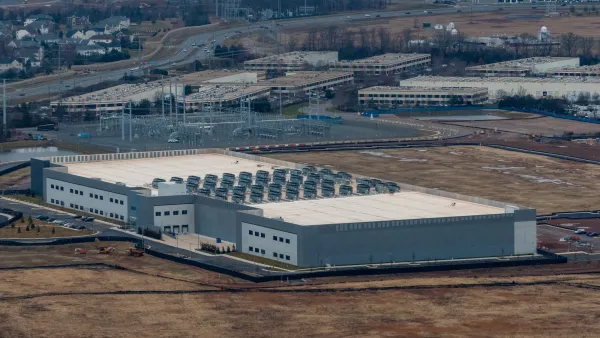
Data center developer offers over $4M per acre to buy out homeowners
Data center builders are outbidding home builders for land, prompting concerns about competition with housing.

Planetizen Federal Action Tracker
A weekly monitor of how Trump’s orders and actions are impacting planners and planning in America.

California plans to bury El Niño’s downpour
If the state plays its cards right, it may be able to store a billion acre-feet of El Niño’s water in aquifers.

Desperate measures: Advocates weigh draining Lake Powell to fill Colorado River
Draining the reservoir could reduce evaporation losses by a couple hundred thousand acre-feet.

US buildings threatened, destroyed by fires set to triple by 2060
Researchers found a high fire risk for socioeconomically vulnerable neighborhoods in the American West.

LA residents may be allowed to paint their own crosswalks
Councilwoman Katy Yaroslavsky put out a motion instructing the Los Angeles Department of Public Transportation to study the feasibility of allowing volunteers to paint crosswalks.

Dallas moves to overhaul its zoning code
The city's zoning reform will allow more multi-family and mixed-use developments.

FREE Course: Walkable City 1: Why Walkability?
After describing his path towards focusing on walkability as the essence of good planning, Jeff Speck marches through his five principal reasons for making more walkable places.
Reinventing Malls: Planning Alchemy—Turning Gray Fields Into Gold
The course focuses on the opportunities and imperatives that shape reinvention of mall sites.

City of Rosemead
Rutgers University, Edward J. Bloustein School of Planning and Public Policy
One Hundred Miles
Hunter College, City University of New York (CUNY)
The Architects Foundation
University of Cincinnati Online
City of Cambridge
Montrose County
The Pocatello Development Authority