New York City has garnered new powers to institute cleanups on moderately contaminated sites, which could help revive hundreds of spots in the city that have sat empty or unused for years.


"[T]he city signed an agreement with the state Department of Environmental Conservation that gives the city authority over light to moderate cleanups. It is the first site in the program and is slated to hold a seven-story affordable housing complex, called Pelham Parkway Towers.
New York State has had a similar program in place since 2003, and it will continue to oversee the truly toxic, Superfund-caliber cleanups. The state also has tax credits at its disposal that the city does not. Until now, most light to moderate cleanups in the city were done either at the developer's discretion or not at all."
There are at least 1,000 brownfield sites located in the city, according to this article from The Architect's Newspaper.
Read the full story: NYC Turns Toxic Assets Into Developer Gold

A Natural Way to Green Brownfields
With more than 11,000 acres of brownfield sites in New York City sitting underused due to contamination, officials there want to get things cleaned up and reused. Urban designer Kaja Kühl offers this field guide to small-scale bioremediation to help.
New York City Brownfields Program Clean But Flawed
A citywide brownfields recovery program in New York City has been cleaning up polluted sites, allowing new developments to move in on formerly vacant areas. But some worry the program is fueling gentrification.
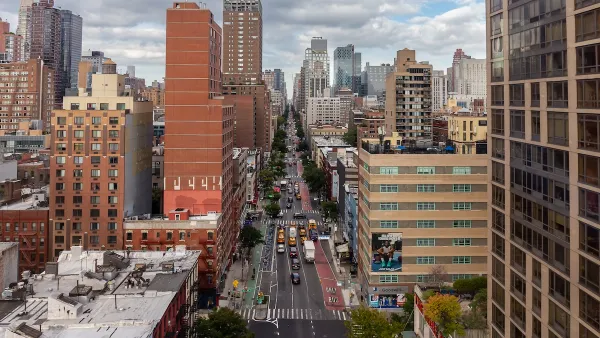
See the 12 communities on New York City’s affordable housing naughty list
The Upper East and West Sides, Elmhurst, and Bayside are among the communities that have built little affordable housing over the past five years, and now will see certain projects fast-tracked under new city rules.

Planetizen Federal Action Tracker
A weekly monitor of how Trump’s orders and actions are impacting planners and planning in America.

‘Going backwards:’ Baltimore mayor, students rally against state's transit funding plan
Maryland's proposed six-year plan provides no funding for Baltimore’s BMORE bus program and reduces its road maintenance funding.

Detroit to transform waterfront with $2.2 billion investment
Developers will convert about 18 acres of unused parking lot space into civic spaces.

Newsom vetoes high-speed rail supervision bill after agency receives condemnatory audit
The audit found the CHSRA approved almost $600,000 in unallowable travel expenses.

Nation sees first electric plane-boat hybrid take off in public demo
The Viceroy Seaglider can fly at speeds of 180mph for up to 180 miles.

One of nation’s poorest counties to receive $6 billion data center
The developers estimate the project will create 200 permanent jobs and 1,000 temporary construction jobs.

FREE Course: Walkable City 1: Why Walkability?
After describing his path towards focusing on walkability as the essence of good planning, Jeff Speck marches through his five principal reasons for making more walkable places.
Reinventing Malls: Planning Alchemy—Turning Gray Fields Into Gold
The course focuses on the opportunities and imperatives that shape reinvention of mall sites.

City of Thousand Oaks
City of Wisconsin Rapids
Harvard University Graduate School of Design
The Architects Foundation
University of Cincinnati Online
Northern Illinois Transit Authority (NITA)
The Pocatello Development Authority
The Urban Renewal Agency of the City of Pocatello