Researchers in Europe are experimenting with a new kind of traffic light that better responds to traffic by monitoring the actual amount of cars on the road and estimating how long lights should stay green.


"Stefan Lämmer at the Dresden University of Technology and Dirk Helbing of ETH Zurich made a computer model of Dresden's roads, in which the traffic streams flowed and merged not unlike water going through pipes. They then equipped the virtual traffic lights on those roads with sensors that monitored the local traffic flow. Using this input, each light calculated the expected number of immediately oncoming vehicles, and figured out how long it would have to stay green in order to let that traffic through."
The researchers found that these "self-regulating" traffic lights could reduce the amount of time spent waiting at traffic signals by 10%-30%.
Read the full story: Self-regulating traffic lights would improve vehicle flow

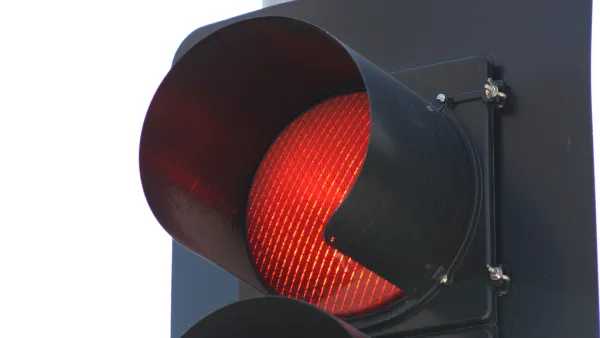
Slot-Based Design Could Eliminate Traffic Lights
An MIT study determined that traffic lights, and their inefficiencies, could be eliminated if all vehicles were equipped to regulate their speed and "batch" together as they approach intersections.
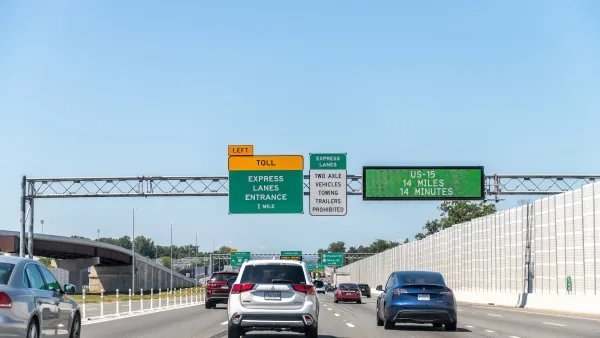
Congestion Costing Reality Check, Part 2: A congestion costing critique
There are good reasons to be skeptical of highway industry claims that traffic congestion is a growing problem. Their analysis is often incomplete and biased. Let’s pull back the curtain on some major congestion cost studies.
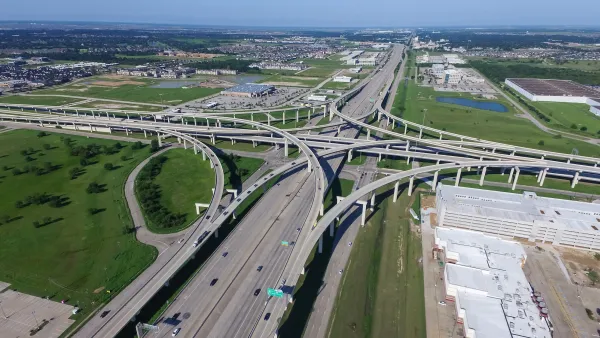
Induced demand is real: Commutes on Houston's 26-lane freeway take 51% longer after expansion
A massive freeway expansion only led to longer drive times, showing that building more lanes won't solve congestion.

Planetizen Federal Action Tracker
A weekly monitor of how Trump’s orders and actions are impacting planners and planning in America.

Amtrak, CN end decades-long dispute with eight-year agreement
The new operating agreement establishes an updated framework for the companies to work together, including processes to resolve disputes.

Northwest rail fans eager for Sept. 30 debut of Amtrak’s Airo fleet
Get ready for that new train smell and more seats. But they won’t go faster or run more frequently on the Cascades route in Washington and Oregon.

This rural Oklahoma town doesn’t want a data center. It may not be able to stop the project
With the project outside city limits and little county oversight of unincorporated land, officials are considering measures to gain local control.

Trump administration unlawfully slashed $7 billion in clean energy grants, judge rules
The Environmental Protection Agency ended the Solar For All program, which provided the grants, after President Donald Trump’s inauguration.

Record-breaking wildlife overpass in Colorado brings 91% reduction in animal collisions
Prior to the overpass, vehicles were hitting one deer per day on Colorado’s Interstate 25.

FREE Course: Walkable City 1: Why Walkability?
After describing his path towards focusing on walkability as the essence of good planning, Jeff Speck marches through his five principal reasons for making more walkable places.
Reinventing Malls: Planning Alchemy—Turning Gray Fields Into Gold
The course focuses on the opportunities and imperatives that shape reinvention of mall sites.

City of Thousand Oaks
City of Wisconsin Rapids
Harvard University Graduate School of Design
The Architects Foundation
University of Cincinnati Online
The Pocatello Development Authority
The Urban Renewal Agency of the City of Pocatello