The 2004 Olympics in Athens burdened the city with underutilized venues and deep debt. But the event also vastly improved pedestrian and public transportation.


"Yet as urban scholars begin to measure the legacy of Athens' Olympics, if they look only at the costly and visible sports venues, they may miss some more mundane, pedestrian things with more lasting significance. Like pedestrians. And subways.
The Olympics showered money and imposed deadlines on long-languishing projects including new subway lines, a tram and suburban rail. A network of pedestrian-only streets in central Athens included removing autos from several busy arteries to create a broad pedestrian way linking key archaeological sites."
This piece looks at this transit legacy of the games and suggests that the expense of the 2004 games was not all a waste.
Read the full story: In the Wake of the Olympics, Did Athens Win or Lose?

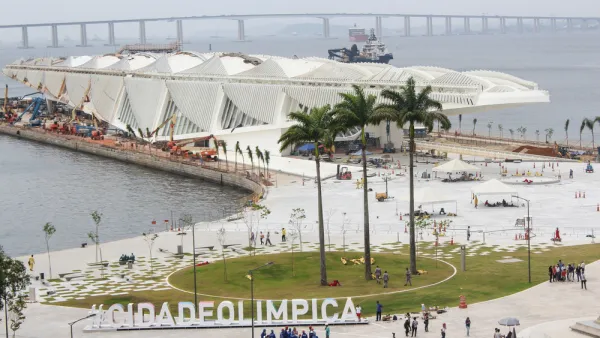
Abandoned Olympic Venues Cast Doubt on the Value of Hosting
Though cities hope for an economic boost, these photos show it's far from guaranteed.
The Olympic Aftermath in Athens
This piece from Domus goes on a tour of Athens with local architect Andreas Angelidakis, who reflects on the city's lasting and negative impacts from hosting the Olympics.
As Venues Sit Unused, Athens Feels Olympic Remorse
Four years after it hosted the Summer Olympics, Athens is questioning whether the $15 billion investment in venues that now largely sit unused was really worth it.

Planetizen Federal Action Tracker
A weekly monitor of how Trump’s orders and actions are impacting planners and planning in America.

Data reveals that NYC’s bet on congestion pricing has paid off
After almost two years of the program, reports show positive impacts on traffic and air quality and no disruptions to parking.

Denver is solving homelessness. Why aren't the rest of us?
Since 2023, Denver's street homeless population has decreased by 64%, proving that effective tools exist to support those in need of housing.

CA city to shut down airport, transform it into utopian park
The western side of the 200-acre park will feature a dog park, nature education center and arboretum.

NYC to vote on supporting outdoor dining, streamlining bus and bike lane creation
The city has five proposed amendments to its municipal constitution on the ballot this November.

Chicago breaks ground on $3 billion megadevelopment
The new neighborhood, titled Foundry Park, will one day host 3,700 residences.

FREE Course: Walkable City 1: Why Walkability?
After describing his path towards focusing on walkability as the essence of good planning, Jeff Speck marches through his five principal reasons for making more walkable places.
Reinventing Malls: Planning Alchemy—Turning Gray Fields Into Gold
The course focuses on the opportunities and imperatives that shape reinvention of mall sites.

City of Rosemead
Rutgers University, Edward J. Bloustein School of Planning and Public Policy
One Hundred Miles
The Architects Foundation
University of Cincinnati Online
Montrose County
Northern Illinois Transit Authority (NITA)
The Pocatello Development Authority