Mary Newsom questions the current and diminishing lack of public worth in the United States today. " Americans have stopped believing that value is something everyone deserves," she writes.


In its attempt to produce a purer meritocracy, America has always been a place where one was always more likely to take ownership of their success or failure. This personalization of status that is often down to luck or chance as much as merit has meant "we've stopped valuing workers. The country apparently no longer believes people who work hard deserve wages that pay them enough to afford the rent or a modest mortgage, or deserve a pension to keep them from penury in retirement."
So much emphasis is on success or failure, that what comes between -actual work- has been marginalized. "What we value, instead, is cheapness. Rock-bottom prices. Low taxes. So we get tomatoes that taste like crunchy sponges, but at least we don't pay a lot for them."
"After decades of stagnant wages followed by waves of layoffs, people sense the American middle class is about to founder. When that happens, they'll either be rich enough to join the First Class crowd or dumped in with the losers in coach. And like insecure adolescents, we insult the losers that we fear we might, deep down, already be."
Read the full story: Losing sight of what matters in America


Low-Barrier Motel Shelter Is a Success—But Not an Easy One
Many guests at Motels4Now are on their second or third stays—but staff say that's doesn't equal failure, and the numbers bear that out.
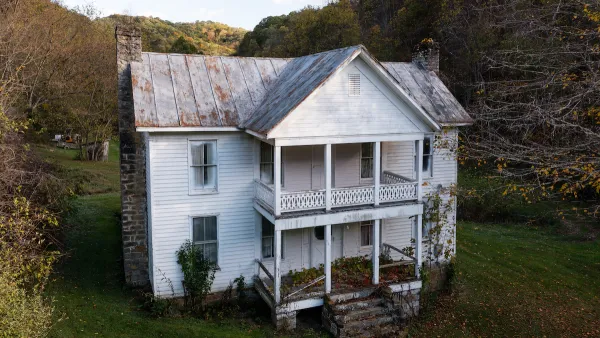
West Virginia Tackles Vacancy With Tax Reform
The Center for Community Progress made recommendations for tax reform in West Virginia to address vacancy. Guided by CCP's suggestions, the state auditor’s office has passed two laws to change its tax sales process and keep properties in use.
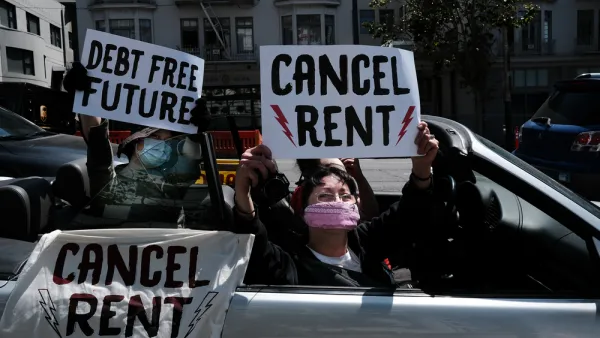
A Housing and Eviction Crisis Still Hangs Over the U.S., Just Like the Pandemic
Checking in with the numerous risks in the housing market as the economic fallout of the pandemic as approaches it approaches its second year.

Planetizen Federal Action Tracker
A weekly monitor of how Trump’s orders and actions are impacting planners and planning in America.

California plans to bury El Niño’s downpour
If the state plays its cards right, it may be able to store a billion acre-feet of El Niño’s water in aquifers.

Chicago breaks ground on $3 billion megadevelopment
The new neighborhood, titled Foundry Park, will one day host 3,700 residences.

California High-Speed Rail Authority CEO resigns after $600,000 scandal
Under Ian Choudri, the authority used taxpayer dollars to fund first class flights and trips to nightclubs.

Want to study the Missouri River? Soon, you may need unanimous approval from 10 states
Legislation would require 10 governors’ permission to study or build projects moving water outside the basin.

Desperate measures: Advocates weigh draining Lake Powell to fill Colorado River
Draining the reservoir could reduce evaporation losses by a couple hundred thousand acre-feet.

FREE Course: Walkable City 1: Why Walkability?
After describing his path towards focusing on walkability as the essence of good planning, Jeff Speck marches through his five principal reasons for making more walkable places.
Reinventing Malls: Planning Alchemy—Turning Gray Fields Into Gold
The course focuses on the opportunities and imperatives that shape reinvention of mall sites.

City of Rosemead
Rutgers University, Edward J. Bloustein School of Planning and Public Policy
One Hundred Miles
Hunter College, City University of New York (CUNY)
The Architects Foundation
University of Cincinnati Online
City of Cambridge
Montrose County
The Pocatello Development Authority