Officials in Southern Sudan are floating a fleet of proposals to build new cities in the shape of animals and fruits.


The $10 billion proposal includes cities that are shaped like rhinos, giraffes and pineapples. With the genocide conflict still raging in the Darfur region, many say the expensive proposal is unrealistic. But with the southern portion of the country hoping to secede and form its own nation, oil riches and private investors could help bring the bizarre city plans into form.
"The plan in the war-torn region comes ahead of a scheduled January referendum on independence, which most people here believe will lead to the creation of the world's newest country. The south is rich in oil, but poverty and hunger is high throughout the region, which is struggling to recover after a civil war more than two decades long.
The $10 billion concept will take decades to carry out, officials concede, though it may never escape the planning stages. The southern government's own 2010 budget was only $1.9 billion, and the U.N. says more than 90 percent of Southern Sudan's population lives on less than $1 a day."
Read the full story: Animal shaped cities? South Sudan unveils big plan

15 US cities and their global namesakes
Hundreds of cities around the United States are named after other places. We tour a few of them.
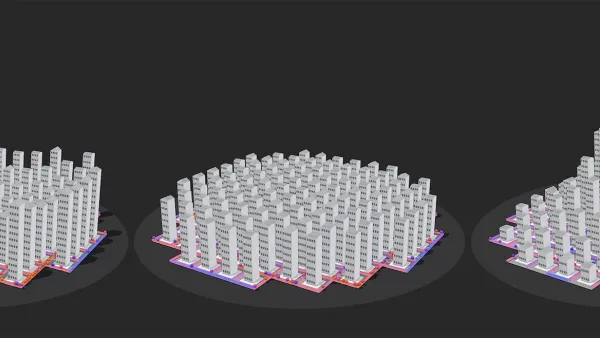
New study visualizes how city shapes impact mobility
Whether circular or linear, the shape and layout of cities affects how their residents get around.
William Whyte’s Seminal Urban Film Restored
‘The Social Life of Small Urban Spaces’ changed the way planners view public space and ushered in a new way of understanding urban patterns.

Planetizen Federal Action Tracker
A weekly monitor of how Trump’s orders and actions are impacting planners and planning in America.

California plans to bury El Niño’s downpour
If the state plays its cards right, it may be able to store a billion acre-feet of El Niño’s water in aquifers.

Chicago breaks ground on $3 billion megadevelopment
The new neighborhood, titled Foundry Park, will one day host 3,700 residences.

California High-Speed Rail Authority CEO resigns after $600,000 scandal
Under Ian Choudri, the authority used taxpayer dollars to fund first class flights and trips to nightclubs.

Want to study the Missouri River? Soon, you may need unanimous approval from 10 states
Legislation would require 10 governors’ permission to study or build projects moving water outside the basin.

Desperate measures: Advocates weigh draining Lake Powell to fill Colorado River
Draining the reservoir could reduce evaporation losses by a couple hundred thousand acre-feet.

FREE Course: Walkable City 1: Why Walkability?
After describing his path towards focusing on walkability as the essence of good planning, Jeff Speck marches through his five principal reasons for making more walkable places.
Reinventing Malls: Planning Alchemy—Turning Gray Fields Into Gold
The course focuses on the opportunities and imperatives that shape reinvention of mall sites.

City of Rosemead
Rutgers University, Edward J. Bloustein School of Planning and Public Policy
One Hundred Miles
Hunter College, City University of New York (CUNY)
The Architects Foundation
University of Cincinnati Online
City of Cambridge
Montrose County
The Pocatello Development Authority