Google CEO Eric Schmidt discusses what makes a city smart and successful in this interview with Foreign Policy.


He suggests that the innovation and success of California's Silicon Valley could easily be replicated in other cities or regions.
"There can be many Silicon Valleys. It is absolutely a reproducible model; it's not something in the water. You know, the history starts in the '50s. What basically happened in Silicon Valley is that you had strong research universities, a relatively liberal and creative culture, lots of reasons for young people to stay in the area -- and young people are the ones with the new ideas. Then you had the development of the venture capital industry.
What's interesting is that every 10 years someone writes an article about how Silicon Valley was responsible for the last innovation wave, but it will miss the next wave. Yet Silicon Valley has now been at the forefront of four or five successive tech waves and has proved itself remarkably resilient because of the combination of the universities, the culture, the climate, the capital. My point is that if you have all of those elements, you can have your own Silicon Valley wherever you want."
Read the full story: Googlopolis
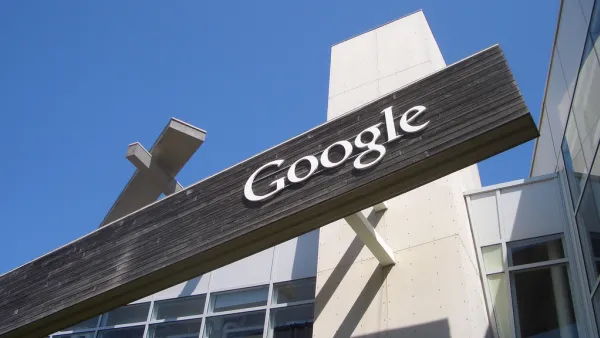
Cities Chase Elusive 'Innovation Economy'
In many places, anchor institutions and local industries are old news. New companies, new ideas, and brand-new industries are creating wealth and vibrancy. Professor Enrico Moretti explains how cities can get in on the 'innovation economy.'
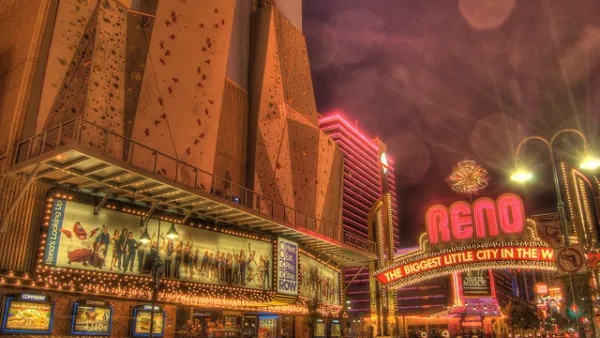
Nevada's Most Interesting City: Reno
Long considered a desert backwater and second fiddle to Las Vegas, the city of Reno is having a resurgence. Small entrepreneurs, industrial giants like Tesla, and artists inspired by Burning Man are converging to overshadow the fading casino economy.
Why New Sources of Capital Matter for Cites
Cities are becoming the new economic engines due to growing sectors in technology and knowledge production. Yet, cities must recognize with that transformation there comes not only opportunities but also new challenges.

Washington state to charge fee to drivers with fuel-efficient cars
Revenue from the fee will go towards supporting the state’s highways.

Illinois considers spending $1 billion in taxpayer money on data center
A quantum computing campus and data center are currently under construction in Chicago.

Trump to blast ‘hydrocarbon highway’ through ‘world’s longest art gallery’
Environmental and historic preservation groups are suing to stop the project.

NYC, state sue feds over mixed-immigration-status housing assistance rule
The state’s lawsuit argues that the rule change violates the Administrative Procedure Act.

Michigan to turn neighborhood into virtual power plant
Residents will soon be able to divert their excess energy to the grid in exchange for compensation.

Data center, mining project swarm to long-awaited Alaska railroad line
The state-owned railroad approved final plans for the spur line this week; the project is expected to cost $311 million, mostly funded by the federal government

FREE Course: Walkable City 1: Why Walkability?
After describing his path towards focusing on walkability as the essence of good planning, Jeff Speck marches through his five principal reasons for making more walkable places.
Reinventing Malls: Planning Alchemy—Turning Gray Fields Into Gold
The course focuses on the opportunities and imperatives that shape reinvention of mall sites.

City of Charlotte
City of Rosemead
Rutgers University, Edward J. Bloustein School of Planning and Public Policy
University of Michigan School for Environment and Sustainability (SEAS)
Hunter College, City University of New York (CUNY)
The Architects Foundation
University District Partnership