The recession has left many real estate properties empty across the country. In Los Angeles, some of those empty spaces are being revived by the city's artists.


Writer Alissa Walker takes a look at some of these reused empty spaces, and discusses how other creative types can get involved in taking advantage of a down real estate market for innovative space-based projects and installations.
"The fact that these three creatives have founded true cultural centers and succeeded in doing it in a place as notoriously scattered as Los Angeles makes me believe their concepts are true models for success.
I bring this up now because probably every designer, architect or artist I've ever spoken with has expressed the desire to open and operate a space: a gallery, a store, a classroom. And I would say this is the time. There's a reason this is the age of the pop-up shop: space is available, and it's yours for the taking. Use this moment when you've got a little extra downtime to inhabit the empty space next door, or some available space in your office that's looking a bit lonely. Creating a space is the perfect opportunity to collaborate on a concept with other designers that helps all of you stay visible, busy, and creatively-fulfilled."
Read the full story: Real Estate Bust: How Creatives Are Carving Up L.A.'s Empty Space
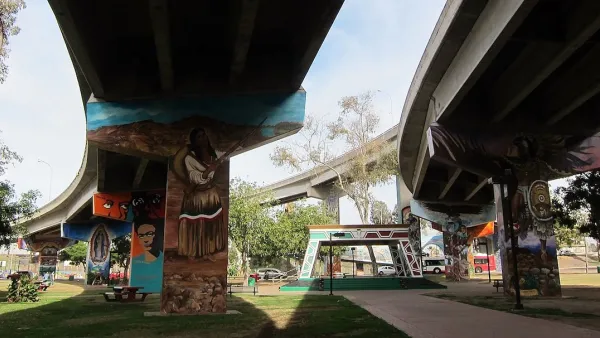
Opinion: Enhancing Inclusive Development: The Crucial Role of the Creative Class in Urban Planning
How bringing local artists into the development process can foster more vibrant, equitable neighborhoods.
Rural Areas Embrace the Arts for Economic Development
A burgeoning revitalization model uses the arts as an opportunity to bring in outside money while hiring local.
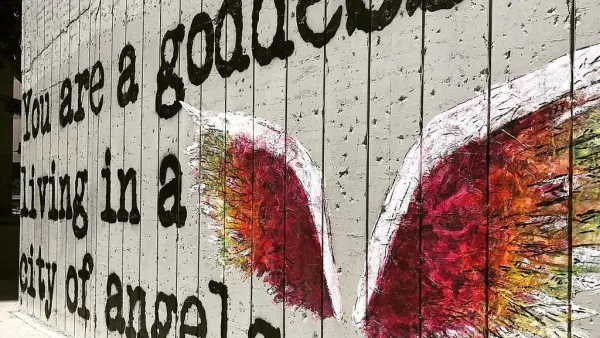
The Rise of Corporate Murals in LA
Downtown Los Angeles, styled DTLA by its new enthusiasts, has long been a site for street art and murals of dubious legality. Now, developers are paying artists to paint them.

Washington state to charge fee to drivers with fuel-efficient cars
Revenue from the fee will go towards supporting the state’s highways.

Illinois considers spending $1 billion in taxpayer money on data center
A quantum computing campus and data center are currently under construction in Chicago.

Trump to blast ‘hydrocarbon highway’ through ‘world’s longest art gallery’
Environmental and historic preservation groups are suing to stop the project.

NYC, state sue feds over mixed-immigration-status housing assistance rule
The state’s lawsuit argues that the rule change violates the Administrative Procedure Act.

Michigan to turn neighborhood into virtual power plant
Residents will soon be able to divert their excess energy to the grid in exchange for compensation.

Data center, mining project swarm to long-awaited Alaska railroad line
The state-owned railroad approved final plans for the spur line this week; the project is expected to cost $311 million, mostly funded by the federal government

FREE Course: Walkable City 1: Why Walkability?
After describing his path towards focusing on walkability as the essence of good planning, Jeff Speck marches through his five principal reasons for making more walkable places.
Reinventing Malls: Planning Alchemy—Turning Gray Fields Into Gold
The course focuses on the opportunities and imperatives that shape reinvention of mall sites.

City of Charlotte
City of Rosemead
Rutgers University, Edward J. Bloustein School of Planning and Public Policy
University of Michigan School for Environment and Sustainability (SEAS)
Hunter College, City University of New York (CUNY)
The Architects Foundation
University District Partnership