Downtown Los Angeles, styled DTLA by its new enthusiasts, has long been a site for street art and murals of dubious legality. Now, developers are paying artists to paint them.


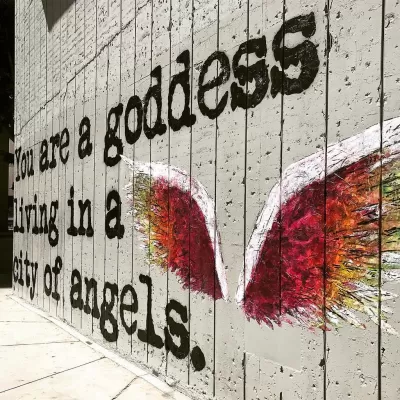
Developer-sponsored murals: cool public art or more corporate appropriation? Downtown L.A. is becoming a hotspot for that debate. Eddie Kim writes, "In recent years large-scale works have been commissioned to serve as defining features on buildings including the Eighth & Grand apartments, the Park DTLA office campus, One Santa Fe and The Row in the Industrial District, among many others."
In light of the area's rapid gentrification, the murals aren't well-received by all. "Others see a mass of corporate efforts overtaking the free-for-all street art culture that helped define the Arts District and other neighborhoods when Downtown had less mainstream appeal."
The corporate commissions can be a good source of income for local artists, but many L.A. murals still get whitewashed. And while a commissioned piece might be done in a "street" style, is it still "street art?"
Read the full story: In Downtown, Street Artists Find a Surprising New Patron: Developers
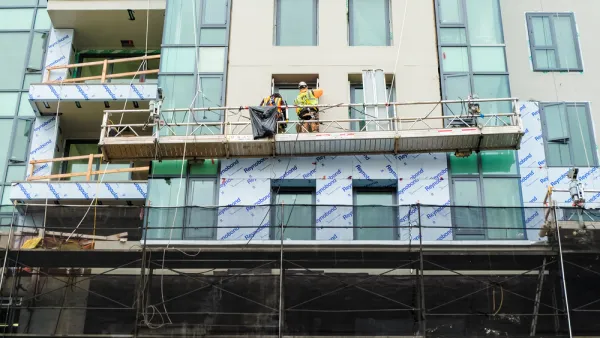
Art May Be Coming to New York City Sidewalk Sheds
Scaffolding and sidewalk sheds being a fixture of life in NYC, the city has decided to let artists do their thing with all that blank canvas.
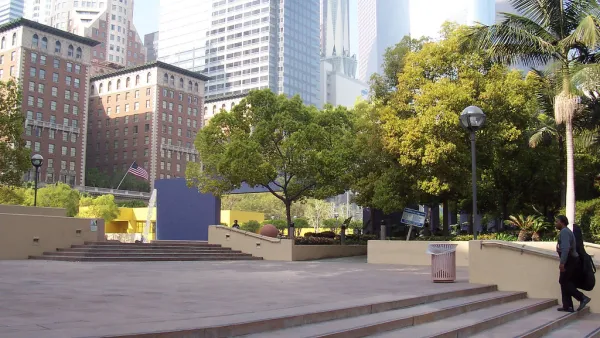
L.A.'s New Pershing Square Will Be 'Radically Flat'
After stakeholder engagement and an international design competition, Agence Ter's plan for "radical flatness" has been selected to replace downtown L.A.'s current Pershing Square. The preferred alternative is, above all, simple.
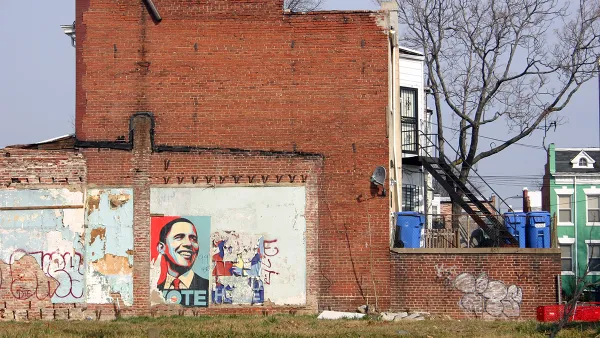
Street Artist Shepard Fairey Tackles Detroit
After billionaire landlord Dan Gilbert commissioned a mural, less-legal works in Fairey's style began showing up around the city. Detroit's case against the artist brings gentrification's ironies into focus.

Planetizen Federal Action Tracker
A weekly monitor of how Trump’s orders and actions are impacting planners and planning in America.

California plans to bury El Niño’s downpour
If the state plays its cards right, it may be able to store a billion acre-feet of El Niño’s water in aquifers.

Desperate measures: Advocates weigh draining Lake Powell to fill Colorado River
Draining the reservoir could reduce evaporation losses by a couple hundred thousand acre-feet.

Housing is the top priority of Seattle’s sole new councilmember
Jenks campaigned on building 1,000 new units of affordable housing.

New tax cuts may slash $1.5 billion in funding for Miami transit, public parks
Amendment 3 will save Miami-Dade homeowners $2,700 in 2028.

Arizona, Wisconsin, Pennsylvania hope to finally advance climate goals post-midterms
The three states have spent years under Republican or divided control.

FREE Course: Walkable City 1: Why Walkability?
After describing his path towards focusing on walkability as the essence of good planning, Jeff Speck marches through his five principal reasons for making more walkable places.
Reinventing Malls: Planning Alchemy—Turning Gray Fields Into Gold
The course focuses on the opportunities and imperatives that shape reinvention of mall sites.

City of Rosemead
Rutgers University, Edward J. Bloustein School of Planning and Public Policy
One Hundred Miles
University of Michigan School for Environment and Sustainability (SEAS)
Hunter College, City University of New York (CUNY)
The Architects Foundation
City of Cambridge
Montrose County
The Pocatello Development Authority