The City of Pittsburgh recently approved a new ordinance requiring bike parking in new developments. Cyclists say the move is a ceremonial acceptance of bicycles as a form of transportation in the city.


The ordinance requires a minimum amount of bike parking for any new or re-zoned commercial development project. It was approved unanimously.
"The approval of the bike parking measure is important symbolically, indicating a general acceptance that bikes are indeed a vital component of Pittsburgh's transportation system and an essential element in Pittsburgh's goal to become a more livable city.
Beyond the pretty symbolism, however, the legal provision for safe and secure bike parking demonstrates a commitment to sustainable transportation in Pittsburgh, now and in the future. Providing secure parking removes what some advocates consider the main deterrent to biking for transportation: bicycle theft. Following this theory, when secure and reliable parking is available, people are more likely to ride bicycles."
Read the full story: Pittsburgh’s Biking Moment

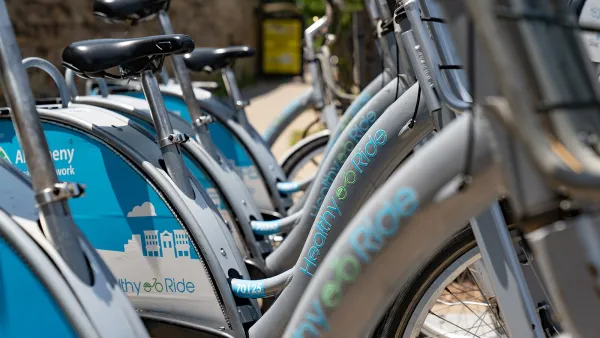
Pittsburgh To Revamp its Bike Share System With E-Bikes, New Stations
The system overhaul is partly due to nextbike's shift to focusing on its European markets. The new fleet will include 350 e-bikes and expand service to new neighborhoods.
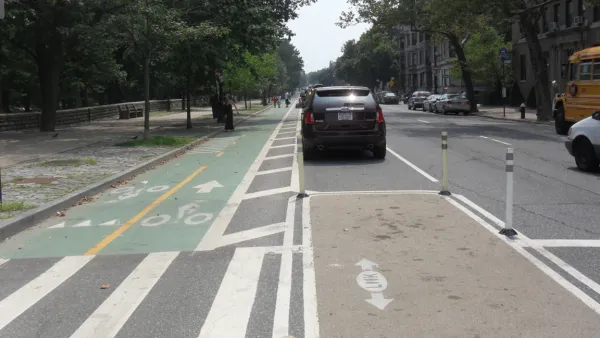
More Bicycle Infrastructure Equals More Riders
Analysis of Census data shows that, while still small in number, more Americans are taking to two-wheels as part of their daily commute.
Bike Parking Boon for Businesses
Elly Blue at Grist makes the case that bicycle parking is an economically attractive alternative to additional parking spaces.

Planetizen Federal Action Tracker
A weekly monitor of how Trump’s orders and actions are impacting planners and planning in America.

Amtrak, CN end decades-long dispute with eight-year agreement
The new operating agreement establishes an updated framework for the companies to work together, including processes to resolve disputes.

Judges permit Denver to divert 77,000 acre feet from the Colorado River for reservoir expansion
Overuse and climate change have caused the Colorado River’s water levels to plummet.

Boston has spent millions making the Green Line more accessible — and there’s no end in sight
While the city has invested millions into expanding and adding platforms to the Green Line to make it more accessible, new train cars set to arrive next year will be too tall for disabled passengers to board without raising the current platforms.

Idaho may see an 18% drop in federal surface transit funding — the largest estimated cut in the US
Transit systems in rural communities are much more reliant on federal funding to provide their services.

How ‘post-disaster gentrification’ alters neighborhoods after natural calamities
After hurricanes, fires or other calamities, the original residents of a community are often replaced by younger, wealthier residents.

FREE Course: Walkable City 1: Why Walkability?
After describing his path towards focusing on walkability as the essence of good planning, Jeff Speck marches through his five principal reasons for making more walkable places.
Reinventing Malls: Planning Alchemy—Turning Gray Fields Into Gold
The course focuses on the opportunities and imperatives that shape reinvention of mall sites.

City of Wisconsin Rapids
Harvard University Graduate School of Design
KFH Group Inc.
The Architects Foundation
University of Cincinnati Online
The Pocatello Development Authority
The Urban Renewal Agency of the City of Pocatello