Through a survey of New York City taxis with GPS tracking devices, the city has created a database of speeds and routes that gives them a clear picture of the state of traffic in the city.


"Traffic in Manhattan has a rhythm all its own, and, according to a new study by the city, it is not quite the constant gridlock that it seems.
Using data from the GPS devices in all New York City cabs, officials tracked the routes of tens of millions of taxi trips over the past two years. The result: a database of speeds and travel routes that can be broken down by minute, month and neighborhood.
'It's like an M.R.I.,' said Bruce Schaller, a deputy transportation commissioner who supervised the city's study."
The data offers officials a look at where traffic problems have been occurring, and when they're likely to occur. Transportation officials are already using the data to tweak traffic along one of the city main arteries, according to this piece from The New York Times.
Read the full story: Gridlock May Not Be Constant, but Slow Going Is Here to Stay

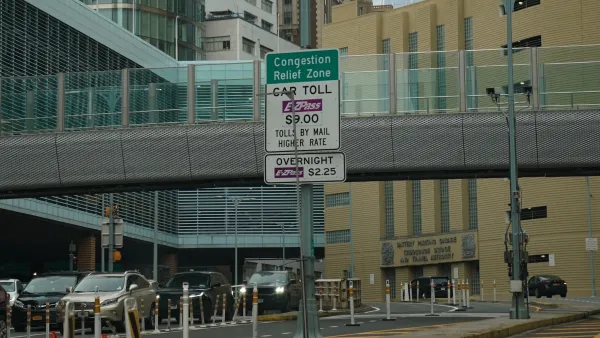
Judge Rules to Keep NYC Congestion Pricing, Ending Trump's Legal Challenge
The decision likely deals a fatal blow to efforts to end the program, but the Trump administration says it will explore other avenues for reversing the congestion pricing scheme.
NYC Congestion Pricing: Still Working
10 million fewer vehicles entered the congestion pricing zone in the first six months of the program than last year, while pedestrian fatalities are at ‘historic lows.’
Judge Extends NYC Congestion Pricing Through at Least June 9
A federal judge halted the Trump administration’s effort to kill the program, which remains in limbo as a lawsuit filed by the MTA moves forward.

Planetizen Federal Action Tracker
A weekly monitor of how Trump’s orders and actions are impacting planners and planning in America.

Amtrak, CN end decades-long dispute with eight-year agreement
The new operating agreement establishes an updated framework for the companies to work together, including processes to resolve disputes.

Judges permit Denver to divert 77,000 acre feet from the Colorado River for reservoir expansion
Overuse and climate change have caused the Colorado River’s water levels to plummet.

NYC DOT wants faster, more permanent street upgrades
The city is examining ways to build more concrete infrastructure without getting entangled in 'decades-long' projects.

'Something we’ve never seen before:' rising utility rates could strain city finances nationwide
Data centers, climate change and other factors have caused utility rates in the United States to increase by 38% since 2020.

Trump to overrule local leaders, lease millions of acres of America’s Pacific Island territories’ seafloors to mining companies
International law says that the Indigenous people of America’s territories have a right to prior and informed consent regarding projects that impact their countries.

FREE Course: Walkable City 1: Why Walkability?
After describing his path towards focusing on walkability as the essence of good planning, Jeff Speck marches through his five principal reasons for making more walkable places.
Reinventing Malls: Planning Alchemy—Turning Gray Fields Into Gold
The course focuses on the opportunities and imperatives that shape reinvention of mall sites.

Harvard University Graduate School of Design
KFH Group Inc.
Greater Baltimore Committee
The Architects Foundation
University of Cincinnati Online
The Pocatello Development Authority
The Urban Renewal Agency of the City of Pocatello