2010 may become a tipping-point for bike-share programs with new pilots popping up in Denver, Boston and Minneapolis.


The European concept of car-sharing has taken off in the United States. Will bike-sharing do the same? 2010 will be the first year actual large-scale programs will be open and spinning for customers.
Marketplace lays out the speedbumps for bike-sharing as compared to car-sharing: cycles need more infrastructure, like kiosks, bike lanes, and custom-manufactured bikes with anti-theft devices. That costs money. Boston estimates it will spend $3 million annually for its program. Corporate sponsorships may be part of the funding mix. In Minneapolis for example, you'll see Blue Cross/Blue Shield logos on bikes and kiosks. Subscribers will also get cash incentives to join.
"That's something really important for what we are trying to do," says Minneapolis Bike Share manager Bill Dossett. "We're doing something totally new, people don't know about it. We need to create a market for it."
Thanks to Cathy Duchamp
Read the full story: Cities take a spin with bike sharing

Resilience Matters: Collective Action For Healthier Communities
The Island Press Urban Resilience Project (URP) has published a new, free "Resilience Matters" e-book that contains fascinating articles, op-eds, and interviews that provide practical guidance for collective action to build a fairer, greener future.
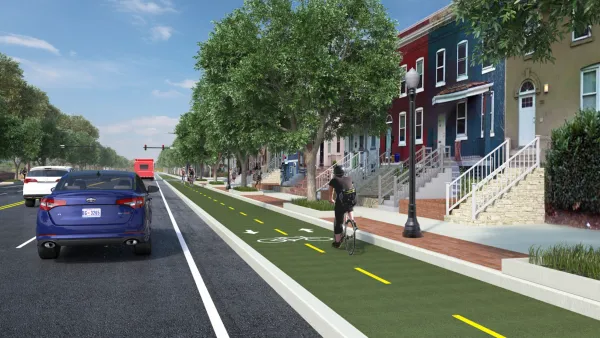
Bike Ridership Outpaces Infrastructure in D.C.
D.C.'s bike-sharing programs are gaining popularity, but the city's infrastructure might not be enough to support the new riders.
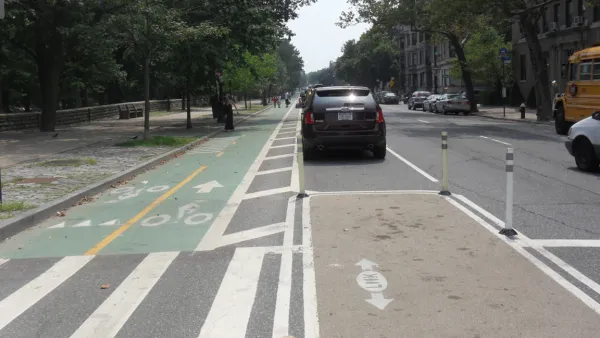
More Bicycle Infrastructure Equals More Riders
Analysis of Census data shows that, while still small in number, more Americans are taking to two-wheels as part of their daily commute.

Planetizen Federal Action Tracker
A weekly monitor of how Trump’s orders and actions are impacting planners and planning in America.

California plans to bury El Niño’s downpour
If the state plays its cards right, it may be able to store a billion acre-feet of El Niño’s water in aquifers.

Chicago breaks ground on $3 billion megadevelopment
The new neighborhood, titled Foundry Park, will one day host 3,700 residences.

California High-Speed Rail Authority CEO resigns after $600,000 scandal
Under Ian Choudri, the authority used taxpayer dollars to fund first class flights and trips to nightclubs.

Want to study the Missouri River? Soon, you may need unanimous approval from 10 states
Legislation would require 10 governors’ permission to study or build projects moving water outside the basin.

Desperate measures: Advocates weigh draining Lake Powell to fill Colorado River
Draining the reservoir could reduce evaporation losses by a couple hundred thousand acre-feet.

FREE Course: Walkable City 1: Why Walkability?
After describing his path towards focusing on walkability as the essence of good planning, Jeff Speck marches through his five principal reasons for making more walkable places.
Reinventing Malls: Planning Alchemy—Turning Gray Fields Into Gold
The course focuses on the opportunities and imperatives that shape reinvention of mall sites.

City of Rosemead
Rutgers University, Edward J. Bloustein School of Planning and Public Policy
One Hundred Miles
Hunter College, City University of New York (CUNY)
The Architects Foundation
University of Cincinnati Online
City of Cambridge
Montrose County
The Pocatello Development Authority