The three counties in the Portland Metropolitan area are at odds about what parts of the region should and should not be protected by urban growth boundaries.


"The disagreement is not a concern solely for the wonks of the world. The greater Portland area is projected to attract a million more residents during the next 20 years and will have to accommodate the increased jobs, housing, traffic, infrastructure and services that accompany population growth.
By designating urban and rural reserves, regional leaders hoped to offer 40- to 50-year certainty on land-use decisions. Developers would know far in advance where urban areas would grow. Farmers could make crop or equipment purchase decisions, knowing development wouldn't infringe for decades to come. Planners at all levels of government would be able to think ahead regarding utilities, schools, parks and other services."
Read the full story: The quest to designate Portland's growth areas sets counties against each other

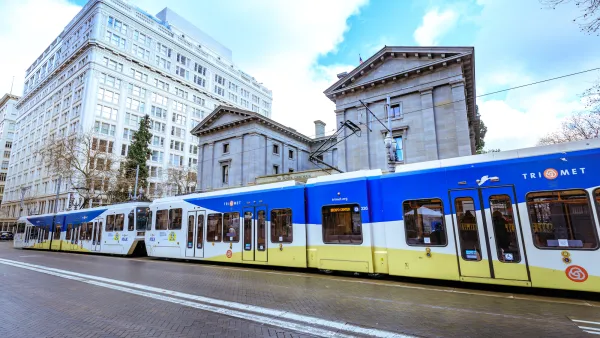
Big Business in Portland Doesn't Want to Pay for Metro Transportation Funding Measure
A heated dispute over a $5 billion Metro transportation funding ballot measure has erupted between climate activists and a group representing Portland's big business interests.
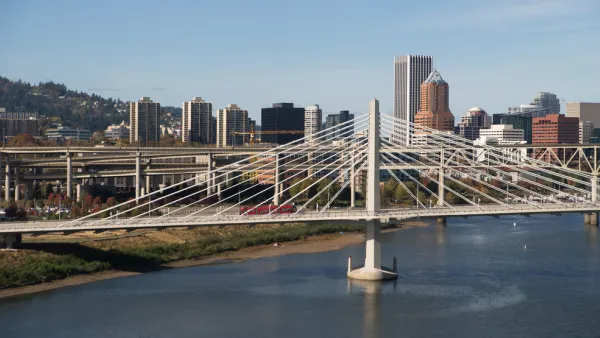
How Much for Roads and Highways in a Proposed Portland-Area Transportation Funding Measure?
A regional transportation tax could be on the 2020 ballot in Portland and surrounding communities in Oregon. How much of that money created by the new tax, should it pass, will go to transit and how much will go to cars is an open question.
Portland's Jade District Is a Planner's Nightmare (and Dream)
The Jade District on Portland's distant east side is a typical geography of wide streets and sprawl, but is also a relatively complete, self-contained community.

Planetizen Federal Action Tracker
A weekly monitor of how Trump’s orders and actions are impacting planners and planning in America.

California plans to bury El Niño’s downpour
If the state plays its cards right, it may be able to store a billion acre-feet of El Niño’s water in aquifers.

Chicago breaks ground on $3 billion megadevelopment
The new neighborhood, titled Foundry Park, will one day host 3,700 residences.

Want to study the Missouri River? Soon, you may need unanimous approval from 10 states
Legislation would require 10 governors’ permission to study or build projects moving water outside the basin.

Desperate measures: Advocates weigh draining Lake Powell to fill Colorado River
Draining the reservoir could reduce evaporation losses by a couple hundred thousand acre-feet.

This road in NYC is infamously dangerous — and Mamdani can't fix it
New York City's Ocean Parkway is known for reckless driving, but the power to implement safety measures lies with the state rather than the city.

FREE Course: Walkable City 1: Why Walkability?
After describing his path towards focusing on walkability as the essence of good planning, Jeff Speck marches through his five principal reasons for making more walkable places.
Reinventing Malls: Planning Alchemy—Turning Gray Fields Into Gold
The course focuses on the opportunities and imperatives that shape reinvention of mall sites.

City of Rosemead
Rutgers University, Edward J. Bloustein School of Planning and Public Policy
One Hundred Miles
Hunter College, City University of New York (CUNY)
The Architects Foundation
University of Cincinnati Online
City of Cambridge
Montrose County
The Pocatello Development Authority