There's a glut of ethanol on the market, and the solutions to consume it are not easy. The maximum blend in gasoline is 10% before it affects the catalytic converter, and E85 can't compete with the more efficient, though more expensive, gasoline.


"When Congress wrote the rules (increasing usage of ethanol) in 2007, gasoline consumption had been growing for years.
Gasoline consumption hit a peak of 3.4 billion barrels that year and then fell to 3.3 billion barrels last year, and it could end 2009 at about the same level."
It's clear that it will be very difficult, if not impossible to reach the mandate of 15 billion gallons of biofuels by 2012, or 36 billion gallons in 2022, up from less than seven billion gallons in 2007.
"As of yet, not all gasoline is blended with 10 percent ethanol, but that saturation point is rapidly approaching.
As for E85, the problem is that at current prices, it does not make economic sense for drivers, and most of them use regular gasoline in their flex-fuel cars.
Gasoline was selling on average Thursday (11/26) for $2.63 a gallon, while E85 was selling for $2.23 a gallon. That might make E85 sound like a bargain, but cars go fewer miles on a gallon of ethanol than of gasoline. Adjusted for that factor, E85 on Thursday was effectively 31 cents a gallon more expensive than gasoline.
A return of $4 gasoline might change things, by making E85 a relative bargain and spurring wider use. So would an unexpected spurt in total fuel demand. Otherwise, it is not at all clear how the nation's coming surplus of ethanol can be absorbed."
Contributor's comment: Another solution would be for Congress to add a 'fossil fuel fee per gallon' so that E85 becomes more competitive with gasoline.
Read the full story: U.S. Unlikely to Use the Ethanol Congress Ordered

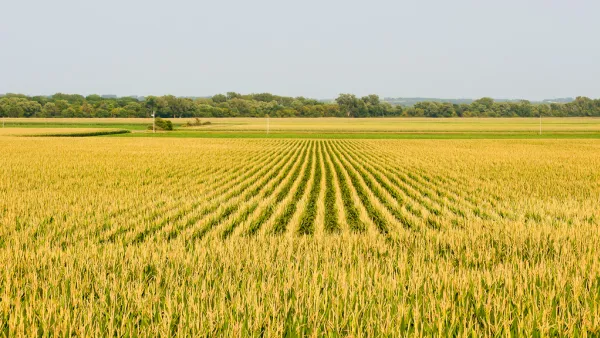
Summertime Ethanol Restriction Lifted to Help Corn Farmers—But at What Cost?
President Trump made good on his promise last October to lift the E15 ban in time for the summer driving season. Not mentioned by the Des Moines Register are the downsides to allowing the higher ethanol blend to be sold during the summer, e.g., smog.
U.S. Becomes Net Oil Exporter, If Only Briefly
Oil independence, a goal set by President Nixon in the depth of the 1973 energy embargo, was achieved in the last week of November thanks to a fluke in record keeping as well as an "unprecedented boom in American oil production."
Corn Ethanol Industry In The Tank
Low fuel prices, high corn prices, and a new CA regulation that penalizes the energy intensity necessary to convert corn to fuel are hurting the industry.

Amtrak, CN end decades-long dispute with eight-year agreement
The new operating agreement establishes an updated framework for the companies to work together, including processes to resolve disputes.

Judges permit Denver to divert 77,000 acre feet from the Colorado River for reservoir expansion
Overuse and climate change have caused the Colorado River’s water levels to plummet.
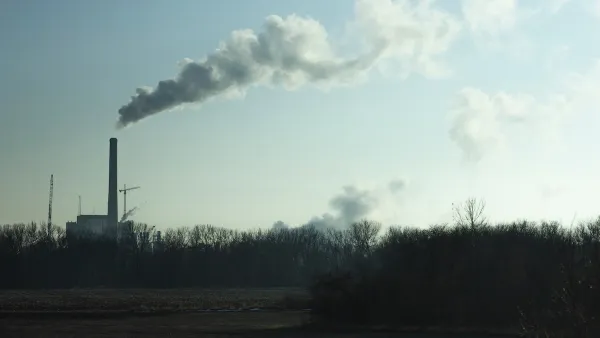
Nation's most wind-powered state turns to coal as data centers increase energy demand
For the first time in decades, Iowa has increased its generation of coal power.

Boston has spent millions making the Green Line more accessible — and there’s no end in sight
While the city has invested millions into expanding and adding platforms to the Green Line to make it more accessible, new train cars set to arrive next year will be too tall for disabled passengers to board without raising the current platforms.

Idaho may see an 18% drop in federal surface transit funding — the largest estimated cut in the US
Transit systems in rural communities are much more reliant on federal funding to provide their services.

How ‘post-disaster gentrification’ alters neighborhoods after natural calamities
After hurricanes, fires or other calamities, the original residents of a community are often replaced by younger, wealthier residents.

FREE Course: Walkable City 1: Why Walkability?
After describing his path towards focusing on walkability as the essence of good planning, Jeff Speck marches through his five principal reasons for making more walkable places.
Reinventing Malls: Planning Alchemy—Turning Gray Fields Into Gold
The course focuses on the opportunities and imperatives that shape reinvention of mall sites.

City of Wisconsin Rapids
Harvard University Graduate School of Design
KFH Group Inc.
The Architects Foundation
University of Cincinnati Online
The Pocatello Development Authority
The Urban Renewal Agency of the City of Pocatello