Another column by New York Times columnist, Thomas Friedman on the need to raise the gas tax - in this one, he compares the U.S. to Europe and concludes that the former are 'wimps' for not having the courage to raise gas or carbon taxes.


Friedman looks at national security, mid-east wars, and a skyrocketing national deficit as well as other domestic problems and questions why American political leaders lack the fortitude to raise gas taxes, or better yet, implement carbon taxes, as has been done by our European allies.
"In 1973, Denmark got all its oil from the Middle East. Today? Zero. Why? Because Denmark got tough. It imposed on itself a carbon tax, a roughly $5-a-gallon gasoline tax, made massive investments in energy efficiency and in systems to generate energy from waste, along with a discovery of North Sea oil (about 40 percent of its needs).
And us? When it comes to raising gasoline taxes or carbon taxes - at a perfect time like this when prices are already low - our politicians tell us it is simply 'off the table.'"
Thanks to Ron McLinden
Read the full story: Op-Ed Columnist: Real Men Tax Gas
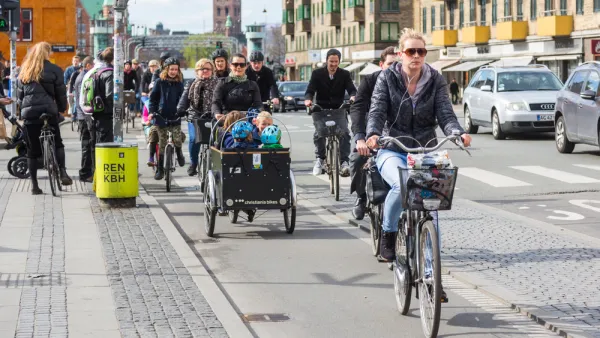
What's Behind Copenhagen's Success as a Cycling City?
Denmark's capital is a model city in terms of biking, but the reasons that bikes rule go beyond political leadership and robust infrastructure.
Jockeying for a Gas Tax Increase from Fiscal Cliff Talks
It could be a win-win: Reducing the deficit, stimulating job creation, and avoiding the dreaded 'fiscal cliff'. Those pushing for a gas tax increase have joined other industries in using the need to raise and/or cut $500 billion to avoid recession.
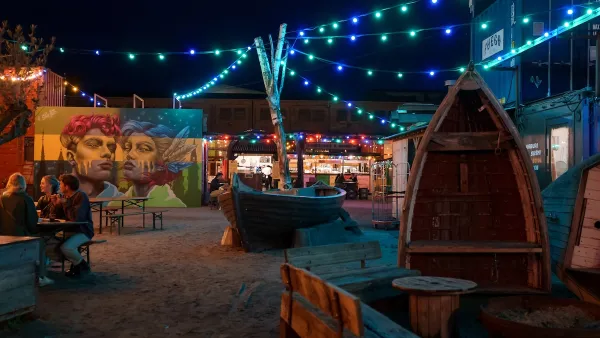
The coolest Copenhagen urban retrofit you’ve never heard of
In Denmark, a ship-building-site-turned-cultural-hub demonstrates the power of mixed-use spaces and organic planning.

Planetizen Federal Action Tracker
A weekly monitor of how Trump’s orders and actions are impacting planners and planning in America.

California plans to bury El Niño’s downpour
If the state plays its cards right, it may be able to store a billion acre-feet of El Niño’s water in aquifers.

Desperate measures: Advocates weigh draining Lake Powell to fill Colorado River
Draining the reservoir could reduce evaporation losses by a couple hundred thousand acre-feet.

Chicago voters approve permanent festival grounds, penalty for vacant property owners
Currently, major summer and fall festivals take over public parks for weeks at a time, drawing criticism from nearby residents

NYC votes to cut outdoor dining red tape, speed up permitting
New York City also voted to allow the Department of Transportation to begin work on urgent projects before notifying elected officials.

California appears to reject Prop. 45
The proposition would have expanded the projects that qualify for a streamlined environmental review, effectively paring down the California Environmental Quality Act.

FREE Course: Walkable City 1: Why Walkability?
After describing his path towards focusing on walkability as the essence of good planning, Jeff Speck marches through his five principal reasons for making more walkable places.
Reinventing Malls: Planning Alchemy—Turning Gray Fields Into Gold
The course focuses on the opportunities and imperatives that shape reinvention of mall sites.

City of Rosemead
Rutgers University, Edward J. Bloustein School of Planning and Public Policy
One Hundred Miles
Hunter College, City University of New York (CUNY)
The Architects Foundation
University of Cincinnati Online
City of Cambridge
Montrose County
The Pocatello Development Authority