The Broken Windows theory suggests that a high concentration of small, petty crimes leads to a higher incidence of bigger, nastier crimes. Some European cities run counter to that premise, according to this piece from Next American City.


Ben Adler looks at Berlin and Copenhagen and finds the crime trends don't match the idea behind Broken Windows.
"Increasingly, criminologists are challenging Broken Windows' hegemonic grasp on urban public policy. My travels in Europe have convinced me, once a Broken Windows believer, that it is largely a lot of hokum. Let the pot dealers return to Washington Square Park, the graffiti sit indefinitely on the mailboxes, the hookers wander Times Square, and I'm not at all sure you'd see an increase in violent crime as a result.
Berlin, Germany, a city of 3.4 million, is rife with symbols of social disorder. Sitting at a bar's outdoor table you're liable to smell hash wafting over from the table next to you, and to be offered it while walking through some of the city's parks. Prostitution is legal. If there are any open container laws, they are completely unenforced. Beer is drunk openly on the streets and the metro.
And yet there is very little crime."
Read the full story: Does Berlin Disprove Broken Windows?

Will Developing Nations Drive/Follow in our Faulted Footsteps?
The growth in hybrid car sales is a welcome sign that a major change in the automobile industry is afoot. The shift to transport infrastructure that is not based on the archaic complexity of an internal combustion engine, with its hundreds of moving parts and compressed fuel explosions, has been long put off by an automobile industry, happy with status quo, partnered with oil cartels with the power to price their product as if it were in endless supply. But with smack-in-the-face-reality fuel prices last summer, the collapse of the so-called “Big Three” over the winter, and the simultaneous heralding assertion of alternative energy technologies (Daimler AG bought a 10% stake in Tesla Motors last month!), the fallout of western economic near-collapse has changed everything we’ve known to be sacrosanct; Leonard Lopate even waxed nostalgic about the “Death of the Car Song” yesterday on National Public Radio’s local station, WNYC.
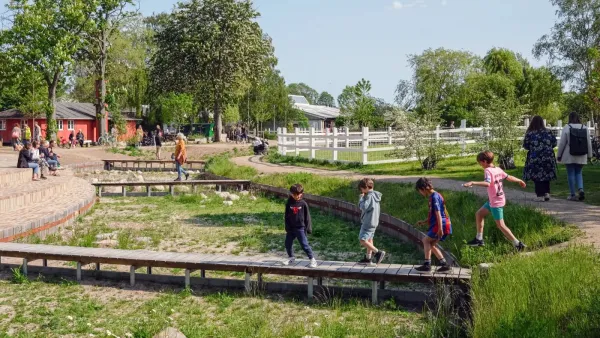
Copenhagen is losing its cool
In a city long designed to maximize light during dark Scandinavian winters, climate change is forcing the Danish capital to rethink its relationship with the sun.
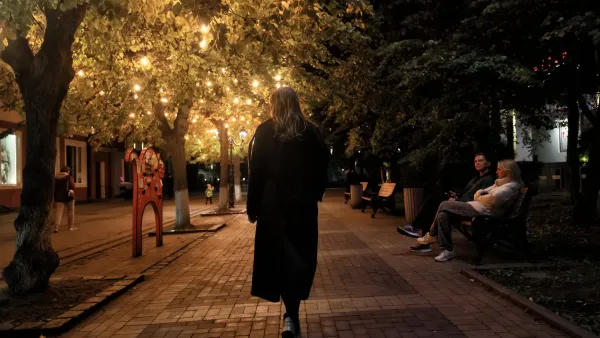
How urban design can deter crime
Well-designed public spaces and good lighting can prevent crime and make residents feel safer.

Planetizen Federal Action Tracker
A weekly monitor of how Trump’s orders and actions are impacting planners and planning in America.

Amtrak, CN end decades-long dispute with eight-year agreement
The new operating agreement establishes an updated framework for the companies to work together, including processes to resolve disputes.

Judges permit Denver to divert 77,000 acre feet from the Colorado River for reservoir expansion
Overuse and climate change have caused the Colorado River’s water levels to plummet.

NYC DOT wants faster, more permanent street upgrades
The city is examining ways to build more concrete infrastructure without getting entangled in 'decades-long' projects.

'Something we’ve never seen before:' rising utility rates could strain city finances nationwide
Data centers, climate change and other factors have caused utility rates in the United States to increase by 38% since 2020.

Trump to overrule local leaders, lease millions of acres of America’s Pacific Island territories’ seafloors to mining companies
International law says that the Indigenous people of America’s territories have a right to prior and informed consent regarding projects that impact their countries.

FREE Course: Walkable City 1: Why Walkability?
After describing his path towards focusing on walkability as the essence of good planning, Jeff Speck marches through his five principal reasons for making more walkable places.
Reinventing Malls: Planning Alchemy—Turning Gray Fields Into Gold
The course focuses on the opportunities and imperatives that shape reinvention of mall sites.

Harvard University Graduate School of Design
KFH Group Inc.
Greater Baltimore Committee
The Architects Foundation
University of Cincinnati Online
The Pocatello Development Authority
The Urban Renewal Agency of the City of Pocatello