Cities on the rise are growing faster and cities on the decline are shrinking slower, according to new figures from the U.S. Census Bureau.


Big cities are getting bigger, according to these new numbers. Analysts say the recession has caused many people to leave behind their suburban homes for more affordable inner-city locations. Domestic migration to suburbs and exurbs has fallen sharply.
"The central-city population in U.S. metropolitan areas with more than one million people (excluding New Orleans, where recent growth rates reflect residents returning to the city following Hurricane Katrina) grew at an annual rate of 0.97% between July 2007 and July 2008, according to Mr. Frey's analysis. That compared with a growth rate of 0.90% in 2006-2007, and growth rates around 0.5% in the years between 2002 and 2005, when the robust real-estate market led to new jobs and new housing developments outside the cities, where open land is more plentiful."
Read the full story: Cities Grow at Suburbs' Expense During Recession

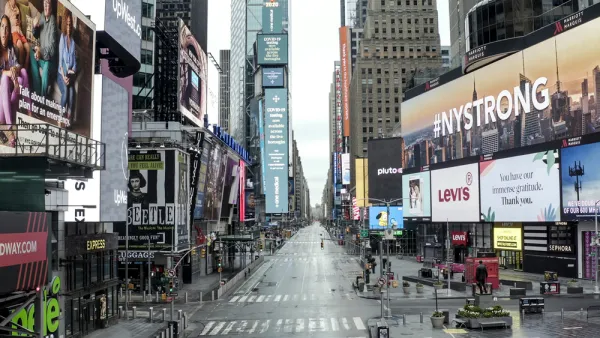
Pandemic-Era Big City Population Loss More Dramatic Than We Thought
A new analysis indicates that many big cities saw their biggest population declines in at least a decade, with suburbs also showing a slowdown in growth.
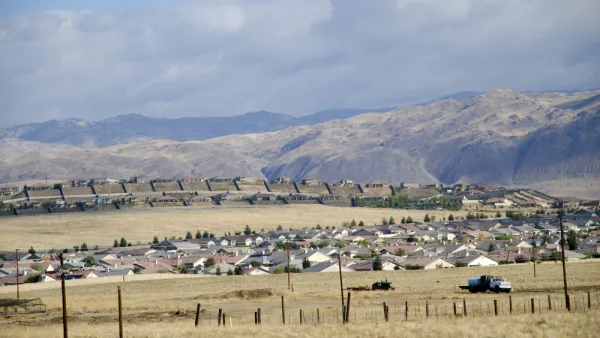
Exurbs Growing Fast
American exurbs growing again, after brief period of urbanization.
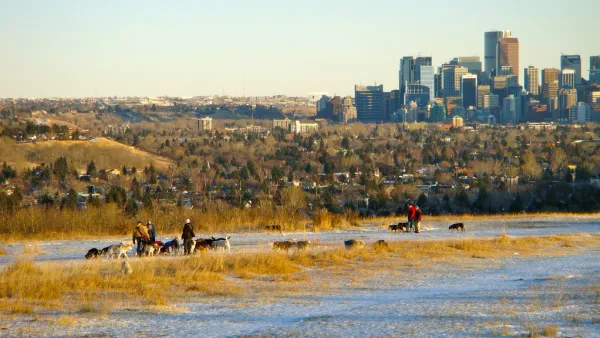
Despite Urban Building Binge, Canada Remains a Country of Suburbs
A high-rise residential building boom has transformed the skylines of Vancouver and Toronto over the past two decades. But despite the evident rise in the popularity of urban living, Canada's suburbs and exurbs continue to dominate growth trends.

Planetizen Federal Action Tracker
A weekly monitor of how Trump’s orders and actions are impacting planners and planning in America.

California plans to bury El Niño’s downpour
If the state plays its cards right, it may be able to store a billion acre-feet of El Niño’s water in aquifers.

Desperate measures: Advocates weigh draining Lake Powell to fill Colorado River
Draining the reservoir could reduce evaporation losses by a couple hundred thousand acre-feet.

Chicago Avenue bridge construction delays enrages city leaders
The bridge has been closed since 2025. The city originally aimed to re-open it in December, and now expects to finish construction in 2027.

NYC bus network redesign speeds up Queens buses
Rush routes have seen a 4.6% speed increase after the redesign.

California High-Speed Rail Authority picks trainset manufacturer
The California High-Speed Rail Authority aims to start servicing passengers by 2033.

FREE Course: Walkable City 1: Why Walkability?
After describing his path towards focusing on walkability as the essence of good planning, Jeff Speck marches through his five principal reasons for making more walkable places.
Reinventing Malls: Planning Alchemy—Turning Gray Fields Into Gold
The course focuses on the opportunities and imperatives that shape reinvention of mall sites.

City of Rosemead
Rutgers University, Edward J. Bloustein School of Planning and Public Policy
One Hundred Miles
Hunter College, City University of New York (CUNY)
The Architects Foundation
University of Cincinnati Online
City of Cambridge
Montrose County
The Pocatello Development Authority