American exurbs growing again, after brief period of urbanization.


The great recession hurt many distant suburbs. The last year of census data shows that trend is long over and many are coming back. "The new numbers leave little doubt that suburbanization is on the rise, after a decided lull in the first part of the decade," William H. Frey writes for the Brookings Institute. A pattern of moving from large metro areas to more suburban areas characterized the 90s and early 2000s, and that trend has returned.
"Kaufman County in suburban Dallas, Pinal County in suburban Phoenix, and Toole County in suburban Salt Lake City, Utah were among those registering highest growth. In contrast, core urban counties in the Snow Belt, including Cook Co., Ill., Cuyahoga Co., Ohio, and Allegheny Co., Pa. showed some of the greatest numeric population losses," Frey reports.
If this return to '90s-style suburbanization continues, it will have big implications for transport the largest contributor to CO2 emissions.
Read the full story: US population disperses to suburbs, exurbs, rural areas, and “middle of the country” metros

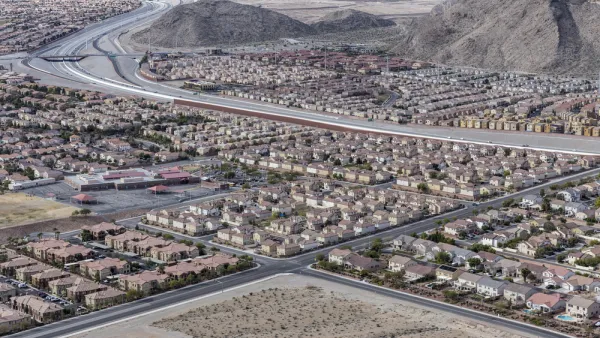
How COVID-19 and Skyrocketing Housing Costs Accelerated Sprawl
In search of space and affordability, American families are increasingly moving to suburbs and exurbs.
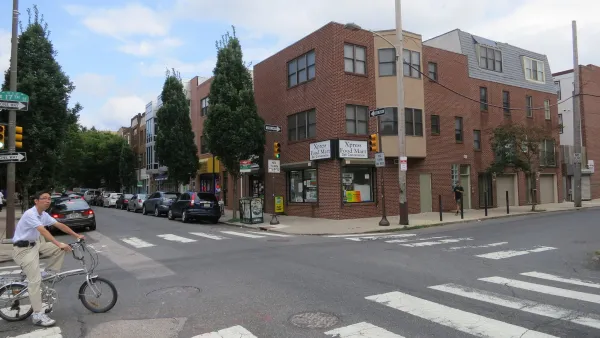
AIA: Demand for High-Density Development Is Down
For the first time in four years, a quarterly survey indicates “market saturation in urban areas.”
Development in Cities Outpaces 'Burbs
Development is occurring more rapidly in urban centers than in the suburbs, according to a new study from the U.S. Environmental Protection Agency.

Planetizen Federal Action Tracker
A weekly monitor of how Trump’s orders and actions are impacting planners and planning in America.

California plans to bury El Niño’s downpour
If the state plays its cards right, it may be able to store a billion acre-feet of El Niño’s water in aquifers.

Chicago breaks ground on $3 billion megadevelopment
The new neighborhood, titled Foundry Park, will one day host 3,700 residences.

Satanic Place Names
From streams and lakes to valleys and canyons, I mapped more than 1,000 places named after the Devil.

California High-Speed Rail Authority CEO resigns after $600,000 scandal
Under Ian Choudri, the authority used taxpayer dollars to fund first class flights and trips to nightclubs.

Want to study the Missouri River? Soon, you may need unanimous approval from 10 states
Legislation would require 10 governors’ permission to study or build projects moving water outside the basin.

FREE Course: Walkable City 1: Why Walkability?
After describing his path towards focusing on walkability as the essence of good planning, Jeff Speck marches through his five principal reasons for making more walkable places.
Reinventing Malls: Planning Alchemy—Turning Gray Fields Into Gold
The course focuses on the opportunities and imperatives that shape reinvention of mall sites.

City of Rosemead
Rutgers University, Edward J. Bloustein School of Planning and Public Policy
One Hundred Miles
Hunter College, City University of New York (CUNY)
The Architects Foundation
University of Cincinnati Online
City of Cambridge
Montrose County
The Pocatello Development Authority