Cap and trade is the topic du jour in climate change circles. A new report from CCAP makes the economic case for using those revenues to promote smart growth that reduces transportation emissions though VMT reductions.


With fully one-third of greenhouse gas emissions stemming from transportation, the Center for Clean Air Policy looked at how the evolving climate change bill will reduce those emissions through its cap and trade policy. While excellent at tackling 'point sources' of emissions, the carbon trading mechanism's affect on driving may in fact be negligible.
"The study points out that although the price signal from a national cap-and-trade system will be sufficient to change behavior of major point sources of emissions, it will be far less effective in influencing travel demand for Americans.
This study demonstrates that achieving economy-wide emissions reductions will be less costly if strategies include smart growth and improved travel choices. Therefore, CCAP recommends dedicating 10 percent of national cap-and-trade allowance value to smart growth and improved transportation choices."
Thanks to Steetsblog Daily

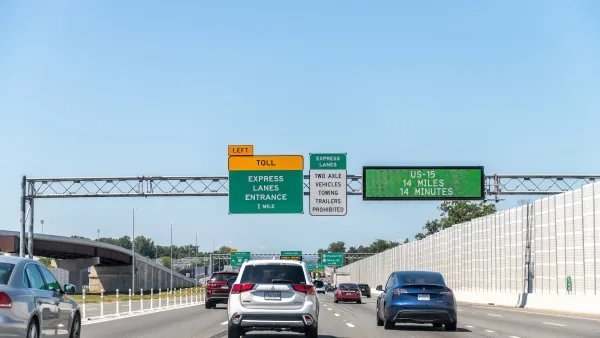
Congestion Costing Reality Check, Part 2: A congestion costing critique
There are good reasons to be skeptical of highway industry claims that traffic congestion is a growing problem. Their analysis is often incomplete and biased. Let’s pull back the curtain on some major congestion cost studies.
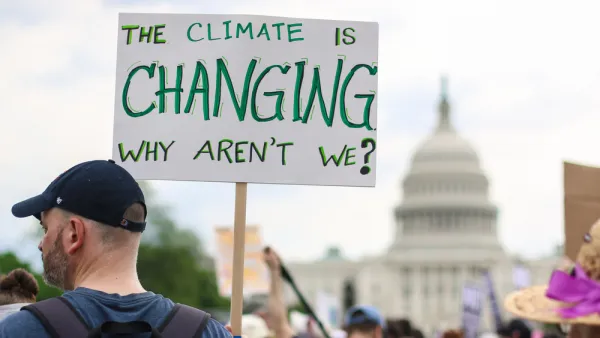
USDOT Releases Climate Strategies Playbook
The USDOT's new Climate Strategies that Work Playbook provides detailed information concerning benefits and implementation requirements for 27 transportation-related emission reduction strategies.
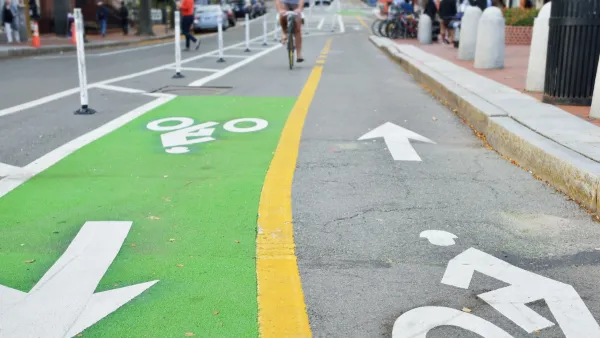
Book Review: Combining Sustainability and Smart Growth
A review of The Sustainable Urban Design Handbook, by architects Nico Larco and Kaarin Knudson.

Planetizen Federal Action Tracker
A weekly monitor of how Trump’s orders and actions are impacting planners and planning in America.

The state-sanctioned urbicide of Austin
People don’t kill cities. Freeways do.

US to reduce Colorado River water deliveries to Mexico
A new Colorado Treaty amendment reduces Mexico’s Colorado River water allocation by 250,000 acre feet.

5 New England states march closer to 800 megawatt wind energy project
Securing federal approval for the project may be complicated under the Trump administration, which has historically been hostile towards domestic wind power.

Baltimore to break ground on $50 million Transit Priority Project
The project will bring faster bus trips, safer streets and better bike connections to Baltimore.

Airbnb launches $250 million 'last-dollar financing' housing accelerator, makes first investment in Austin
The company will put $6.4 million towards affordable housing development in Texas’ capital.

FREE Course: Walkable City 1: Why Walkability?
After describing his path towards focusing on walkability as the essence of good planning, Jeff Speck marches through his five principal reasons for making more walkable places.
Reinventing Malls: Planning Alchemy—Turning Gray Fields Into Gold
The course focuses on the opportunities and imperatives that shape reinvention of mall sites.

Eagle County Government
Harvard University Graduate School of Design
Nashville Planning Department
The Architects Foundation
University of Cincinnati Online
The Pocatello Development Authority
The Urban Renewal Agency of the City of Pocatello
Journal of the American Planning Association