Jacksonville, Florida officials are considering removing pay phones on sidewalks and in downtown parks, which are often viewed as nuisances that hinder efforts to make neighborhoods cleaner and safer.


"Karen Nasrallah, redevelopment manager for the Jacksonville Economic Development Commission, said there would still be plenty of pay phones in downtown, both in government buildings like City Hall as well as on privately-owned property.
She said the regulation is aimed at pay phones that people loiter around, creating an intimidating situation for others who are walking down the sidewalks and find their path obstructed by panhandlers. She said it creates a perception that undermines the effort to make downtown a clean and safe neighborhood that's walkable.
The legislation mirrors similar restrictions the city placed on pay phones in the Springfield neighborhood north of downtown. Bruno said those regulations have proven successful."
Read the full story: JEDC to recommend removal of pay phones
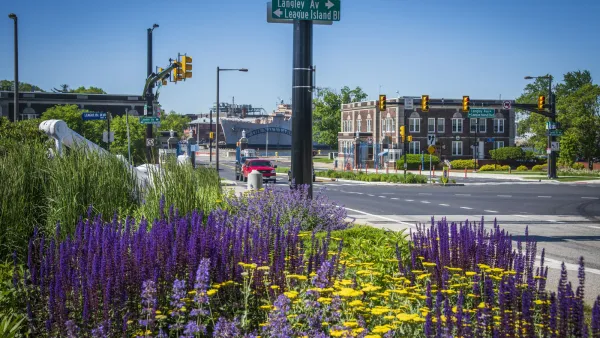
Philadelphia sees 29% drop in gun violence near new green spaces
A city-backed program that cleans up blighted and vacant lots is creating new public spaces and reducing crime in surrounding communities.
After the Drug War: Ciudad Juárez Working to Attract Visitors
The murder rate in Ciudad Juárez is in sharp decline: from 3,075 in 2010 to 487 in 2013. Juárez officials are launching initiatives to revitalize the city and attract visitors from across the border in Texas and New Mexico.
Drug War Leaves Wake of Empty Homes
The border city of Juarez, Mexico, has been a flashpoint in the drug-fueled violence that has plagued many parts of Mexico. Recent figures show that nearly 25% of the homes there have been abandoned.

Washington state to charge fee to drivers with fuel-efficient cars
Revenue from the fee will go towards supporting the state’s highways.

Illinois considers spending $1 billion in taxpayer money on data center
A quantum computing campus and data center are currently under construction in Chicago.

Trump to blast ‘hydrocarbon highway’ through ‘world’s longest art gallery’
Environmental and historic preservation groups are suing to stop the project.

NYC, state sue feds over mixed-immigration-status housing assistance rule
The state’s lawsuit argues that the rule change violates the Administrative Procedure Act.

Michigan to turn neighborhood into virtual power plant
Residents will soon be able to divert their excess energy to the grid in exchange for compensation.

Data center, mining project swarm to long-awaited Alaska railroad line
The state-owned railroad approved final plans for the spur line this week; the project is expected to cost $311 million, mostly funded by the federal government

FREE Course: Walkable City 1: Why Walkability?
After describing his path towards focusing on walkability as the essence of good planning, Jeff Speck marches through his five principal reasons for making more walkable places.
Reinventing Malls: Planning Alchemy—Turning Gray Fields Into Gold
The course focuses on the opportunities and imperatives that shape reinvention of mall sites.

City of Charlotte
City of Rosemead
Rutgers University, Edward J. Bloustein School of Planning and Public Policy
University of Michigan School for Environment and Sustainability (SEAS)
Hunter College, City University of New York (CUNY)
The Architects Foundation
University District Partnership