The border city of Juarez, Mexico, has been a flashpoint in the drug-fueled violence that has plagued many parts of Mexico. Recent figures show that nearly 25% of the homes there have been abandoned.


"Rows upon rows of houses have been abandoned in this housing project located on the southeast side of the city. People left because of the lack of security or the lack of work. The few who stayed have nowhere else to go.
"Back home, you either work at the mines or with the narcos," said a maquiladora worker from Parral who preferred not to be identified.
About a quarter of the homes in Juárez are empty due to the massive exodus of people who have fled the current wave of violence, and the urban planning mistakes of the past."
The empty areas are now harboring even more criminal activity, which has many locals worried about the likelihood of finding a long-term solution.
Read the full story: Flight brings plight: About 25% of Juárez homes sit empty, as residents flee drug war violence

After the Drug War: Ciudad Juárez Working to Attract Visitors
The murder rate in Ciudad Juárez is in sharp decline: from 3,075 in 2010 to 487 in 2013. Juárez officials are launching initiatives to revitalize the city and attract visitors from across the border in Texas and New Mexico.
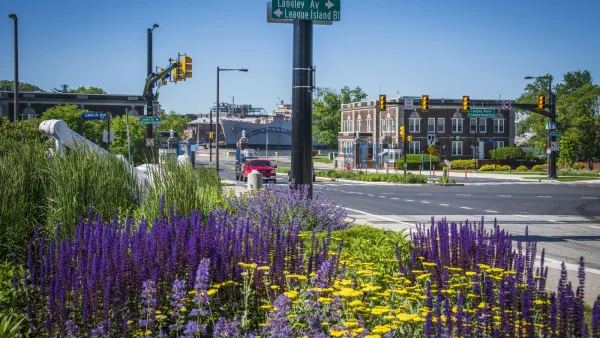
Philadelphia sees 29% drop in gun violence near new green spaces
A city-backed program that cleans up blighted and vacant lots is creating new public spaces and reducing crime in surrounding communities.
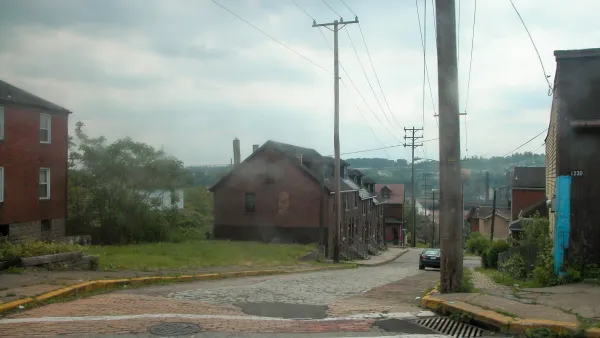
Managing Abandoned Homes in North Braddock
The usual litany of Rust Belt woes hit North Braddock, Pennsylvania particularly hard. The Pittsburgh suburb has shed two-thirds of its population and is burdened with 350 abandoned properties.

Planetizen Federal Action Tracker
A weekly monitor of how Trump’s orders and actions are impacting planners and planning in America.

Amtrak, CN end decades-long dispute with eight-year agreement
The new operating agreement establishes an updated framework for the companies to work together, including processes to resolve disputes.

Judges permit Denver to divert 77,000 acre feet from the Colorado River for reservoir expansion
Overuse and climate change have caused the Colorado River’s water levels to plummet.

NYC DOT wants faster, more permanent street upgrades
The city is examining ways to build more concrete infrastructure without getting entangled in 'decades-long' projects.

'Something we’ve never seen before:' rising utility rates could strain city finances nationwide
Data centers, climate change and other factors have caused utility rates in the United States to increase by 38% since 2020.

Trump to overrule local leaders, lease millions of acres of America’s Pacific Island territories’ seafloors to mining companies
International law says that the Indigenous people of America’s territories have a right to prior and informed consent regarding projects that impact their countries.

FREE Course: Walkable City 1: Why Walkability?
After describing his path towards focusing on walkability as the essence of good planning, Jeff Speck marches through his five principal reasons for making more walkable places.
Reinventing Malls: Planning Alchemy—Turning Gray Fields Into Gold
The course focuses on the opportunities and imperatives that shape reinvention of mall sites.

Harvard University Graduate School of Design
KFH Group Inc.
Greater Baltimore Committee
The Architects Foundation
University of Cincinnati Online
The Pocatello Development Authority
The Urban Renewal Agency of the City of Pocatello