Officials in Fort Worth, Texas, are searching for ways to deal with buildings left vacant by businesses struggling during the recession. Other cities and the state of Texas are also addressing the issue.


"'One of the worst things you can have in your neighborhood is a boarded-up building,'" said Brandon Bennett, director of Fort Worth's code enforcement department. "'It attracts crime.'"
Recognizing that vacant buildings pose a long-term problem, Fort Worth code compliance workers a year ago started a public review to consider an ordinance to better control vacant buildings, but the work was tabled. The issue has since resurfaced and city employees are wanting to talk with real estate agents, mortgage companies and lenders about the best way to address the problem, Bennett said.
Last summer, when the review began, city workers noticed that vacant houses were generally boarded up for 1? 1/2 to two months, he said. Now more lenders and banks are boarding up structures to deter thieves, Bennett said.
In Arlington, the city launched a program to bill owners of vacant properties for inspections but recently put the plan on hold after numerous complaints.
In Austin, legislation has been filed to fine property owners who don't register vacant buildings with their city annually and show proof of insurance."
Read the full story: Cities struggle with vacant buildings

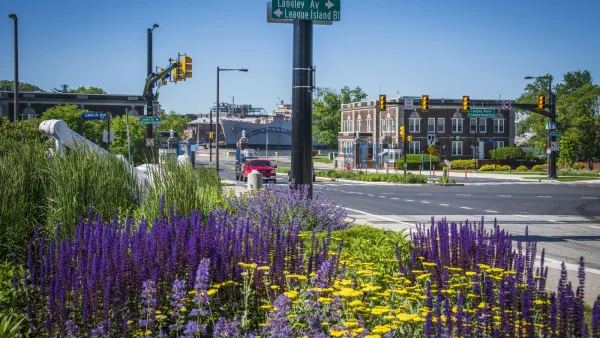
Philadelphia sees 29% drop in gun violence near new green spaces
A city-backed program that cleans up blighted and vacant lots is creating new public spaces and reducing crime in surrounding communities.
Cook County Land Bank Expands Vacancy Program, Offers 4,400 Lots for Sale
The vacant lot program at the Cook County Land Bank Authority recently kicked into high gear—offering a huge number of vacant lots for sale, located around 27 neighborhoods and suburbs in the Chicago region.

NYC Puts 250 Most Distressed Apartment Buildings on Enhanced Oversight List
The city’s Alternative Enforcement Program prioritizes buildings with the most unaddressed code violations, allowing the city to make repairs where needed.

Planetizen Federal Action Tracker
A weekly monitor of how Trump’s orders and actions are impacting planners and planning in America.

‘Going backwards:’ Baltimore mayor, students rally against state's transit funding plan
Maryland's proposed six-year plan provides no funding for Baltimore’s BMORE bus program and reduces its road maintenance funding.

Detroit to transform waterfront with $2.2 billion investment
Developers will convert about 18 acres of unused parking lot space into civic spaces.

Data center developers are using lawsuits, cash offers to ‘overwhelm’ rural America
Newsrooms in five states worked together to uncover the tactics big tech developers use to buy land from reluctant communities.

U.S.-Iran war may have ‘devastating’ impact on cost to warm homes
Vermont and Maine residents may see a 76% increase in the cost of warming their homes this winter.

Senate bill would ‘overhaul’ environmental permitting laws
Under the proposed act, government agencies would also not be able to suspend or rescind permits after granting them.

FREE Course: Walkable City 1: Why Walkability?
After describing his path towards focusing on walkability as the essence of good planning, Jeff Speck marches through his five principal reasons for making more walkable places.
Reinventing Malls: Planning Alchemy—Turning Gray Fields Into Gold
The course focuses on the opportunities and imperatives that shape reinvention of mall sites.

One Hundred Miles
County of Mendocino
planning NEXT
The Architects Foundation
University of Cincinnati Online
Montrose County
Northern Illinois Transit Authority (NITA)
The Pocatello Development Authority