A group of surfers has successfully blocked an environmentally-harmful beach dredging and repair project in Florida, at least temporarily. The project was meant to counteract beach erosion problems, but was protested over concerns about local reefs.


"When the Town of Palm Beach proposed a beach repair project that Mr. Gibson thought posed a threat to those prized breaks, he and other surfers challenged the project in court.
Last week they succeeded in blocking - at least temporarily, on environmental grounds - a strategy widely used against the beach erosion that threatens most of the nation's coast and is accelerating as global warming fuels the rise of sea levels.
In ruling against the project, the administrative law judge who heard the case, Robert E. Meale, criticized its potential environmental effects and denounced as "worthless" some of the engineering behind it. Advocates of the project, a sand-pumping effort known as beach nourishment, called the ruling misguided and said they feared that if it held up it would drive coastal towns to remedies that are more environmentally dangerous, like constructing seawalls or other coastal armor."
Read the full story: Surfers Deal a Blow to a Beach Dredging Project
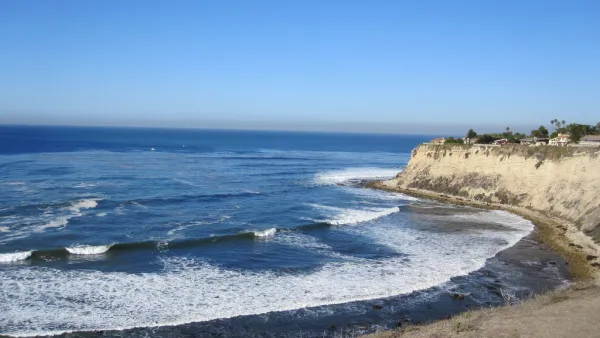
'Surfer Gang' Beach Fort Causes Problems
A rowdy collection of Palos Verdes surfers, some of them middle-aged, will resort to criminal tactics to keep outsiders away from their favorite spot. They've even built a fort, and officials are having trouble getting rid of it.
Rush to Rebuild Could Cause Long-Term Damage to NY/NJ Beaches
Just seven months ago Hurricane Sandy damaged 94 percent of New Jersey's beaches and eroded dozens of miles of coastline in New York. As waterfront communities rush to rebuild before summer, some fear disastrous long-term consequences.
San Francisco's Battle With Mother Nature
As climate change accelerates coastal erosion across the continent, officials everywhere look to San Francisco to see how it will stem the tide, Felicity Barringer reports.

Planetizen Federal Action Tracker
A weekly monitor of how Trump’s orders and actions are impacting planners and planning in America.

California plans to bury El Niño’s downpour
If the state plays its cards right, it may be able to store a billion acre-feet of El Niño’s water in aquifers.

Desperate measures: Advocates weigh draining Lake Powell to fill Colorado River
Draining the reservoir could reduce evaporation losses by a couple hundred thousand acre-feet.

Housing is the top priority of Seattle’s sole new councilmember
Jenks campaigned on building 1,000 new units of affordable housing.

New tax cuts may slash $1.5 billion in funding for Miami transit, public parks
Amendment 3 will save Miami-Dade homeowners $2,700 in 2028.

Arizona, Wisconsin, Pennsylvania hope to finally advance climate goals post-midterms
The three states have spent years under Republican or divided control.

FREE Course: Walkable City 1: Why Walkability?
After describing his path towards focusing on walkability as the essence of good planning, Jeff Speck marches through his five principal reasons for making more walkable places.
Reinventing Malls: Planning Alchemy—Turning Gray Fields Into Gold
The course focuses on the opportunities and imperatives that shape reinvention of mall sites.

City of Rosemead
Rutgers University, Edward J. Bloustein School of Planning and Public Policy
One Hundred Miles
University of Michigan School for Environment and Sustainability (SEAS)
Hunter College, City University of New York (CUNY)
The Architects Foundation
City of Cambridge
Montrose County
The Pocatello Development Authority