A rowdy collection of Palos Verdes surfers, some of them middle-aged, will resort to criminal tactics to keep outsiders away from their favorite spot. They've even built a fort, and officials are having trouble getting rid of it.


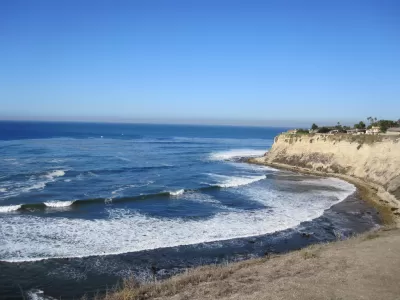
In Los Angeles, truth can be stranger than fiction. The territorial surfers who comprise the "Lunada Bay Boys" are one such case. Demographically distinct from most gangs, their alleged antics include "bombarding outsiders with dirt clods, slashing their tires and assaulting them in the water -- sometimes coordinating the attacks with walkie-talkies." This coming from older, whiter men living in the affluent neighborhood of Palos Verdes.
Despite an order from the Coastal Commission to tear down their "fort," the city of Palos Verdes Estates has been slow to act, according to a recent statement. Garret Therolf writes, "The city's statement came in response to a letter the Coastal Commission sent on Tuesday telling the city that it has until July 6 to develop a plan to tear down the crudely built structure or begin a permitting process that would include measures to improve access to one of the state's most coveted – and hostile – surf breaks."
The Bay Boys have apparently harassed enough of their fellow beach-goers to inspire a class-action lawsuit. Victims have petitioned a federal judge to ban the gang members from the beach, and their suit asks that a judge require city officials to investigate and prosecute the Bay Boys' crimes.
Read the full story: Surfer gang's beach 'fort' must be torn down or get a permit, state says, but city slow to act

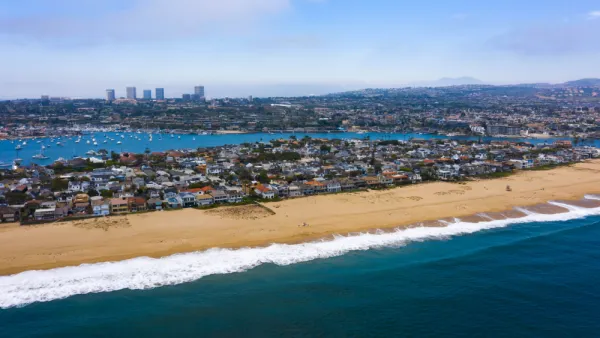
Beachfront Residences Can't Extend Yards Onto Public Beaches, CA Coastal Commission Decides
"It's like squatting by the rich," said one commissioner.
In New Jersey, Beach Parking Located Right on the Sand
This summer, the seashore town of Wildwood is charging a fee for people with the right cars to park in a very convenient location.
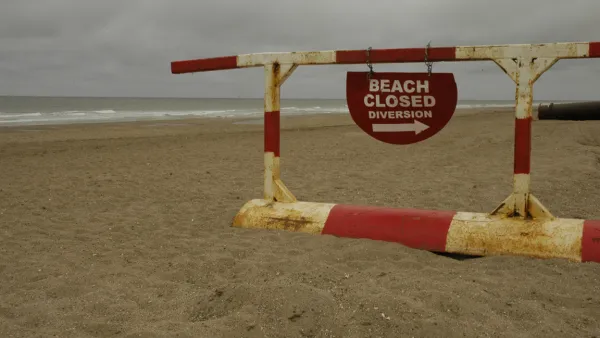
Making the Coast Accessible for Black and Latino Californians
A history of segregation and other barriers have made California's beaches and oceanfront disproportionately white.

Planetizen Federal Action Tracker
A weekly monitor of how Trump’s orders and actions are impacting planners and planning in America.

Amtrak, CN end decades-long dispute with eight-year agreement
The new operating agreement establishes an updated framework for the companies to work together, including processes to resolve disputes.

Judges permit Denver to divert 77,000 acre feet from the Colorado River for reservoir expansion
Overuse and climate change have caused the Colorado River’s water levels to plummet.

Atlanta City Council unanimously backs $3.5 billion Beltline light rail project
The resolution was drafted after Atlanta Mayor Andre Dickens pulled support for the Atlanta Streetcar extension last year.

SEPTA to bring nearby frequent transit to over 1 million new riders as part of decade-long plan
The agency's Accelerate plan will also bring frequent transit to twice the amount of jobs that are currently located near it.

NYC plants over 18,000 trees, the most new foliage in a decade
Many of the trees were planted in communities vulnerable to extreme heat.

FREE Course: Walkable City 1: Why Walkability?
After describing his path towards focusing on walkability as the essence of good planning, Jeff Speck marches through his five principal reasons for making more walkable places.
Reinventing Malls: Planning Alchemy—Turning Gray Fields Into Gold
The course focuses on the opportunities and imperatives that shape reinvention of mall sites.

City of Thousand Oaks
City of Wisconsin Rapids
Harvard University Graduate School of Design
The Architects Foundation
University of Cincinnati Online
The Pocatello Development Authority
The Urban Renewal Agency of the City of Pocatello