The Municipal Art Society wants Coney Island to be bigger and more attractive, but the developer says time-share hotels and big boxes are the key the landmark's financial sustainability.


"The issues are only further complicated by the recession, sharply declining retail sales and the inability to get financing for any project, regardless of who the developer is. Many residents of Coney Island are more concerned with affordable housing, jobs and attracting grocery stores to the area than the nuances of rebuilding the amusement district, although no one wants it to close down. The beaches, a minor league ballpark and what's left of the amusements still attract millions of summer visitors.
'We hope that there'll be some sort of marriage of convenience so we don't lose any summers, especially now with a depression, when more people may choose to come to Coney Island,' said Chuck Reichenthal, district manager for Community Board 13.
The city is pressing forward, expecting that Mr. Sitt will ultimately yield or sell his land. 'The city's plan will set the stage for the restoration of Coney Island's world-renowned vibrancy,' said Robert C. Lieber, deputy mayor for economic development. The art society 'has some compelling concepts that we are open to, but it's also important to make sure that the final plan is economically feasible and is integrated with the Coney Island community.'"
Read the full story: City and Developer Spar Over Coney Island Visions

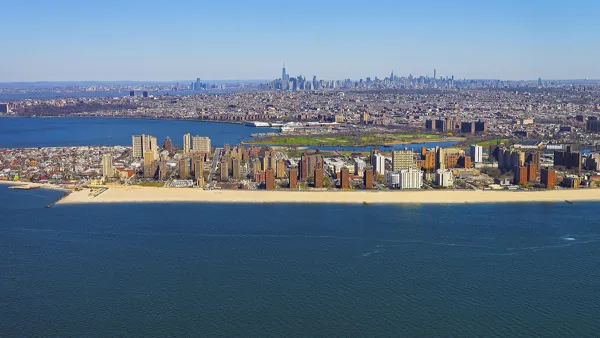
Planning for Resilience on Coney Island Creek
A case study in New York's response to the Hurricane Sandy flooding in the neighborhoods of Coney Island and Gravesend.
Coney Island's Facelift Manages to Keep the Wrinkles
A city led effort to revitalize Coney Island's famous boardwalk and amusements, started amid much angst from longtime business owners, has managed to achieve a delicate balance somewhere between Disney and seedy, writes Joseph Berger.
Revamped Coney Island Opens
A new amusement and entertainment section has opened at New York City's Coney Island. Long suffering from disrepair and neglect, the new development marks a turnaround. But some locals still object.

Planetizen Federal Action Tracker
A weekly monitor of how Trump’s orders and actions are impacting planners and planning in America.

The state-sanctioned urbicide of Austin
People don’t kill cities. Freeways do.

US to reduce Colorado River water deliveries to Mexico
A new Colorado Treaty amendment reduces Mexico’s Colorado River water allocation by 250,000 acre feet.

Nation's most wind-powered state turns to coal as data centers increase energy demand
For the first time in decades, Iowa has increased its generation of coal power.

NYC cools commuters with city's first rain garden above a bus stop
New York City officials say the plants in the rain garden can absorb 16 gallons of rainwater during heavy storms.

Brightline West’s future may rely on $6 billion federal loan
The company has until Nov. 2 to make a $400 million equity investment into its proposed high-speed rail line.

FREE Course: Walkable City 1: Why Walkability?
After describing his path towards focusing on walkability as the essence of good planning, Jeff Speck marches through his five principal reasons for making more walkable places.
Reinventing Malls: Planning Alchemy—Turning Gray Fields Into Gold
The course focuses on the opportunities and imperatives that shape reinvention of mall sites.

Eagle County Government
Harvard University Graduate School of Design
Nashville Planning Department
The Architects Foundation
University of Cincinnati Online
The Pocatello Development Authority
The Urban Renewal Agency of the City of Pocatello
Journal of the American Planning Association