Ridership is up on transit in the Twin Cities. Fewer cars are being sold, and tax revenues are down. With little funding expected to fill the gap, transit fare increases may be on the horizon.


"With huge declines in car sales that generate revenue from Minnesota's motor vehicle sales tax, it could invite difficult decisions that could include another fare increase, Peter Bell told about 200 people gathered at Maplewood Community Center. The vehicle sales tax supplies about 38 percent of the money the Met Council needs to operate buses and trains."
"Bell said he expected the problem to worsen by the time the state releases its updated budget forecast this month. He said the shortfall -- which one county commissioner called a "serious problem" -- would extend to suburban bus companies."
"Because many people aren't buying new cars, the Met Council is receiving far less revenue from motor vehicle sales taxes; in the current fiscal year those receipts are down $12 million from five years ago, and the council forecasts a budget shortfall of $45 million over the next two years."
Read the full story: Metro Transit long on riders, short on money
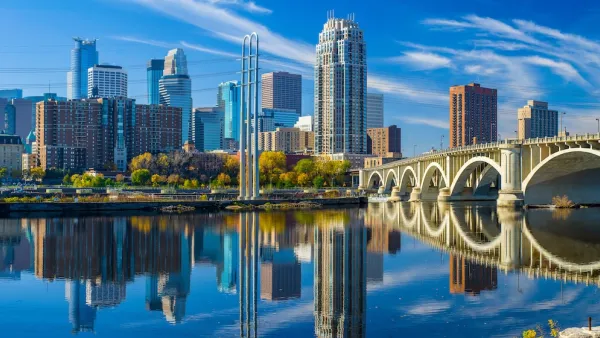
Looking Back on 60 Years of Land Development in the Twin Cities
In 1960, about 12 percent of the Twin Cities metro's land was already developed. By 2020, about 34 percent had been developed. Many factors influenced how the region has changed since 1960.
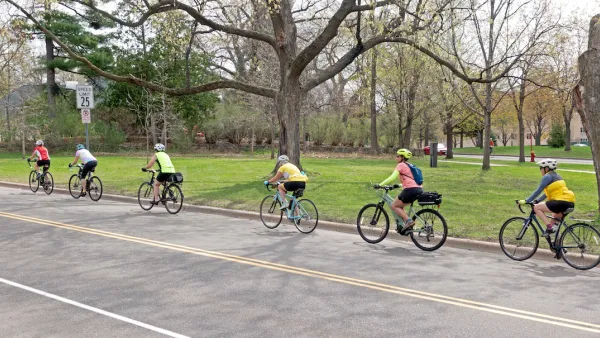
Twin Cities Suburbs Look to Improve Bike Facilities
Communities around Minneapolis and St. Paul are working to build more robust bike infrastructure networks.
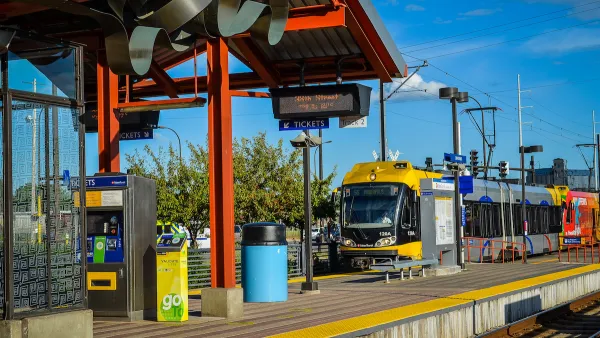
Twin Cities Trains Move to Fewer Cars, Higher Frequency
Headways will drop from 15 minutes to 12 minutes.

Planetizen Federal Action Tracker
A weekly monitor of how Trump’s orders and actions are impacting planners and planning in America.

Washington state to charge fee to drivers with fuel-efficient cars
Revenue from the fee will go towards supporting the state’s highways.

Illinois considers spending $1 billion in taxpayer money on data center
A quantum computing campus and data center are currently under construction in Chicago.

People Mover delayed again, LAX and contractor trade barbs
The automated train was last slated to open in January 2027.

Trump to blast ‘hydrocarbon highway’ through ‘world’s longest art gallery’
Environmental and historic preservation groups are suing to stop the project.

25 states cast bids to be the home of U.S. Space Academy
The academy will train scientists, officers and astronauts for the U.S. Space Force.

FREE Course: Walkable City 1: Why Walkability?
After describing his path towards focusing on walkability as the essence of good planning, Jeff Speck marches through his five principal reasons for making more walkable places.
Reinventing Malls: Planning Alchemy—Turning Gray Fields Into Gold
The course focuses on the opportunities and imperatives that shape reinvention of mall sites.

City of Charlotte
City of Rosemead
Rutgers University, Edward J. Bloustein School of Planning and Public Policy
University of Michigan School for Environment and Sustainability (SEAS)
Hunter College, City University of New York (CUNY)
The Architects Foundation
University District Partnership