President-elect Barack Obama has announced a promise to institute a broad-ranging package of building programs, from infrastructure to schools -- the nation's largest public works program since the post-war era.


"Mr. Obama's remarks showcased his ambition to expand the definition of traditional work programs for the middle class, like infrastructure projects to repair roads and bridges, to include new-era jobs in technology and so-called green jobs that reduce energy use and global warming emissions. "We need action - and action now," Mr. Obama said in an address broadcast Saturday morning on radio and YouTube."
"Mr. Obama's plan, if enacted, would be in part a government-directed industrial policy, with lawmakers and administration officials picking winners and losers among private projects and raining large amounts of taxpayer money on them."
"It would cover a range of programs to expand broadband Internet access, to make government buildings more energy efficient, to improve information technology at hospitals and doctors' offices, and to upgrade computers in schools."
Read the full story: Obama Pledges Public Works on a Vast Scale
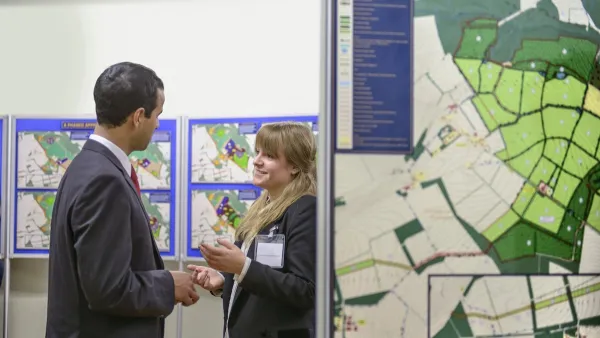
The Problem With Outsourcing Public Engagement
Why hiring outside consultants to represent public works projects at meetings often misses the point of having public officials hear community concerns.
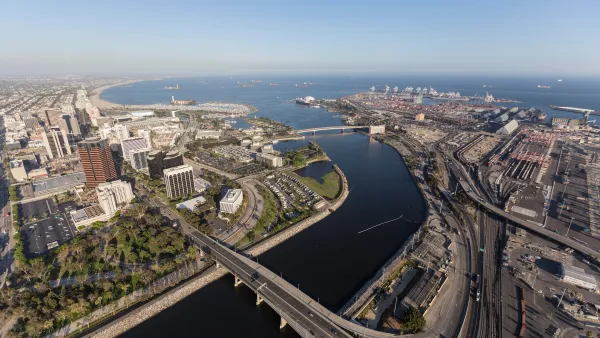
Los Angeles County Initiates Effort to Advance Equity in Infrastructure
L.A. County Public Works has launched an initiative to center equity in all of its processes, programming, and services as it plans, designs, builds, and maintains modern infrastructure that uplifts all communities of the county.
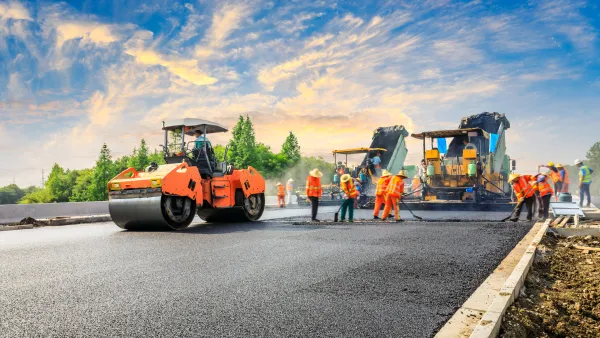
Opinion: The Slippery Slope of Privatizing Public Works
The Biden administration is changing course on a century of policy in public works ownership and management, signaling a concerning shift toward privately owned, profit-driven utilities and other essential services.

Planetizen Federal Action Tracker
A weekly monitor of how Trump’s orders and actions are impacting planners and planning in America.

Eastern Nebraska is running out of electricity
Data centers and electrification are straining eastern Nebraska’s grid, throttling economic development.

Study reveals best places in the U.S. for cycling, walking
New research from Streetlight Data examines bicycle and pedestrian miles per capita in the 100 largest U.S. cities by population.

DSA members accuse Mamdani of 'abandoning values' over housing redevelopment
New York City's mayor plans to replace about 2,000 units of public housing with private, mixed-income housing.

All sides of BRT debate unhappy with CDOT’s most recent move
The Colorado Department of Transportation is no longer considering center-running bus lanes for Colorado Boulevard.

Massachusetts bogs generate both power, and cranberries
Putting solar panels above farmland is one way Massachusetts is advancing toward its goal of net-zero carbon emissions by 2050.

FREE Course: Walkable City 1: Why Walkability?
After describing his path towards focusing on walkability as the essence of good planning, Jeff Speck marches through his five principal reasons for making more walkable places.
Reinventing Malls: Planning Alchemy—Turning Gray Fields Into Gold
The course focuses on the opportunities and imperatives that shape reinvention of mall sites.

City of Rosemead
Rutgers University, Edward J. Bloustein School of Planning and Public Policy
One Hundred Miles
University of Michigan School for Environment and Sustainability (SEAS)
Hunter College, City University of New York (CUNY)
The Architects Foundation
City of Cambridge
The Pocatello Development Authority
The Urban Renewal Agency of the City of Pocatello