Vallejo, CA declared bankruptcy last spring, felled by fiscal mismanagement and falling property taxes. Cities around the country are looking to Vallejo's example as they teeter near the edge.


"'Vallejo was sort of the canary in the coal mine - the sickest patient goes first,' says Dean Gloster, an attorney representing Vallejo's unions. 'Even better-run cities are going to be facing similar issues as health care costs rise and the baby boomer generation reaches retirement age.'
A September report from the National League of Cities points to precarious fiscal conditions in cities across the nation, due to falling revenues from property, sales and income taxes and rising costs from inflation, energy, infrastructure, salaries, health care and pensions. 'Vallejo is significant in the sense that the reasons they are doing it are factors that are going to be in place in cities across the country,' says Chris Hoene, director of policy and research for the National League of Cities. 'You can see the Vallejo situation as something that cities across the country watch as a way to bring costs under control.'
Read the full story: Vallejo’s Fiscal Freefall
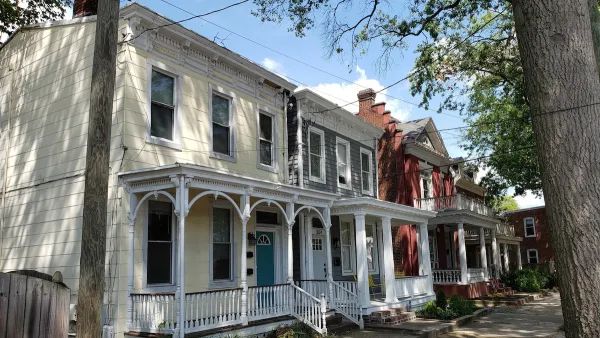
Property Taxes Cuts on the Ballot in at Least Eight States
From completely eliminating property tax to creating new exemptions, voters in eight states across the country will cast their votes on a variety of ballot measures that could have major implications for local budgets.

Affordable Housing Bond Nixed From the California Ballot
Supporters of the proposed bond say the measure will have more success in the future.
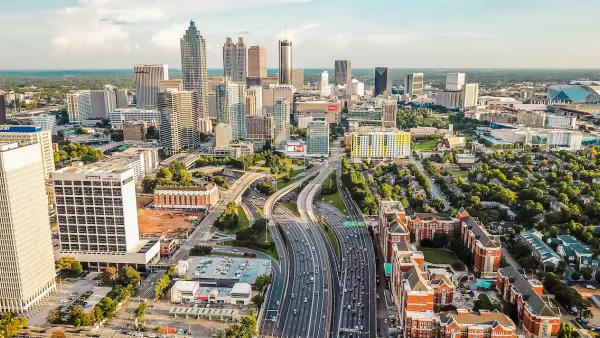
Quantifying the Losses Caused by New Freeways
Data shows cities lose millions in potential property taxes when highways displace homes and businesses.

Planetizen Federal Action Tracker
A weekly monitor of how Trump’s orders and actions are impacting planners and planning in America.

California plans to bury El Niño’s downpour
If the state plays its cards right, it may be able to store a billion acre-feet of El Niño’s water in aquifers.

Desperate measures: Advocates weigh draining Lake Powell to fill Colorado River
Draining the reservoir could reduce evaporation losses by a couple hundred thousand acre-feet.

Mamdani’s pied-à-terre tax survives legal challenge
A panel of judges found that the plaintiffs failed to demonstrate injury as a result of New York City's implementation of the tax.

Eastern Nebraska is running out of electricity
Data centers and electrification are straining eastern Nebraska’s grid, throttling economic development.

Seattle passes record-breaking transit services expansion
Proposition 1 will double the city’s transit tax to add 95,000 more bus trips and preserve 180,000 bus trips annually.

FREE Course: Walkable City 1: Why Walkability?
After describing his path towards focusing on walkability as the essence of good planning, Jeff Speck marches through his five principal reasons for making more walkable places.
Reinventing Malls: Planning Alchemy—Turning Gray Fields Into Gold
The course focuses on the opportunities and imperatives that shape reinvention of mall sites.

City of Rosemead
Rutgers University, Edward J. Bloustein School of Planning and Public Policy
One Hundred Miles
University of Michigan School for Environment and Sustainability (SEAS)
Hunter College, City University of New York (CUNY)
The Architects Foundation
City of Cambridge
Montrose County
The Pocatello Development Authority