David Brooks is dismayed at all the failed 'stimulus packages' and those yet to come. Instead, he points to short and long term infrastructure plans, mostly in transportation, that will help the country in addition to any stimulus to the economy.


"Bad policy ideas are coming in profusion. There are plans to bail out automakers. There are plans to issue more rebate checks (even though the last ones didn't work). Barack Obama is proposing one-time tax credits for small businesses that are hiring.
These and other plans amount to an economic sugar rush.
The smart thing to do is announce a short-term infrastructure initiative to accelerate all those repair projects that can be done within a few years. Then, begin a long-term National Mobility Project.
Major highway projects take about 13 years from initiation to completion - too long to counteract any recession. But at least they create a legacy that can improve the economic environment for decades to come.
Explore all the new ideas that are burgeoning in the transportation world - congestion pricing, smart highways, rescue plans for shrinking Midwestern cities, new rail and airplane technologies. When you look into this sector, you see we are on the cusp of another transportation revolution."
Read the full story: Op-Ed Columnist: A National Mobility Project

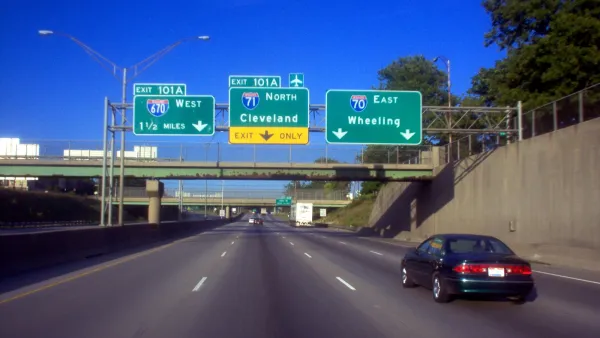
The 'INVEST in America Act' Would Help States Kick the Highway Habit
While Congress debates its bipartisan infrastructure deal, a House-approved bill, the INVEST in America Act, waits in the wings with the potential to alter the direction of transportation planning in the United States.
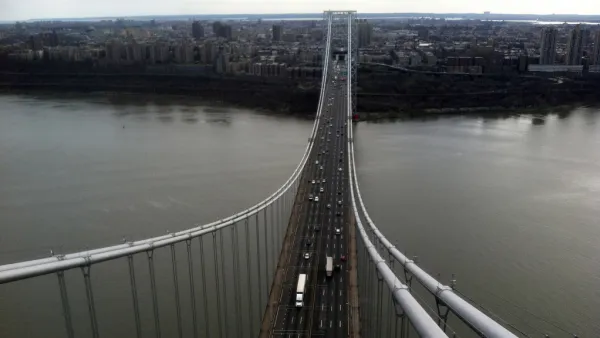
Updated: Strong Towns: Bipartisan Infrastructure Bill Would 'Make our Infrastructure Crisis Worse'
To some, the agreement promises too much funding for traditional infrastructure programs rather than 'adaptations and innovations.'

Direct Payment, Rent Relief, Homelessness Funding in Expanded 'California Comeback Plan'
Nearly 6 million Californians will receive $600 in economic stimulus checks as the state makes a plan to spend its surprise, massive budget surplus. $2.6 million for rent relief and $2 billion to pay utility bills are also planned.

Planetizen Federal Action Tracker
A weekly monitor of how Trump’s orders and actions are impacting planners and planning in America.

The state-sanctioned urbicide of Austin
People don’t kill cities. Freeways do.

US to reduce Colorado River water deliveries to Mexico
A new Colorado Treaty amendment reduces Mexico’s Colorado River water allocation by 250,000 acre feet.

Nation's most wind-powered state turns to coal as data centers increase energy demand
For the first time in decades, Iowa has increased its generation of coal power.

NYC cools commuters with city's first rain garden above a bus stop
New York City officials say the plants in the rain garden can absorb 16 gallons of rainwater during heavy storms.

Brightline West’s future may rely on $6 billion federal loan
The company has until Nov. 2 to make a $400 million equity investment into its proposed high-speed rail line.

FREE Course: Walkable City 1: Why Walkability?
After describing his path towards focusing on walkability as the essence of good planning, Jeff Speck marches through his five principal reasons for making more walkable places.
Reinventing Malls: Planning Alchemy—Turning Gray Fields Into Gold
The course focuses on the opportunities and imperatives that shape reinvention of mall sites.

Eagle County Government
Harvard University Graduate School of Design
Nashville Planning Department
The Architects Foundation
University of Cincinnati Online
The Pocatello Development Authority
The Urban Renewal Agency of the City of Pocatello
Journal of the American Planning Association