The prospect of a looming MTA deficit and rising transit fares is prompting a second look at congestion pricing in Manhattan, a project defeated by the state Assembly in April, notwithstanding a federal grant for $360 million.


"Facing a projected $900 million budget shortfall next year, the authority has proposed increasing transit fares twice in the coming three years, and has asked the city and state governments to provide hundreds of millions in additional aid.
At the heart of the changing dynamic are the politics of transit fare increases. Assembly Democrats killed a scaled-down version of Mr. Bloomberg's congestion pricing plan in April when they refused to bring it to a floor vote."
The state has rejected MTA's request for aid but asked them to "find alternative sources of revenue. They have said they are counting on a commission led by Richard Ravitch, a former transportation authority chairman, to devise a plan to rescue the agency from its deepening financial hole.
Enter congestion pricing. Asked in a recent interview how seriously the commission was considering elements of Mayor Michael R. Bloomberg's traffic revenue plan to provide money that could bail out the authority, Mr. Ravitch replied, "Very."
"Mayor Bloomberg has said that he sees no alternative. "Congestion pricing will come, in New York and lots of other cities, because it is the only way where you were going to do the two things that you need to do: reduce people driving and find money for mass transit," the mayor told reporters at the National Conference of State Legislatures in New Orleans last week."
Thanks to Mark Boshnack
Read the full story: M.T.A. Shortfall Renews Talk of Congestion Pricing

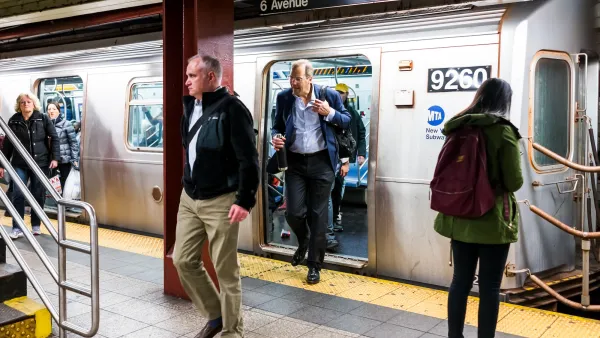
NYC to Upgrade 1/3 of its Subway Car Fleet
The MTA is seeking proposals for up to 2,390 new subway cars to upgrade its aging fleet.
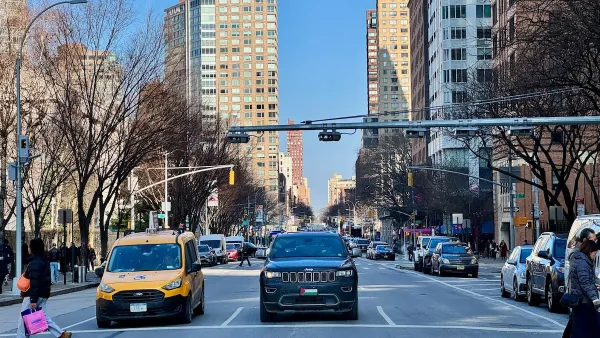
NYC’s ‘Rare and Comprehensive’ Public Data Reveals Congestion Pricing's Success
The Metropolitan Transportation Authority’s analytics and data team maintains over 180 regularly updated datasets about the city’s transportation system.
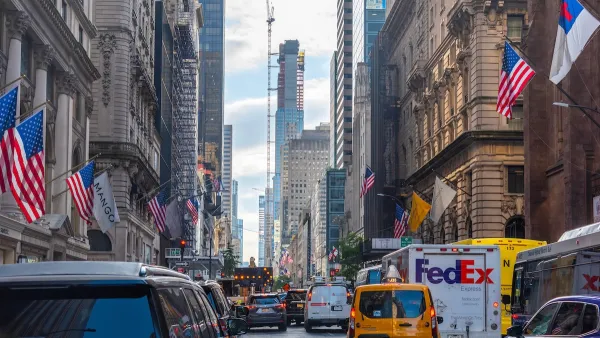
NYC Congestion Pricing: Still Working
10 million fewer vehicles entered the congestion pricing zone in the first six months of the program than last year, while pedestrian fatalities are at ‘historic lows.’

Planetizen Federal Action Tracker
A weekly monitor of how Trump’s orders and actions are impacting planners and planning in America.

Amtrak, CN end decades-long dispute with eight-year agreement
The new operating agreement establishes an updated framework for the companies to work together, including processes to resolve disputes.

Judges permit Denver to divert 77,000 acre feet from the Colorado River for reservoir expansion
Overuse and climate change have caused the Colorado River’s water levels to plummet.

Philadelphia to invest $2 billion into upgrading city airports as PHL places last in customer satisfaction
Modernizations to Philadelphia's airports will include baggage system upgrades and a new automated parking garage guidance system.

The LA housing policies making developers turn away from the city
Despite LA’s housing shortage, developers say the city’s "mansion-tax" and pandemic-era policies make it an unappealing place to build housing.

New density bill would require 7 California cities to establish regional transit hubs
The bill would also require major cities in California to permit high-rise residential buildings.

FREE Course: Walkable City 1: Why Walkability?
After describing his path towards focusing on walkability as the essence of good planning, Jeff Speck marches through his five principal reasons for making more walkable places.
Reinventing Malls: Planning Alchemy—Turning Gray Fields Into Gold
The course focuses on the opportunities and imperatives that shape reinvention of mall sites.

City of Wisconsin Rapids
Harvard University Graduate School of Design
KFH Group Inc.
The Architects Foundation
University of Cincinnati Online
The Pocatello Development Authority
The Urban Renewal Agency of the City of Pocatello