San Francisco is considering a plan to boost its fees for parking violations -- a move that could end up bringing in a total of $100 million in revenues from the pockets of illegal parkers.


"For the first time in city history, San Francisco officials expect to make more than $100 million next fiscal year from fines issued to people who park illegally."
"That's the plan, at least, if the Municipal Transportation Agency's governing board signs off on the budget-balancing proposal to add $10 to all parking fines now set at $90 or less."
"Reaction to the plan was mixed."
"Myrna Lim, a former city planning commissioner rumored to be contemplating a run for the Board of Supervisors in the fall, decried the fine increase. 'What you're doing is unconscionable. ... You're just punishing the poor,' she said."
"But Katherine Roberts, an advocate for public transit, said the board shouldn't be concerned about raising parking fines. 'You're talking about something that is already illegal,' Roberts said. Drivers, she said, have an alternative to getting parking tickets: 'Don't break the law.'"
"San Francisco now gets about $90 million a year from parking fines. Tacking on another $10 per violation would raise about $13 million or so more a year. Parking at an expired meter, for example, would ballon to $60 downtown and $50 in a neighborhood commercial district - among the highest in the nation."
Read the full story: $100 million for city - that's the ticket

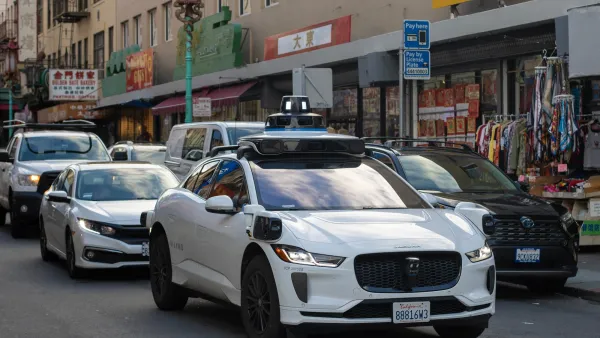
Luxury condo owners fight robotaxis in the most San Francisco conflict ever
Waymos parking in a condo building's garage are causing headaches as they get stuck and block other cars from exiting.
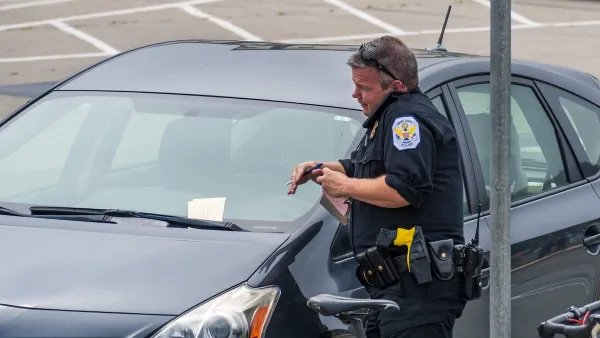
For a Few Hours, This Site Put San Francisco Drivers a Step Ahead of Parking Officers
A web developer used city parking enforcement data to map the routes of parking enforcement officers.
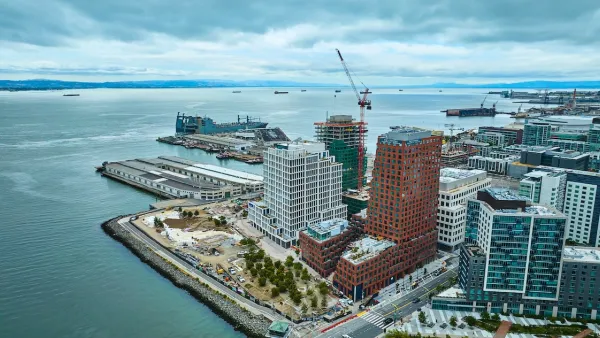
San Francisco Development Centers Pedestrians, Public Space
The Mission Rock project eliminates street parking, replacing it with public seating and landscaping.

Planetizen Federal Action Tracker
A weekly monitor of how Trump’s orders and actions are impacting planners and planning in America.

Amtrak, CN end decades-long dispute with eight-year agreement
The new operating agreement establishes an updated framework for the companies to work together, including processes to resolve disputes.

Judges permit Denver to divert 77,000 acre feet from the Colorado River for reservoir expansion
Overuse and climate change have caused the Colorado River’s water levels to plummet.

NYC DOT wants faster, more permanent street upgrades
The city is examining ways to build more concrete infrastructure without getting entangled in 'decades-long' projects.

'Something we’ve never seen before:' rising utility rates could strain city finances nationwide
Data centers, climate change and other factors have caused utility rates in the United States to increase by 38% since 2020.

Trump to overrule local leaders, lease millions of acres of America’s Pacific Island territories’ seafloors to mining companies
International law says that the Indigenous people of America’s territories have a right to prior and informed consent regarding projects that impact their countries.

FREE Course: Walkable City 1: Why Walkability?
After describing his path towards focusing on walkability as the essence of good planning, Jeff Speck marches through his five principal reasons for making more walkable places.
Reinventing Malls: Planning Alchemy—Turning Gray Fields Into Gold
The course focuses on the opportunities and imperatives that shape reinvention of mall sites.

Harvard University Graduate School of Design
KFH Group Inc.
Greater Baltimore Committee
The Architects Foundation
University of Cincinnati Online
The Pocatello Development Authority
The Urban Renewal Agency of the City of Pocatello