This article from Next American City looks at the new land use ideas that are guiding development in disaster-prone areas.


"How do you get developers, construction companies, insurers and homeowners to bear the costs of this new construction regimen?"
"'It's real simple,' say Rancho Santa Fe fire marshal and 37-year California fire-service veteran Cliff Hunter. 'Don't approve the plans. If you don't approve the plans, they don't get a house.'"
"Just like that, Hunter is helping to rewrite the drama that has long played out in communities from San Diego County to the Gulf Coast and in the multitudes of other regions across America where catastrophe and construction are co-stars. This drama stars the "greedy developer" and the "sentimental environmentalist." Should we build or shouldn't we build? It's the land-use equivalent of a Shakespearean dilemma, and just like Shakespeare's plays, it may seem real but it's ultimately fiction. Even with Hurricane Andrew and Hurricane Katrina firmly lodged in our collective memory, development in hazardous regions continues. Even if construction were to stop entirely in these regions, we would still have generations' worth of property and citizens to protect from a changing-risk environment that now includes the effects of climate change and the realities of aging infrastructure."
Read the full story: Building Under Peril


The ASLA's New Guide to Resilient Design
The American Society of landscape Architects is promoting a new guide to resilient landscape design, which examines hundreds of case studies for examples of infrastructure that works with nature, instead of against it.
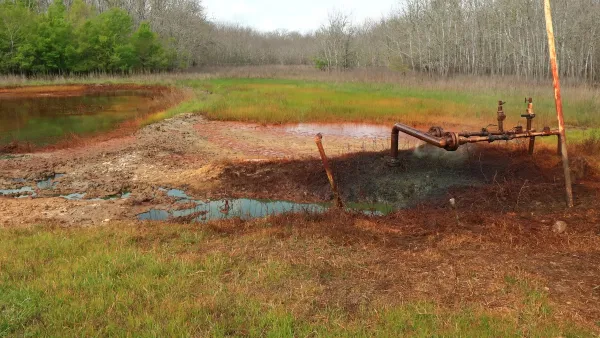
Texas suburbs are popping up around old oil wells. Some are starting to leak
Several plugged wells in Texas have failed in recent years, endangering those who unknowingly settled nearby.
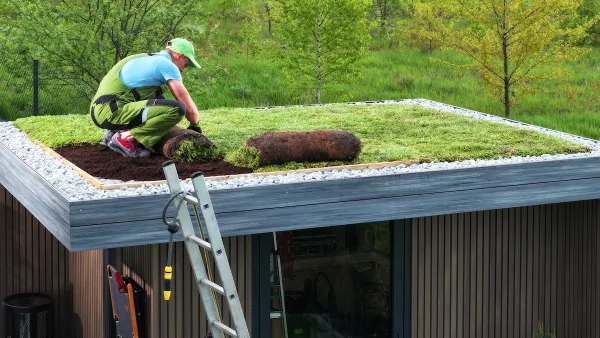
The next era of climate resilience will be measured in co-benefits
Why the strongest resilience investments solve more than one problem at once.

Planetizen Federal Action Tracker
A weekly monitor of how Trump’s orders and actions are impacting planners and planning in America.

California plans to bury El Niño’s downpour
If the state plays its cards right, it may be able to store a billion acre-feet of El Niño’s water in aquifers.

Chicago breaks ground on $3 billion megadevelopment
The new neighborhood, titled Foundry Park, will one day host 3,700 residences.

California High-Speed Rail Authority CEO resigns after $600,000 scandal
Under Ian Choudri, the authority used taxpayer dollars to fund first class flights and trips to nightclubs.

Want to study the Missouri River? Soon, you may need unanimous approval from 10 states
Legislation would require 10 governors’ permission to study or build projects moving water outside the basin.

Desperate measures: Advocates weigh draining Lake Powell to fill Colorado River
Draining the reservoir could reduce evaporation losses by a couple hundred thousand acre-feet.

FREE Course: Walkable City 1: Why Walkability?
After describing his path towards focusing on walkability as the essence of good planning, Jeff Speck marches through his five principal reasons for making more walkable places.
Reinventing Malls: Planning Alchemy—Turning Gray Fields Into Gold
The course focuses on the opportunities and imperatives that shape reinvention of mall sites.

City of Rosemead
Rutgers University, Edward J. Bloustein School of Planning and Public Policy
One Hundred Miles
Hunter College, City University of New York (CUNY)
The Architects Foundation
University of Cincinnati Online
City of Cambridge
Montrose County
The Pocatello Development Authority